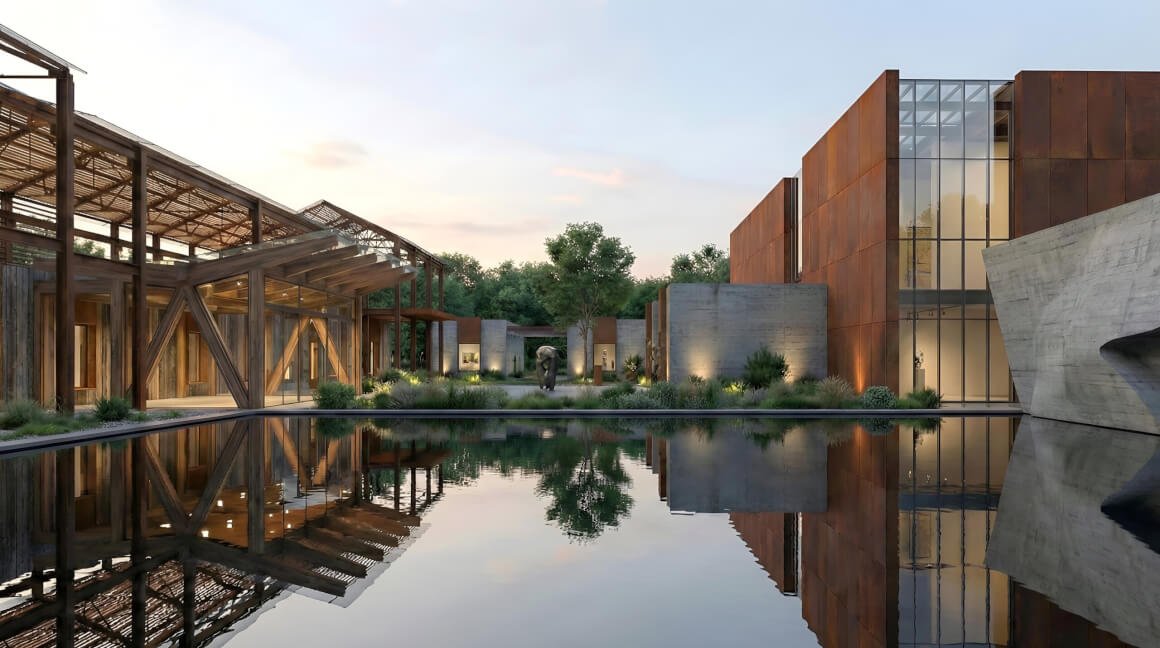
Iconic architecture is often discussed in terms of spectacle, silhouette, and cultural status. Yet the most compelling projects today do something more subtle: they reshape how we experience knowledge, craft, and care. Stratum Assemblies’ Ruhr Contemporary Conservation Institute is one of those rare works, proposing a new architectural language where art conservation becomes visible, spatial, and deeply human.
Positioned at the intersection of design research, preservation, and contemporary institutional planning, the project reframes the conservation lab not as a hidden back-of-house function but as a central public-facing experience. In the process, it offers a powerful lesson for readers interested in luxury architecture, luxury design, and the future of cultural spaces: true distinction lies not only in form, but in how a building choreographs purpose.
Iconic Architecture That Makes Conservation Visible
At its core, the Ruhr Contemporary Conservation Institute challenges the conventional museum and archive model. Conservation is typically concealed behind controlled doors, restricted rooms, and technical barriers. Stratum Assemblies reverses that logic by treating restoration and preservation as a living spatial practice—something that can be observed, understood, and integrated into the building’s identity.
This is where iconic architecture gains new relevance. Rather than pursuing monumentality for its own sake, the project uses architectural composition to express process. Space becomes a tool for interpretation. Circulation, material layering, and visual connections help transform conservation from an invisible technical discipline into an active cultural narrative.
For design-conscious audiences, this approach aligns with a broader shift in high-end architecture:
- Buildings are expected to communicate values, not just aesthetics
- Institutions increasingly prioritize transparency and engagement
- Adaptive, research-driven environments are becoming essential in contemporary design
The result is an institutional concept that feels both rigorous and experiential—qualities that define enduring iconic architecture.
A Spatial Philosophy Built on Layers, Process, and Precision
The name Stratum Assemblies suggests an interest in accumulation, layering, and constructed meaning, and that sensibility appears central to the institute’s architectural identity. Rather than a singular gesture, the project can be understood as a carefully orchestrated sequence of spaces that reveal how conservation unfolds over time.
Architecture as a working framework
Instead of separating public and technical functions into rigid zones, the design appears to build relationships between them. This creates a more dynamic institutional environment—one where research, restoration, storage, viewing, and learning coexist as interconnected parts of a larger whole.
That strategy matters because conservation is inherently layered. Every artwork carries material history, intervention, aging, and context. A building designed for conservation must therefore do more than house objects; it must support analysis, control, care, and interpretation at multiple scales.
In this sense, iconic architecture is expressed through operational intelligence as much as visual form. The institute stands out because it likely balances:
- Technical requirements such as climate stability and material protection
- Public accessibility and educational visibility
- A coherent architectural narrative rooted in care and continuity
Materiality with institutional depth
Projects of this kind often rely on restrained yet refined material palettes—surfaces that communicate durability, calm, and precision. In luxury design terms, this is less about ornament and more about atmosphere. The strongest institutional interiors create a sense of confidence through proportion, light, texture, and clarity.
That same principle applies across luxury home and luxury decor trends as well. Discerning clients increasingly value spaces that feel curated, tactile, and quietly intelligent. The Ruhr Contemporary Conservation Institute reflects this sensibility at an institutional scale, proving that sophistication can emerge from discipline rather than excess.
Why This Project Matters for Luxury Architecture and Design
For anyone tracking the future of luxury architecture, this project signals an important evolution. Prestige is no longer defined solely by exclusivity or visual drama. It is also shaped by intellectual depth, sustainability of use, and a building’s capacity to create meaningful experiences.
The institute demonstrates how iconic architecture can be both culturally ambitious and functionally exacting. It speaks to several major movements in contemporary design:
- Experience-led institutions: Visitors want to understand how spaces work, not just admire them
- Transparency in design: Exposing process creates trust, curiosity, and richer engagement
- Flexible research environments: Buildings must support evolving technologies and interdisciplinary collaboration
- Purpose-driven aesthetics: Beauty is strongest when tied to mission
This makes the project relevant beyond museums or conservation facilities. Architects, developers, and luxury homeowners can all draw inspiration from its central premise: design should reveal value through thoughtful organization, not just visual statement.
For example, in high-end residential design, similar principles can inform:
- Gallery-like private interiors with curated sightlines
- Material layering that highlights craftsmanship and age
- Dedicated spaces for collections, archives, or restoration
- Open-plan layouts that make daily rituals more visible and intentional
In that way, institutional innovation often filters into luxury decor and luxury home planning, influencing how elite spaces are conceived and lived in.
The Broader Design Lesson: Care as a Form of Architecture
One reason this project resonates so strongly is that it elevates care into an architectural idea. Conservation is about attention—studying surfaces, preserving memory, extending life, and respecting transformation. When architecture embodies those values, it gains emotional and cultural weight.
That is what separates memorable buildings from merely photogenic ones. Iconic architecture endures when it captures a deeper relationship between people, objects, and time. The Ruhr Contemporary Conservation Institute appears to do exactly that by making preservation spatially legible and publicly meaningful.
It also contributes to an important discourse around contemporary conservation architecture: that preservation is not static. It is active, interpretive, and collaborative. Buildings designed around that idea can feel more open, relevant, and future-facing than traditional institutional models.
Readers exploring related trends may also want to discover our insights on sustainable luxury interiors, adaptive reuse in high-end architecture, and how museum-inspired design is influencing private residences. These connected themes reveal how cultural architecture increasingly shapes the broader design landscape.
Conclusion: A New Standard for Iconic Architecture
Stratum Assemblies’ Ruhr Contemporary Conservation Institute suggests a compelling future for iconic architecture—one where significance comes from making hidden practices visible and turning technical function into spatial experience. Rather than treating conservation as a backstage necessity, the project centers it as the building’s defining concept.
The takeaway is clear: the most powerful architecture today does more than impress. It interprets, educates, and cares. In that respect, this project sets a sophisticated new benchmark for iconic architecture, offering inspiration for cultural institutions, luxury architecture, and design-led living alike.