

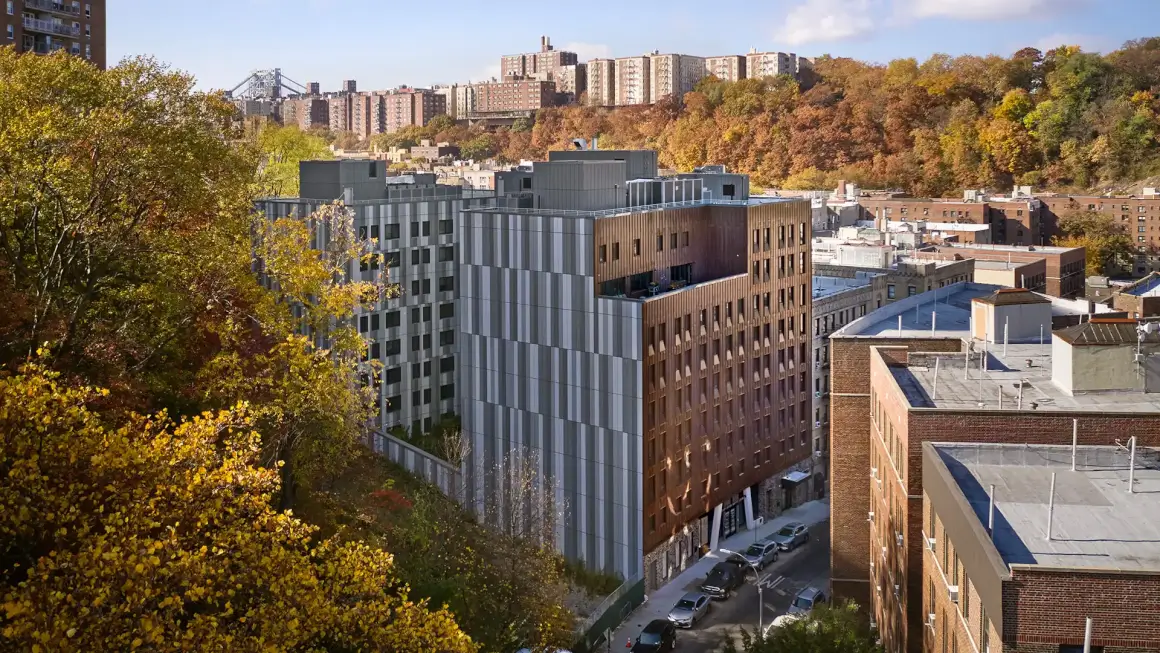
What if senior housing felt less like an institution and more like a beautifully crafted retreat woven into nature? That question sits at the heart of iconic architecture at The Hillside in Inwood, a passive house community designed by Architecture in Formation to elevate aging in place through sustainability, comfort, and dignified design.
Positioned at the intersection of wellness, climate-responsive construction, and refined residential planning, The Hillside offers a compelling model for the future of luxury senior living. Rather than treating elder housing as purely functional, the project embraces landscape, daylight, energy efficiency, and human-centered planning to create homes that support independence while delivering architectural distinction.
Iconic Architecture Meets Passive House Design
The defining strength of The Hillside is how it merges iconic architecture with rigorous passive house principles. This is not a flashy building that prioritizes form over function. Instead, its architectural identity emerges from performance, site sensitivity, and the lived experience of residents.
Passive house design is known for dramatically reducing energy use through airtight construction, high-performance insulation, strategic orientation, and advanced ventilation. In a senior living context, those features do more than lower utility costs. They help create:
- More stable indoor temperatures year-round
- Improved indoor air quality
- Quieter interiors with less outside noise
- Greater comfort for residents with changing mobility or health needs
That combination of environmental intelligence and residential elegance is what makes this project stand out in today’s luxury architecture conversation.
A Hillside Community Designed Around Dignity and Daily Life
Great senior housing begins with empathy. The Hillside appears to take that principle seriously by shaping the community around the realities of aging, without sacrificing beauty or spatial richness. Instead of relying on sterile corridors or generic layouts, the design emphasizes connection to the landscape and a sense of home.
This approach reflects a broader evolution in iconic architecture: buildings are no longer judged only by their silhouette, but by how deeply they improve everyday life. In the case of senior residents, that means balancing privacy, social opportunity, accessibility, and emotional well-being.
Key planning ideas that define the project
- Site-responsive massing: The architecture appears to work with the slope of the land rather than impose on it.
- Light-filled interiors: Access to natural light supports mood, orientation, and overall wellness.
- Community-focused circulation: Shared spaces encourage chance encounters and social connection.
- Residential warmth: Materials and proportions aim to feel domestic rather than institutional.
For readers exploring related luxury residential ideas, this is an excellent moment to connect internally to topics such as sustainable home design, high-performance building envelopes, and wellness-centered interiors.
Why The Hillside Matters in Luxury Architecture
Luxury architecture is often associated with expansive views, premium finishes, and bespoke detailing. While those elements can certainly play a role, true luxury today increasingly includes health, resilience, and environmental responsibility. The Hillside demonstrates that senior housing can belong in the same conversation as forward-thinking luxury homes and design-led communities.
Its value lies in reframing what prestige means. Here, luxury is not excess. It is:
- Thermal comfort without drafts or temperature swings
- Clean air through advanced ventilation systems
- Thoughtful accessibility integrated into the design
- A meaningful relationship between architecture and landscape
- Long-term sustainability that protects both residents and resources
That is a powerful message for developers, architects, and homeowners alike. As expectations rise across the luxury design sector, projects like The Hillside show that performance-based living environments can also deliver visual and emotional appeal.
How Iconic Architecture Supports Aging in Place
The phrase aging in place has become central to residential planning, but it is often reduced to technical checklists. The best iconic architecture goes further by making accessibility feel seamless and elegant. A well-designed senior community should anticipate change over time while preserving autonomy and delight.
In practical terms, architecture for aging in place often includes:
- Barrier-reduced layouts and intuitive circulation
- Ample natural light for visibility and comfort
- Durable, low-maintenance materials
- Shared amenities that reduce isolation
- Outdoor access that encourages movement and reflection
When these strategies are integrated early, they stop reading as accommodations and start feeling like good design. That distinction matters. It allows residents to feel respected, empowered, and genuinely at home.
Landscape, Sustainability, and a Sense of Belonging
The setting of The Hillside is central to its identity. Hillside sites present challenges, but they also offer opportunities for layered views, terraced forms, and stronger visual connections to the natural environment. In luxury home and luxury decor circles, this indoor-outdoor relationship is a hallmark of timeless design.
By rooting the community in its topography, the architecture gains authenticity. It feels placed rather than merely built. This is another reason the project resonates as iconic architecture: the design is memorable because it belongs to its site.
Sustainability also deepens that sense of belonging. Residents benefit from reduced energy demand, and the broader community benefits from lower environmental impact. In an era of rising climate concerns, that dual value is increasingly essential. Readers interested in adjacent topics may also explore internal content on biophilic design, net-zero trends, and resilient housing strategies.
A New Standard for Senior Living Design
The Hillside points toward a future in which senior communities are not hidden at the margins of architectural innovation. Instead, they become testing grounds for some of the field’s most important ideas: passive house performance, inclusive planning, wellness design, and site-driven form.
That is why this project deserves attention beyond the senior housing niche. It has implications for luxury home planning, multifamily design, and the next generation of sustainable residential development. More importantly, it suggests that architecture can support people through every stage of life with grace and intelligence.
As the market continues to evolve, expect more emphasis on homes and communities that combine beauty with measurable performance. The most successful projects will not simply look impressive. They will feel better to inhabit every day.
Conclusion
The Hillside in Inwood shows how iconic architecture can redefine senior living through passive house innovation, landscape sensitivity, and resident-first planning. Its greatest lesson is simple: when architecture prioritizes dignity, sustainability, and comfort, it creates not just housing, but lasting quality of life. For anyone tracking the future of luxury architecture, luxury design, and high-performance homes, this is a project worth watching.


