
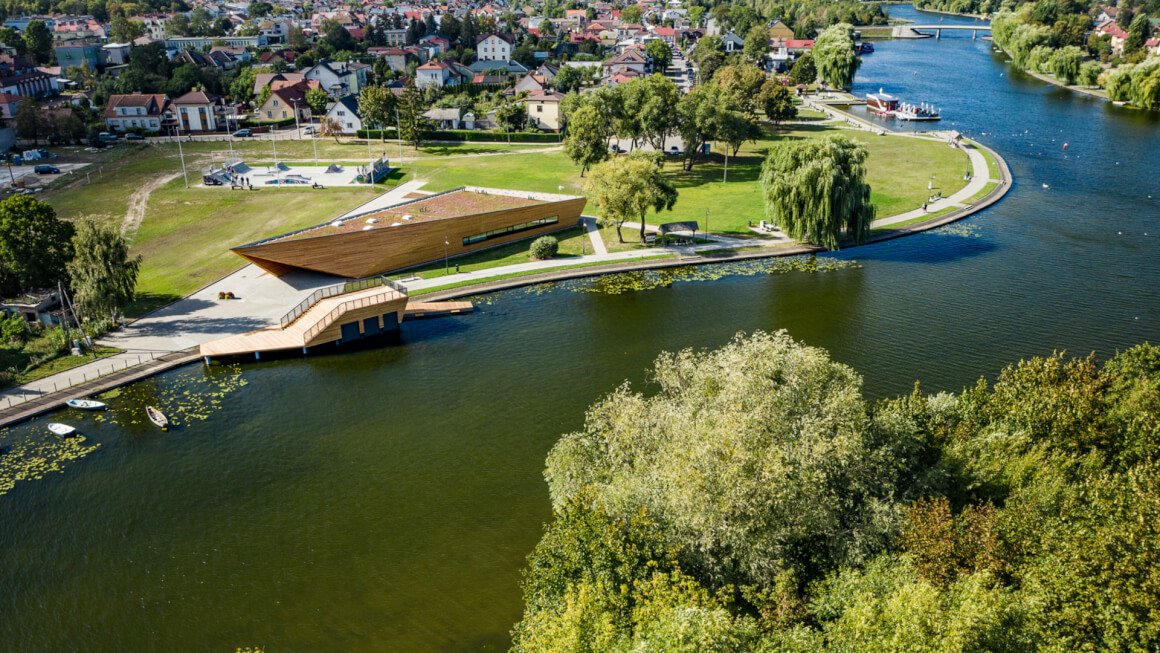
Iconic architecture often emerges where landscape, purpose, and imagination meet—and that is precisely what PSBA has achieved in Augustów, Poland. With a sharply geometric canoe base topped by a living green roof and finished with a public observation deck, the project transforms a simple recreational facility into a design destination.
Set within one of Poland’s best-known lake and canal regions, the new canoe base captures the growing appetite for architecture that does more than serve a function. It frames views, blends into nature, and creates a memorable experience for visitors. For readers exploring Luxury Architecture, Luxury Design, and elevated outdoor spaces, this project offers a compelling case study in how civic design can feel both refined and deeply rooted in place.
How This Iconic Architecture Redefines a Waterfront Facility
At first glance, the building’s triangular form gives it an instantly recognizable identity. Rather than relying on decorative excess, PSBA uses a bold architectural gesture to create visual impact. The angled silhouette evokes movement, direction, and even the dynamic shape of a canoe cutting through water.
This is where iconic architecture becomes more than a marketing phrase. The structure is not iconic simply because it looks unusual; it earns that distinction by responding to its site and program in a way that feels inevitable. The building’s sculptural geometry helps it stand out while still relating to the surrounding landscape of waterways, forest, and open sky.
Its public-facing design also reinforces the idea that civic buildings can be memorable landmarks. Visitors are not just arriving at a service point for paddling activities—they are encountering a piece of contemporary architecture that adds cultural value to the region.
A Triangular Design Language with Practical Purpose
The triangular plan is the project’s defining move, but it also carries practical benefits. Angular forms can help organize circulation, create distinct internal zones, and direct attention toward key views. In a recreational setting like Augustów, orientation matters. Architecture should help people move intuitively between arrival, storage, gathering, and launch points.
Key strengths of the design include:
- A strong visual identity: the unconventional massing gives the canoe base a signature presence.
- Efficient spatial organization: the geometry can support clear transitions between public and operational functions.
- Improved site integration: the form appears designed to engage the waterfront rather than compete with it.
- Destination appeal: the building becomes an attraction in its own right, supporting architectural tourism.
In today’s design landscape, iconic architecture increasingly succeeds when bold form is tied to real usability. This project reflects that balance well.
Green Roof Design That Softens the Structure
One of the most thoughtful elements of the canoe base is its green roof. Living roofs have become a defining feature of contemporary sustainable architecture, but here the strategy feels especially appropriate. Positioned within a natural setting, the vegetated top surface visually softens the building and reduces the contrast between the built form and its environment.
Green roofs can also provide a range of environmental advantages, such as:
- Improved rainwater management
- Added thermal insulation
- Support for local biodiversity
- Reduced heat gain during warmer months
- A more seamless visual connection to the landscape
In luxury-led design conversations, sustainability is no longer separate from beauty. The most admired projects merge ecological intelligence with material and spatial sophistication. That is one reason this example of iconic architecture feels current: it presents environmental sensitivity as an integrated design feature rather than an afterthought.
An Observation Deck That Turns Utility into Experience
The observation deck elevates the project from infrastructure to experience-driven architecture. Instead of limiting the roofscape to a technical or inaccessible surface, PSBA creates a place for pause, gathering, and panoramic viewing. This simple move adds social and emotional value to the building.
Observation spaces are especially powerful in waterside architecture because they heighten the visitor’s awareness of weather, movement, and horizon. From above, the surrounding lakescape becomes part of the project’s identity. The architecture frames the setting, while the setting completes the architecture.
For homeowners and designers following Luxury Home trends, there is a useful lesson here: elevated platforms, roof terraces, and view-oriented outdoor rooms can dramatically increase how a property is experienced. Even in a public project, the same principles of premium spatial design apply.
Why Augustów Is the Right Setting for Iconic Architecture
Augustów is known for its waterways, outdoor recreation, and strong connection to nature, making it an ideal location for a canoe base that embraces regional identity. Architecture in such settings works best when it does not overpower the environment. Instead, it should clarify the relationship between visitor and landscape.
This project appears to do exactly that. Its low, angular profile and planted roof help reduce visual heaviness, while the viewing platform invites people to engage more deeply with the scenery. The result is iconic architecture that feels site-specific rather than generic.
That sense of belonging is increasingly important in global design. In an era when many cities and destinations chase instantly shareable buildings, the strongest projects are often those that could exist nowhere else.
What Luxury Design Can Learn from This Project
Although the canoe base is a civic and recreational building, it offers insights highly relevant to luxury architecture and luxury decor audiences. The project shows that premium design is not defined only by expensive finishes. It is equally shaped by clarity of concept, environmental responsiveness, and the quality of the user experience.
Takeaways for architects, developers, and design enthusiasts
- Use bold geometry with restraint and purpose.
- Integrate landscape features directly into the architecture.
- Create usable rooftops that add social and visual value.
- Design around views and movement, not just enclosed rooms.
- Let local context guide the form and material expression.
These principles apply across scales—from boutique hospitality and waterfront residences to public pavilions and private retreats. That broad relevance is part of what makes this project resonate beyond its immediate function.
Conclusion: A Small Building with Big Design Impact
PSBA’s Augustów canoe base proves that iconic architecture does not have to be monumental to be powerful. Through its triangular form, green roof, and observation deck, the project turns a practical program into a striking architectural statement—one that honors nature while inviting people to experience it more fully.
For anyone tracking the future of waterfront design, sustainable building, and place-led luxury, this is a reminder that the best iconic architecture is not just seen. It is felt, used, and remembered.