Luxury is no longer defined only by fashion houses, bespoke interiors or collectible objects. Increasingly, it is also shaped by the world’s most advanced engineering—and NATO’s drone problem is a striking example of how precision, innovation and industrial design are converging in Europe. As unmanned aerial threats become more frequent across the continent, European manufacturers are being pushed to create systems that are not only faster and smarter, but also more elegant in their efficiency.
For readers in the luxury brands, luxury decor and luxury design space, this may seem far removed from traditional lifestyle coverage. Yet the same values that define exceptional design—craftsmanship, material innovation, seamless integration and future-focused thinking—are now central to Europe’s response to a fast-changing security challenge.
NATO’s drone problem is forcing a new design era
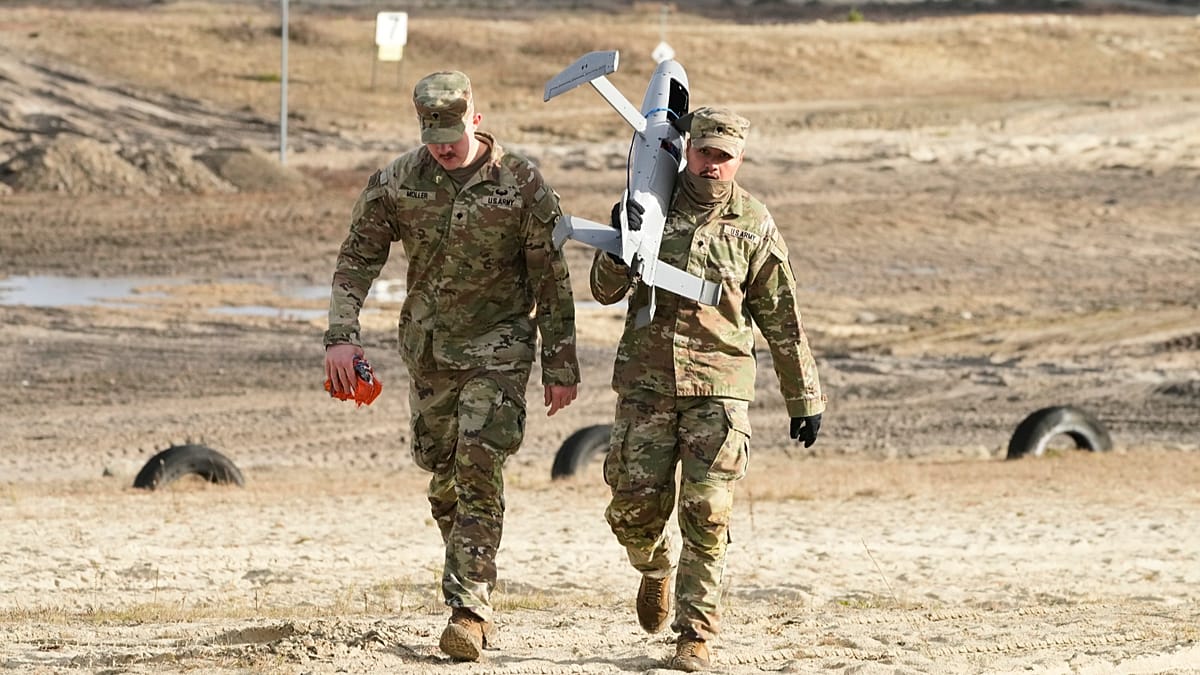
At NATO AIRCOM’s Industry Day in Ramstein, military leaders and defence companies focused on a pressing issue: how to counter cheap drones without relying on extremely expensive fighter jet responses. The imbalance is stark. Some drones can be produced for less than €100,000, while scrambling fighter aircraft to intercept them can cost tens of thousands of euros per hour, with a typical two-jet interception exceeding €85,000 before missiles are even launched.
That cost gap is why NATO’s drone problem has become as much an industrial and design challenge as a military one. European industry is now tasked with producing counter-drone systems that are:
- More cost-effective than traditional air policing responses
- Fast enough to react within seconds
- Reliable in complex real-world environments
- Scalable for mass drone attacks
- Adaptable as battlefield technology evolves
In design terms, this is a brief centered on performance under pressure. The mission is no longer just to build powerful systems, but to create integrated solutions where hardware, software, sensors and AI work together with minimal friction.
Why European industry matters now
NATO’s drone problem is intensifying as incidents multiply, from drones entering airspace near Romania and Lithuania to disruptions at major infrastructure sites like Munich Airport. These events show that unmanned systems are no longer niche threats. They are persistent, comparatively inexpensive and increasingly capable.
European defence firms are responding with a blend of established manufacturing expertise and start-up agility. At Ramstein, around 35 companies showcased technologies ranging from radar systems and interceptor drones to specialised missiles. Major names included MBDA, Hensoldt, Aselsan and Alta Ares, each representing a different facet of Europe’s advanced industrial ecosystem.
What stands out is the speed of iteration. Military requirements are shifting rapidly, particularly in response to lessons from Ukraine, while traditional procurement cycles often move more slowly. That tension is creating demand for modular platforms, agile software updates and more responsive product development—principles that are equally familiar in high-end architecture, automotive design and luxury technology.
From brute force to refined efficiency
The most sophisticated answer to NATO’s drone problem is not simply more firepower. It is better design. One example highlighted at the event was MBDA’s counter-drone missile, developed to tackle mass drone attacks in a more efficient and economical way. The missile is being integrated into Rheinmetall’s Skyranger 30 air defence system, which combines multiple layers of response.
This layered approach is notable for its design intelligence:
- 30 mm cannon fire for smaller Class 1 drones such as quadcopters
- Dedicated missiles for larger threats like Shahed-type drones
- Multiple ready-to-fire interceptors within a mobile battery configuration
- System integration that balances range, cost and reaction speed
In essence, it is a form of functional luxury: highly engineered, carefully calibrated and built to solve a specific problem without excess.
The hidden luxury value: precision engineering
Luxury design has always celebrated objects that combine beauty with technical excellence. NATO’s drone problem reveals how that same admiration for precision engineering extends into advanced aerospace and defence manufacturing. These systems may not sit in a penthouse or private gallery, but they are products of elite European know-how.
Several themes emerging from the counter-drone sector mirror what defines premium design today:
1. Seamless integration
The best counter-UAS systems bring together radar, AI, software, launch platforms and munitions in one coherent user experience. Like a flawlessly designed smart home, the value lies in how seamlessly complex parts work together.
2. Intelligence-led functionality
Companies such as Alta Ares are building AI-powered solutions for intelligence, surveillance, reconnaissance and drone interception. Artificial intelligence is becoming essential to reduce decision-making time, especially when operators have only seconds to act.
3. Material and manufacturing innovation
Europe’s industrial players must make systems lighter, faster to deploy and more economical to produce at scale. That pressure often drives breakthroughs in manufacturing methods, components and modular engineering.
4. Reliability as a premium standard
One of the clearest lessons from the war in Ukraine is that systems must work consistently under stress. In the same way that true luxury rejects compromise, high-end defence engineering demands reliability above all else.
Ukraine’s influence on Europe’s innovation culture
No discussion of NATO’s drone problem is complete without Ukraine. Military experts and industry representatives alike emphasized that working with Ukraine is not optional—it is essential. The battlefield has accelerated the evolution of drones and countermeasures faster than many Western institutions expected.
Ukrainian experience has exposed a critical weakness: reliable detection. According to Ukrainian military insights shared at the event, small drones can disappear from radar for several seconds, preventing fully autonomous interception. That challenge is now shaping European R&D priorities, especially in radar performance, tracking continuity and AI-supported targeting.
For European industry, the takeaway is clear:
- Field learning matters more than theoretical capability
- Products must adapt quickly to real operational feedback
- Partnerships will be crucial because demand is likely to outpace supply
This dynamic resembles the most progressive corners of luxury design, where brands increasingly refine products through constant iteration, user insight and technical collaboration.
What this means for the future of European luxury design
Although NATO’s drone problem belongs to the defence sphere, it also highlights a broader truth about European excellence. The continent’s design future will be shaped not only by aesthetics, but by advanced systems thinking. From mobility and architecture to luxury technology and premium manufacturing, the industries that thrive will be those that combine intelligence, resilience and elegance of execution.
In that sense, the counter-drone race is also a story about European creative power. It showcases how the continent’s brands, engineers and industrial designers respond when performance, speed and innovation become non-negotiable.
As NATO’s drone problem pushes companies to rethink cost, production and innovation, Europe is proving that sophisticated design is not just about appearance. It is about solving difficult problems beautifully, efficiently and at scale. That may be the most modern expression of luxury yet.