

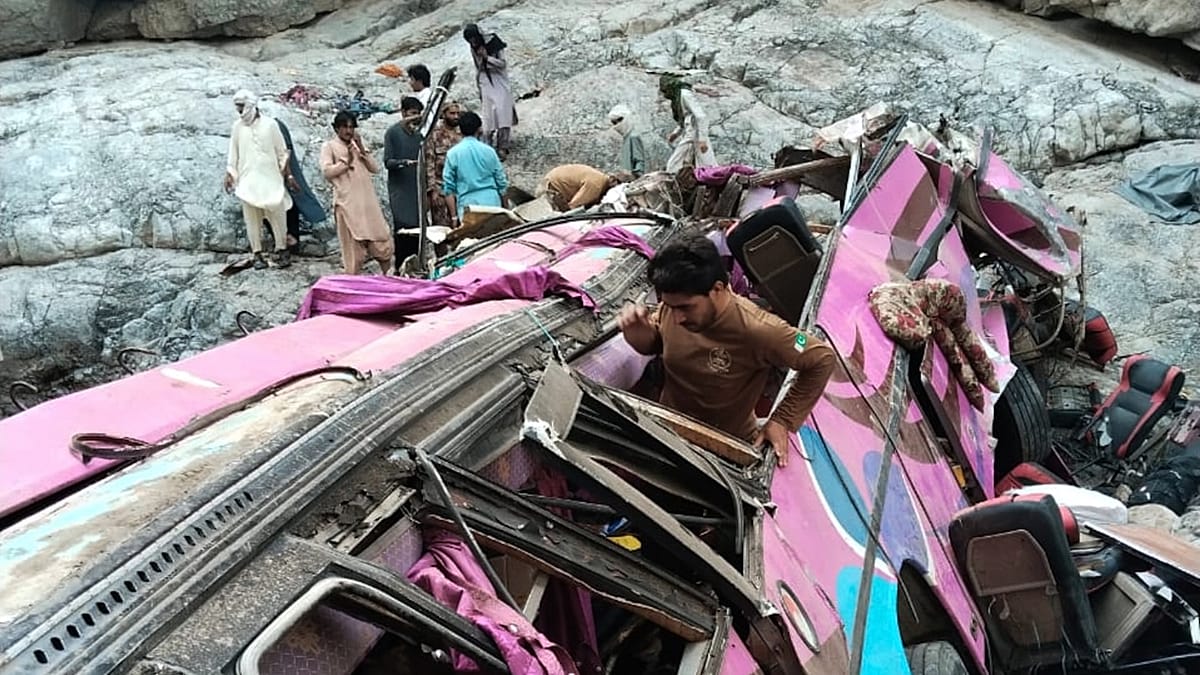
The Pakistan bus crash that killed 40 passengers in the country’s southwest is a stark reminder of how quickly routine travel can turn catastrophic. While the tragedy unfolded far from the polished worlds of luxury brands, luxury decor, and luxury design, it underlines a universal truth: safe, thoughtfully designed transport infrastructure is one of the most essential forms of modern public value.
According to officials, the overcrowded passenger bus veered off a highway and plunged into a rocky ravine in Dana Sar, a remote area near the border of Balochistan and Khyber Pakhtunkhwa. The crash left 40 people dead and eight injured, making it one of the deadliest road accidents in Pakistan in recent years.
What happened in the Pakistan bus crash?
Authorities said the bus was carrying 48 passengers at the time of the incident. Officials also reported that the vehicle had taken on additional travelers from another bus that had broken down, contributing to overcrowding.
The vehicle was traveling toward Peshawar when it reportedly lost control and fell into a ravine. Rescue teams transported the injured and recovered the bodies of those killed, transferring victims to nearby hospitals in the region.
A survivor told local media that some passengers had objected when the driver stopped to pick up people from the disabled bus. He alleged that an argument followed and that someone grabbed the driver by the neck moments before the vehicle crashed. Police have not independently confirmed that account and say the investigation is ongoing.
Emergency response and official reaction
Following the Pakistan bus crash, emergency responders from Balochistan and Khyber Pakhtunkhwa worked together on rescue and recovery efforts. Initial treatment was reportedly provided at the scene before the injured were taken to the district headquarters hospital in Zhob.
Pakistani President Asif Ali Zardari expressed sorrow and offered condolences to the families of those killed. He also directed authorities to make sure survivors receive the best possible medical care. Balochistan Chief Minister Sarfraz Bugti similarly expressed grief and ordered medical support for the injured.
The coordination between provincial emergency services points to the scale of the disaster. In remote and mountainous regions, response time, access to trauma care, and inter-agency cooperation can significantly affect outcomes after major transport accidents.
Why road accidents remain a major problem in Pakistan
The Pakistan bus crash is part of a broader pattern of deadly road incidents across the country. Traffic accidents in Pakistan are frequently linked to several long-standing issues:
- Poor road conditions in remote and rural areas
- Weak enforcement of traffic laws
- Overcrowded public transport
- Unsafe driving practices
- Difficult mountainous terrain
- Limited vehicle safety oversight
These factors become even more dangerous when combined. A single overloaded bus traveling on winding roads at speed can create a high-risk situation for dozens of passengers at once.
In May, another major road accident in northwest Pakistan killed 17 people when a minibus slammed into a parked bus along a motorway. Incidents like these show that transport safety remains an urgent national concern rather than an isolated problem.
Design, safety, and the hidden meaning of infrastructure
For audiences interested in luxury design and premium living, infrastructure may seem far removed from aesthetics. Yet good design is never only about beauty. At its best, design is about function, dignity, and protection. The lessons behind the Pakistan bus crash reach into a wider conversation about how societies build systems that care for people.
In the world of luxury, excellence is measured by attention to detail, user experience, and uncompromising standards. Public transport and road systems deserve the same mindset. Safe highway barriers, better vehicle maintenance, regulated passenger limits, ergonomic seating, visible emergency exits, and reliable communications are all design decisions. They are not glamorous, but they are life-saving.
What better transport design could include
- Stricter capacity controls: Preventing overcrowding is one of the most immediate safety measures.
- Improved vehicle standards: Regular inspections and roadworthiness checks reduce mechanical risk.
- Safer mountain-road engineering: Guardrails, clearer markings, and better surfacing can help prevent vehicles from leaving the roadway.
- Driver training and fatigue management: Professional standards matter, especially on difficult routes.
- Emergency readiness: Faster rescue access and trauma care can save lives after a crash.
The human story behind the headlines
Any report on the Pakistan bus crash must keep the victims at the center. Behind every casualty figure is a family facing sudden loss, uncertainty, and grief. Some of the victims may still need to be identified, and officials have said that bodies will be transported to hometowns if residents are confirmed to be from neighboring provinces.
That detail alone reflects the broader burden such disasters place on communities. Beyond the immediate shock, families often confront medical costs, funeral arrangements, disrupted incomes, and lasting emotional trauma. The injured survivors, meanwhile, may face long recoveries and a lifetime of psychological scars.
This is why transport policy cannot be treated as a technical issue alone. It is a human issue, a public health issue, and a governance issue.
What this tragedy should prompt next
As investigators work to determine the exact chain of events, the Pakistan bus crash should renew calls for practical reforms. These do not need to begin with sweeping promises. Even incremental improvements can reduce risk:
- Routine roadside checks for overloaded vehicles
- Penalties for unsafe passenger transport practices
- Investment in rural and mountain-road safety upgrades
- Public awareness campaigns for passenger rights and driver conduct
- Better emergency medical capacity in remote districts
Accountability will matter, but so will sustained follow-through. Fatal crashes often draw attention for a few days before deeper structural issues fade from view.
The Pakistan bus crash is a devastating event that exposes the consequences of overcrowding, unsafe road travel, and weak transport safeguards. The clearest takeaway is simple: safety is not a luxury. It is the foundation of any well-designed society, and preventing the next Pakistan bus crash will require investment, enforcement, and a far stronger commitment to protecting human life.