
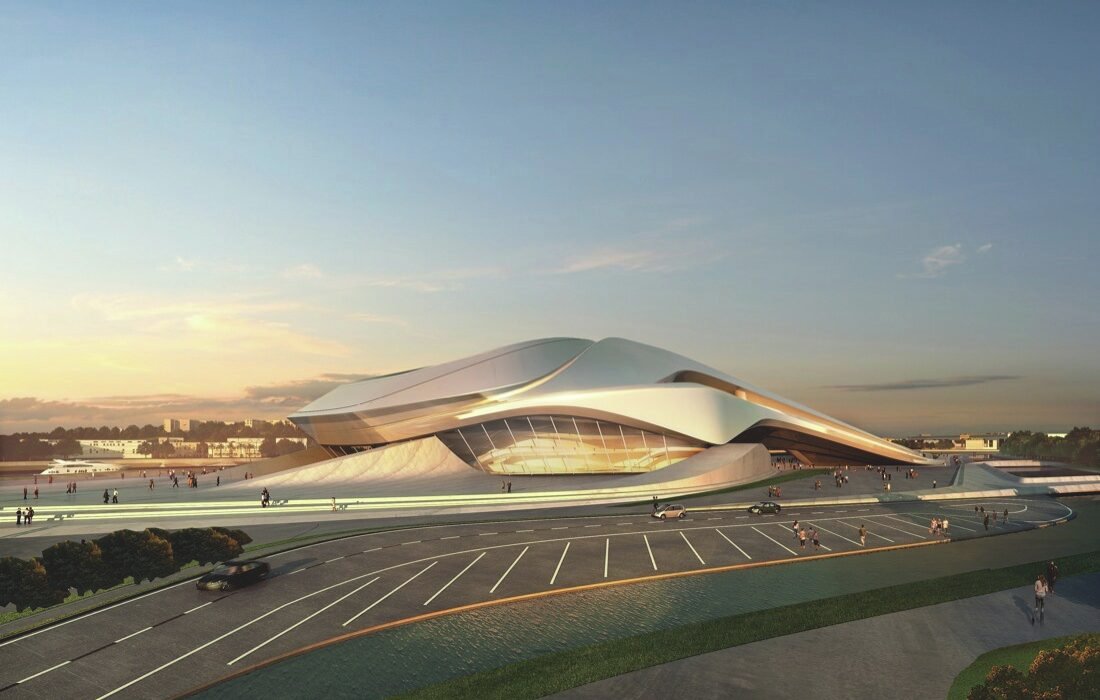
Architecture news rarely captures the imagination quite like a major cultural commission from Zaha Hadid Architects. The Rabat Grand Theatre, planned for Morocco’s capital, stands out as a bold statement in luxury architecture—one that combines sculptural design, civic ambition, and large-scale performance infrastructure in a single waterfront destination.
Confirmed by the Bouregreg Valley Development Agency following an official ceremony in Rabat, the project places one of the world’s most influential design firms at the center of a transformative cultural development. With multiple performance venues, shared support spaces, and creative studios, the Rabat Grand Theatre was conceived not only as a building, but as a catalyst for the city’s artistic future.
Architecture News: Why the Rabat Grand Theatre Matters
In the world of architecture news, major performing arts venues often signal more than a new place for entertainment. They reflect how cities invest in identity, tourism, and public life. The Rabat Grand Theatre does exactly that, positioning Rabat as a destination for contemporary culture while reinforcing the importance of design-led urban renewal.
The project was announced with an estimated budget of 120 million euros, underlining the scale of ambition behind the development. For luxury design observers, this is especially significant: landmark theaters often become defining symbols of a city, much like museums, opera houses, and convention halls that merge civic purpose with architectural prestige.
Set within the broader Bouregreg Valley development, the theater aligns with a larger vision of revitalization. That context makes this piece of architecture news particularly compelling, as it connects iconic design with long-term planning, infrastructure, and regional cultural growth.
A Cultural Complex Designed for Performance
The Rabat Grand Theatre program is notable for its versatility. Rather than serving a single audience type or performance style, the venue was planned as a multi-format cultural complex with indoor and outdoor capabilities.
Key components of the project
- A main indoor theater with seating for 2,050 guests
- A secondary indoor theater with capacity for 520 people
- A fully equipped outdoor amphitheater for up to 7,000 attendees
- Shared back-of-house facilities to improve operational efficiency
- Creative studios integrated into the venue
This layered approach gives the project unusual depth. Large auditoriums can host major productions, while smaller spaces support intimate performances, rehearsals, and experimental programming. In practical terms, the inclusion of shared support functions also reflects smart planning—allowing the complex to deliver scale without unnecessary duplication of building services.
That operational logic is an important detail in architecture news, because it shows how luxury architecture can also be efficient. Grand public buildings are no longer judged on appearance alone; they must balance beauty, function, and long-term usability.
Zaha Hadid Architects and the Language of Luxury Design
Zaha Hadid Architects has long been associated with fluid forms, dynamic geometry, and buildings that appear to move through space. The Rabat Grand Theatre fits naturally within that design legacy. Although the initial announcement focused on the commission and program rather than technical detail, the project’s authorship alone suggests a dramatic architectural presence.
For readers interested in luxury home decor, luxury interiors, and high-end design culture, the significance goes beyond the exterior envelope. The same principles that define landmark architecture—flow, material richness, spatial drama, and sensory experience—often shape broader design trends across residential and hospitality sectors as well.
This is why architecture news about major cultural buildings often resonates far beyond architects. Projects like the Rabat Grand Theatre influence:
- Interior material palettes and sculptural finishes
- Luxury decor trends inspired by curving forms and organic silhouettes
- Public appetite for statement-making contemporary design
- Urban lifestyle developments centered around culture and leisure
In that sense, the theater belongs not only to the performing arts world, but also to the wider conversation around luxury design and destination architecture.
How the Theatre Supports Rabat’s Urban Identity
Every great civic building tells a story about place. In Rabat, the creation of a grand performance venue signals confidence, cultural investment, and international relevance. It is a reminder that architecture can serve as both infrastructure and identity-maker.
Within the context of waterfront development, a major theater has the potential to attract visitors, stimulate local business, and anchor surrounding public space. This is one reason the announcement remains noteworthy in architecture news: it reflects the growing role of architecture in shaping not just skylines, but city experiences.
For a capital city like Rabat, the benefits of such a project may include:
- Strengthening cultural tourism
- Creating a high-profile venue for local and international performances
- Encouraging further investment in the surrounding district
- Elevating the city’s global architectural profile
These outcomes help explain why signature cultural buildings often become central to urban regeneration strategies. They offer prestige, utility, and a visible commitment to public life.
What Luxury Architecture Can Learn From This Project
The Rabat Grand Theatre offers a clear lesson for anyone following luxury architecture, luxury home trends, or upscale design movements: true luxury is not only about cost or spectacle. It is about thoughtful programming, emotional impact, and the ability to create environments people remember.
Several qualities make this project especially relevant:
1. Scale with purpose
The combination of multiple venues ensures the complex can support a diverse cultural calendar rather than a narrow set of events.
2. Efficiency behind the scenes
Shared back-of-house functions demonstrate how elegant design can coexist with practical planning.
3. Creative integration
The inclusion of studios points to a living cultural ecosystem, not just a formal performance hall.
4. Iconic authorship
Zaha Hadid Architects brings a design identity that elevates the project into the global conversation.
For followers of architecture news, these elements show how a public building can feel luxurious without losing sight of performance, flexibility, and civic value.
Conclusion: A Defining Moment in Architecture News
The Rabat Grand Theatre remains one of the most compelling stories in architecture news because it brings together world-class design, cultural ambition, and strategic urban development. With its trio of performance spaces, integrated studios, and backing from Zaha Hadid Architects, the project represents far more than a theater—it is a landmark vision for Rabat’s future.
For readers drawn to luxury architecture, luxury decor, and refined design thinking, the project is a powerful example of how iconic buildings influence both cities and style. In the end, the best architecture news is not just about what gets built, but about what those buildings make possible.