In today’s fast-moving world of Architecture news, few firms stand out for transforming constraints into memorable spatial experiences quite like Sanjay Puri Architects. Based in Mumbai, the practice has built a reputation for creating projects that feel sculptural, climate-aware, and unmistakably contemporary—qualities that resonate strongly across luxury architecture, luxury design, and refined residential living.
With dozens of published works spanning residential architecture, offices, and hospitality, Sanjay Puri Architects represents a distinctive voice in Indian architecture. The firm’s stated philosophy centers on contextual design solutions that reshape how spaces are experienced. That approach is especially relevant in the luxury segment, where discerning homeowners and design enthusiasts increasingly expect buildings to do more than look impressive—they must respond to climate, site, privacy, and lifestyle in intelligent ways.
Sanjay Puri Architects in Architecture news
Within Architecture news, the Mumbai-based studio is frequently associated with expressive forms, layered facades, and dynamic geometry. Yet the visual boldness of the work is only part of the story. What makes the firm notable is its effort to create architecture rooted in context rather than trend alone.
Its published portfolio highlights a broad range of project types, including:
- Luxury homes and residential architecture
- Contemporary office environments
- Hospitality architecture with immersive spatial planning
This diversity matters. A practice that works across multiple sectors often develops sharper insights into movement, materiality, light, and user experience. Those lessons then translate powerfully into high-end residential design, where luxury today is defined as much by comfort and atmosphere as by premium finishes.
A design philosophy shaped by context
One of the strongest themes associated with the studio is contextual response. In luxury architecture, this can mean designing for intense sunlight, urban density, changing views, ventilation needs, and the social rhythms of everyday life. Rather than imposing a signature style without adaptation, contextual design uses the site as a starting point.
For homeowners and design lovers following Architecture news, this philosophy offers an important takeaway: truly elevated design is rarely generic. It considers how a building sits in its environment, how it manages heat and light, and how occupants move through each space.
Why contextual architecture feels more luxurious
Luxury is often misunderstood as excess. In reality, the most refined homes and hospitality spaces tend to deliver a seamless experience. Context-driven design contributes to that feeling by improving:
- Privacy: Smart orientation and facade design can shield interiors without sacrificing daylight.
- Comfort: Passive cooling, shading, and airflow strategies support year-round livability.
- Uniqueness: Site-specific architecture avoids the repetition seen in mass-market design.
- Emotional impact: Carefully framed views and sculpted volumes create memorable daily experiences.
What luxury homeowners can learn from the firm’s work
Even if you are not commissioning a landmark residence, there is plenty to learn from the ideas often seen in projects by Sanjay Puri Architects. Their work aligns with several priorities that define today’s luxury home and luxury decor landscape.
1. Space should feel dynamic
Many high-end interiors fail because they prioritize decoration over spatial quality. A more sophisticated approach starts with volume, circulation, and natural light. Double-height areas, shifting planes, shaded terraces, and transitional zones can make a home feel richer before any furniture is added.
2. Facades matter inside and out
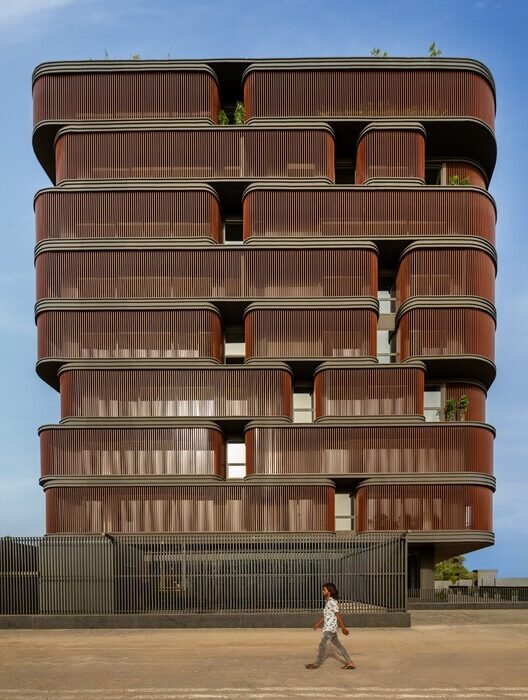
In premium residential architecture, the facade is not just an exterior statement. It also controls daylight, privacy, and heat gain. Screens, recesses, overhangs, and textured surfaces can improve performance while giving a home a distinctive identity.
3. Design should respond to climate
One of the clearest messages emerging in Architecture news is that climate-responsive design is no longer optional. For luxury homes, this means integrating passive strategies that reduce dependence on artificial cooling and lighting while enhancing comfort.
4. Materiality should support experience
Luxury design is shifting away from superficial opulence toward tactile richness. Stone, concrete, wood, metal, and filtered light can be combined to produce calm, sculptural environments. The result is a home that feels curated rather than crowded.
The firm’s relevance across luxury categories
The appeal of Sanjay Puri Architects extends beyond architecture professionals. Their design language intersects naturally with several lifestyle categories:
- Luxury Architecture: Bold forms and site-driven planning create standout buildings.
- Luxury Design: Spatial innovation becomes the foundation for elevated living.
- Luxury Home: Residential projects benefit from privacy, light control, and experiential layouts.
- Luxury Decor: Strong architectural backdrops allow decor choices to feel intentional and restrained.
- Luxury Home Decor: Minimal yet expressive interiors pair well with sculptural envelopes and curated materials.
This crossover is one reason the studio remains relevant to readers who track both design culture and upscale living trends. Their work suggests that the future of luxury lies in integration—where architecture, interiors, climate strategy, and lifestyle planning operate as one cohesive idea.
Why firms like this matter in Architecture news
In a crowded media environment, Architecture news can sometimes overemphasize novelty. Firms like Sanjay Puri Architects deserve attention because they point to a deeper shift in the profession. Architecture is becoming more experiential, more climate-aware, and more tailored to user needs without losing visual ambition.
That is especially significant in regions where environmental conditions are demanding and urban settings are complex. A practice that can turn these realities into design opportunities offers a compelling model for contemporary luxury architecture.
For readers, designers, and homeowners alike, the lesson is clear: memorable spaces are not created by expensive materials alone. They emerge from thoughtful planning, contextual sensitivity, and a willingness to rethink how buildings are lived in every day.
Conclusion
As a standout name in Architecture news, Sanjay Puri Architects illustrates how contextual thinking and expressive form can come together to redefine luxury. Their work shows that great design is not merely about appearance—it is about shaping atmosphere, comfort, and experience in ways that feel both intelligent and unforgettable. For anyone interested in luxury architecture, luxury home design, or the future of elevated living, this is a practice worth watching closely.