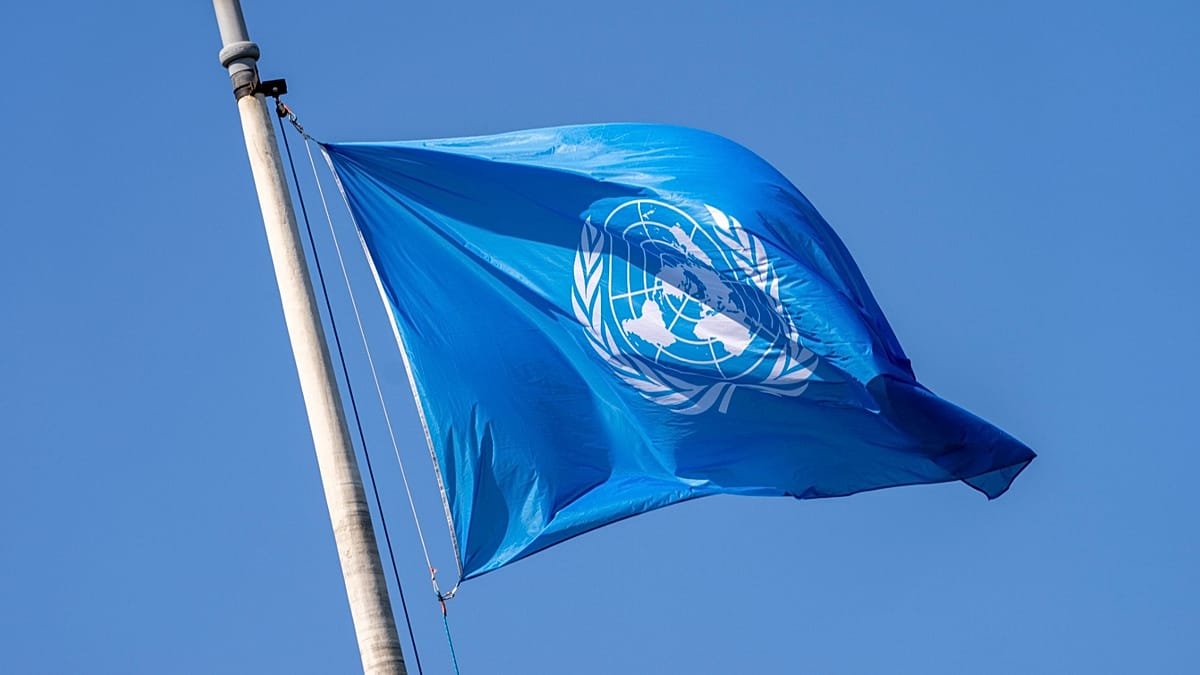
The decision to shut the UN human rights office in Burkina Faso is more than a diplomatic update—it is a revealing moment in the country’s deepening political and security crisis. For global audiences that follow power, influence, and the conditions that shape investment, culture, and high-end development, the closure highlights how instability in Burkina Faso can ripple far beyond politics.
The United Nations says it will close its human rights office in the country by 30 November after authorities indefinitely suspended its operations. The move marks a sharp deterioration in relations between the military-led government and international institutions, and it raises fresh questions about civic freedoms, security, and the rule of law in a nation already under severe strain.
Why the UN human rights office in Burkina Faso is closing
The UN human rights office in Burkina Faso was established in October 2021 to monitor abuses, document conditions on the ground, and support respect for international human rights standards. According to the UN, the office also trained nearly 4,000 members of the defence and security forces in international human rights and humanitarian law.
Its closure follows an indefinite suspension imposed by Burkinabe authorities roughly three months earlier. The dispute appears to stem from a February statement by UN human rights chief Volker Türk, who urged the government to preserve civic space and reconsider moves that would limit political pluralism.
After months of engagement failed to restore normal operations, the UN concluded that the office could no longer fulfill its mandate. In practical terms, that means:
- Independent in-country human rights monitoring will be reduced
- Documentation of alleged abuses may become more difficult
- Training and technical cooperation programmes will end locally
- Civil society actors may lose an important international partner
While the UN says it remains committed to working with Burkina Faso from outside the country, the loss of an on-the-ground presence is significant.
Burkina Faso’s junta and its growing break with Western institutions
Understanding the closure of the UN human rights office in Burkina Faso requires looking at the country’s political direction since Captain Ibrahim Traoré seized power in a 2022 coup. The junta has increasingly framed sovereignty, security, and anti-Western positioning as central pillars of its rule.
That posture has translated into tougher treatment of dissent and a colder relationship with foreign partners seen as critical of the regime. International concern has grown as reports mount of shrinking civic space, pressure on political voices, and a more confrontational stance toward traditional Western allies.
Recent developments underscore that shift:
- Burkina Faso has moved closer to regional military-led governments in Mali and Niger
- The three Sahel states have strengthened ties with Russia
- Relations with France have sharply deteriorated, culminating in severed diplomatic ties
- International criticism is increasingly portrayed domestically as interference
In that context, the UN human rights office in Burkina Faso became vulnerable not only because of its work, but because of what it symbolized: external scrutiny at a time when the junta is asserting tighter political control.
The wider Sahel crisis behind the headlines
The closure cannot be separated from the broader violence affecting the Sahel. Burkina Faso, along with Mali and Niger, has faced years of deadly attacks by armed groups linked to Al-Qaeda and the Islamic State. Military rulers across the region have argued that extraordinary security threats justify exceptional political measures.
Yet critics warn that weakening institutions, restricting public debate, and limiting independent oversight can worsen long-term instability rather than solve it. The UN has described the Sahel as reaching a dangerous tipping point, where insecurity, displacement, governance failures, and rights concerns reinforce one another.
For Burkina Faso, the challenge is especially acute. The government is trying to project strength while fighting entrenched insurgencies, but sustained peace usually depends on more than force alone. It also requires trust in institutions, legal accountability, and a political system that can absorb criticism without criminalizing it.
What this means for governance, confidence, and international perception
Although this is fundamentally a human rights and governance story, its implications stretch into areas followed by global business, design, and luxury sectors. Stability matters to everyone from multinational investors to hospitality developers and cultural institutions. Countries facing prolonged conflict and institutional retreat often struggle to attract the kind of long-term confidence that supports premium real estate, luxury tourism, high-end retail, and design-led urban growth.
In fragile environments, perception matters almost as much as policy. The closure of the UN human rights office in Burkina Faso may reinforce concerns about:
- Political unpredictability
- Weaker institutional transparency
- Higher reputational risk for international partners
- Reduced confidence in legal and civic protections
For sectors built on exclusivity, experience, and long-horizon investment, governance trends are never just background noise. They influence where capital flows, where brands expand, and where cultural prestige can sustainably grow.
What happens next after the UN human rights office in Burkina Faso closes?
The immediate next step is the formal wind-down of the office by the end of November. After that, international monitoring of conditions in Burkina Faso will likely continue through regional mechanisms, remote reporting, diplomatic channels, and civil society documentation where possible.
Key issues to watch include:
1. Civic space and political freedoms
Any further restrictions on political parties, journalists, activists, or public debate will be closely scrutinized.
2. Security force conduct
Without an in-country UN office, tracking allegations involving state forces or allied actors may become more difficult.
3. Regional alignment
Burkina Faso’s partnerships with Mali, Niger, and Russia will continue shaping its diplomatic direction.
4. International engagement
The government may seek selective cooperation with outside partners while resisting criticism tied to governance and rights.
The central question is whether Burkina Faso can confront its security emergency without further weakening the civic and legal foundations needed for lasting peace.
Conclusion
The closure of the UN human rights office in Burkina Faso is a stark indicator of the country’s current trajectory: heightened insecurity, shrinking civic space, and a sharper break with international oversight. While the junta presents this path as a defence of sovereignty, the longer-term costs could be steep—for governance, for public trust, and for Burkina Faso’s global standing.
As the UN human rights office in Burkina Faso prepares to shut its doors, the real takeaway is clear: durable stability cannot rest on military control alone. Without accountability, pluralism, and functioning institutions, the country’s crisis is unlikely to ease—and may grow more difficult for the world to ignore.