Diplomacy rarely moves in straight lines, and the latest US-Iran Qatar talks are a case in point. While no breakthrough has been announced, separate meetings in Doha have produced enough momentum for both sides to agree to keep talking—a modest but meaningful sign at a moment when regional tensions, shipping risks, and energy market volatility remain dangerously high.
Although the story sits firmly in geopolitics, its ripple effects extend into sectors that depend on confidence, cross-border trade, and stable logistics—including luxury brands, luxury decor, and luxury design. When a strategic maritime corridor like the Strait of Hormuz becomes a bargaining chip, the consequences can reach far beyond oil markets and into premium supply chains, materials sourcing, and global consumer sentiment.
What happened in the US-Iran Qatar talks?
The latest round of US-Iran Qatar talks took place in Qatar with mediators from Qatar and Pakistan facilitating separate discussions between the two sides. According to Qatari officials, the meetings made “positive progress,” and both parties agreed that a follow-up session would be scheduled after the funeral ceremonies for Iran’s late supreme leader, Ayatollah Ali Khamenei, begin in Tehran.
The American side reportedly included senior envoy Steve Witkoff and Jared Kushner, while Iran was represented by top negotiator Kazem Gharibabadi. Rather than direct face-to-face bargaining, the format relied on shuttle diplomacy—often used when tensions are too high for open bilateral talks but both sides still want to test possible compromises.
At the center of the discussion is the search for a durable path to de-escalation. The current effort appears focused on an interim maritime arrangement that could create enough stability for broader political negotiations later.
Why the Strait of Hormuz remains the core issue
The US-Iran Qatar talks cannot be understood without the Strait of Hormuz. This narrow waterway is one of the world’s most strategically important shipping lanes, historically carrying a significant share of global oil and natural gas exports. Any uncertainty there immediately affects freight costs, insurance rates, commodity prices, and investor confidence.
The central dispute is not simply whether ships can pass, but under what terms. An interim framework reportedly allowed vessels to transit for 60 days without charges. However, Iran has continued to argue that it should control the routes ships use and, in time, impose passage fees. The United States and several Gulf states reject that position, maintaining that the strait is an international waterway and should remain open under established norms.
This disagreement is more than legal semantics. It reflects competing views of sovereignty, security, and leverage in a region already strained by war and proxy conflict.
Why a grounded vessel matters
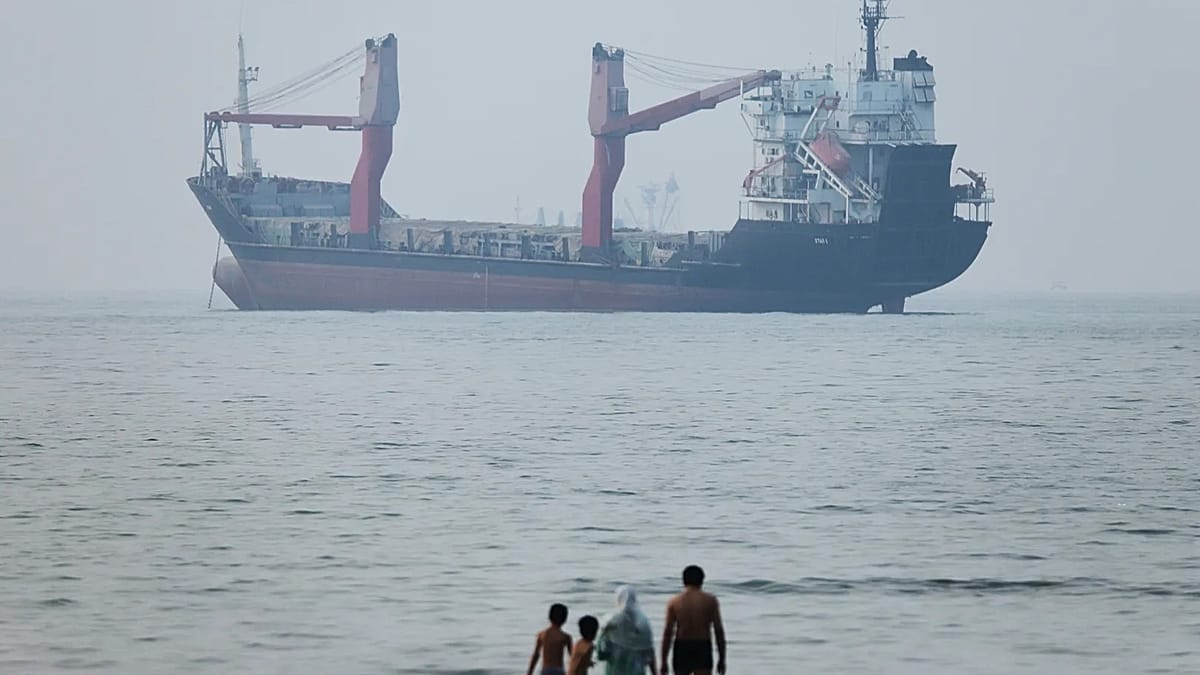
On the same day as the negotiations, Iranian state media reported that a foreign container vessel ran aground while using what Tehran described as an unapproved route through the strait. Even with limited public details, the timing of the report was significant.
The message appeared clear: maritime control remains central to Iran’s negotiating posture. In diplomatic terms, incidents like this can serve several purposes:
- Reinforce territorial claims
- Signal enforcement capacity
- Increase pressure on mediators and commercial stakeholders
- Shape the narrative around who sets the rules at sea
For global markets, even isolated disruptions in the Strait of Hormuz can trigger immediate concern about shipping reliability and supply continuity.
What the next phase of US-Iran Qatar talks could look like
The latest US-Iran Qatar talks ended not with a deal, but with a pledge to continue. That matters. In high-stakes diplomacy, preserving a channel can be as important as announcing a settlement, especially when core disagreements remain unresolved.
The next round will likely focus on a few difficult areas:
- Navigation rules in the Strait of Hormuz — including routing authority and transit fees
- Regional spillover — particularly the conflict dynamics linked to Lebanon
- Interim guarantees — ways to reduce immediate military or commercial escalation
- Political sequencing — whether technical agreements can precede leader-level commitments
Because the talks are indirect, progress may come slowly. Still, the willingness to reconvene suggests neither side wants a complete collapse in diplomacy—at least not yet.
Why luxury brands and luxury design should pay attention
For executives and observers in premium industries, the US-Iran Qatar talks are not a distant foreign policy footnote. Luxury brands, luxury decor houses, and luxury design firms operate in a deeply interconnected commercial ecosystem where geopolitical shocks can reshape margins and market behavior.
Key exposure points include:
- Shipping and logistics: Delays or rerouting around Gulf tensions can raise delivery times and freight costs for high-value goods.
- Raw materials: Energy-intensive manufacturing, specialty finishes, glass, metals, and imported stone can all be affected by higher input costs.
- Consumer confidence: Wealthy buyers often remain resilient, but sustained geopolitical instability can still slow discretionary purchasing.
- Hospitality and real estate: Luxury interiors and branded residences depend on stable international investment flows and predictable project timelines.
In sectors where exclusivity, craftsmanship, and timing are essential, disruptions in energy and shipping can quietly erode profitability even when demand appears intact.
Market psychology matters in premium sectors
Luxury operates on more than product quality—it runs on perception, confidence, and smooth execution. If the Strait of Hormuz becomes a prolonged flashpoint, companies in luxury design and decor may need to reassess sourcing strategies, inventory planning, and regional exposure. The strongest players are often those that build resilience before a full-blown supply shock emerges.
A cautious diplomatic opening, not a resolution
The latest US-Iran Qatar talks suggest that dialogue is still possible despite war, mistrust, and strategic brinkmanship. Yet the core dispute over the Strait of Hormuz remains unresolved, and that means the risk premium hanging over shipping lanes, energy markets, and globally exposed industries is unlikely to disappear soon.
The clearest takeaway is this: the US-Iran Qatar talks have bought time, not certainty. For policymakers, investors, and leaders in luxury brands, luxury decor, and luxury design, now is the moment to watch the next round closely—because what happens in a narrow Gulf waterway can quickly reshape the wider global business landscape.