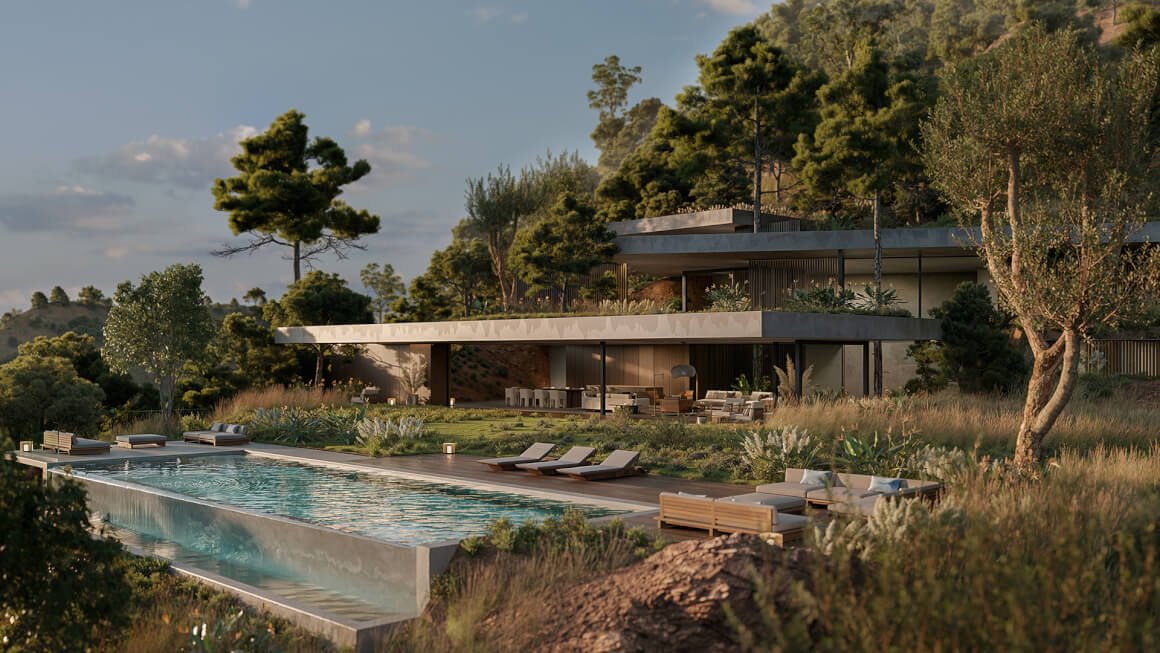
Great homes do not simply sit on the land—they grow from it. That idea is at the heart of iconic architecture, and Villa Almazera offers a compelling example of how topography can become the true foundation of luxury residential design.
Set within a landscape that appears to guide every architectural decision, Villa Almazera reflects a design philosophy in which terrain, views, light, and movement are treated as essential building materials. For readers interested in Luxury Architecture, Luxury Design, and refined Luxury Home concepts, this project demonstrates why site-responsive design continues to define the future of high-end living.
How Iconic Architecture Begins With the Land
The most memorable residences are rarely those imposed on a site without compromise. Instead, iconic architecture often emerges when architects study the natural contours of a property and allow those conditions to shape the plan, massing, and spatial experience.
In the case of Villa Almazera, topography is not treated as an obstacle to be flattened or ignored. It acts as the primary design generator. Changes in elevation influence how the home steps through the site, how rooms connect to the outdoors, and how the building frames long views while maintaining privacy. This approach creates a stronger sense of belonging between structure and setting—something every luxury residence strives to achieve.
Site-led design also brings practical advantages:
- Improved natural light throughout the day
- Better orientation for views and solar control
- Greater privacy without sacrificing openness
- Seamless indoor-outdoor living
- A more sculptural relationship between architecture and landscape
These qualities help explain why terrain-driven homes are increasingly celebrated within contemporary residential architecture.
Villa Almazera as a Lesson in Iconic Architecture and Site Integration
What makes Villa Almazera especially noteworthy is the way its architectural language appears to respond directly to the site rather than compete with it. This is one of the defining marks of iconic architecture: a project feels visually striking not because it is loud, but because it is deeply resolved.
Instead of relying on decorative excess, the home likely builds its identity through proportion, placement, and spatial clarity. Volumes can be arranged to follow the slope, terraces may extend living areas outward, and transitions between solid and open elements can heighten the experience of moving through the house. In luxury homes, this kind of restraint often creates a far more sophisticated result than trend-driven styling.
Topography-based planning also tends to produce a richer sequence of spaces. Arrival areas, courtyards, elevated living rooms, private bedroom wings, and outdoor leisure zones can all unfold gradually as one moves through changing levels. That layered experience is central to high-end residential design, where circulation should feel intentional and cinematic.
Why sloped sites inspire better design
Designing on uneven terrain forces architects to think more carefully about:
- Massing: Breaking the home into volumes that sit comfortably within the landscape
- Access: Creating elegant arrival points despite elevation changes
- Views: Positioning major rooms to capture the strongest sightlines
- Privacy: Using level differences to separate public and private zones
- Outdoor living: Integrating terraces, gardens, pools, and shaded lounges naturally
These moves are often what transform a beautiful house into a destination-worthy piece of iconic architecture.
Luxury Home Design That Feels Rooted, Not Generic
One challenge in global luxury residential design is sameness. Many upscale homes feature premium materials and expansive glazing, yet still feel disconnected from place. Villa Almazera points toward a better model—one where the identity of the home comes from the land itself.
For designers, developers, and homeowners, this is an important reminder: exclusivity is no longer defined only by size or cost. Increasingly, it is defined by originality, environmental sensitivity, and the ability to create a residence that could exist nowhere else.
This philosophy aligns with broader trends in Luxury Decor and bespoke interiors. When architecture responds to site conditions, interiors can follow suit with material palettes, textures, and furnishings that echo the surrounding environment. Stone, timber, muted earth tones, sculptural lighting, and panoramic openings all reinforce a unified design story.
That is where architecture and decor become inseparable. The shell of the building, the route of circulation, the framed landscape views, and the tactile interior finishes work together to produce a complete luxury experience.
Design principles homeowners can learn from Villa Almazera
Even if a project is smaller in scale, several ideas from this approach are widely applicable:
- Study the site before finalizing the floor plan
- Preserve natural contours whenever possible
- Orient living spaces around light and views
- Use terraces and courtyards to connect indoors and outdoors
- Let material choices reflect the surrounding landscape
- Prioritize spatial flow over visual excess
These principles support not just visual impact, but also long-term livability.
The Future of Iconic Architecture in Luxury Living
As residential design evolves, iconic architecture is becoming less about spectacle and more about intelligence. Homes that engage topography, climate, and context in meaningful ways are more likely to stand the test of time—both aesthetically and functionally.
For the luxury market, that shift matters. Discerning clients are looking for homes with a strong architectural narrative, sustainable thinking, and a powerful sense of place. Projects like Villa Almazera show that the terrain itself can supply that narrative, guiding the shape of the home and enriching every daily experience within it.
This design direction also fits the growing demand for residences that feel private, immersive, and emotionally connected to nature. Whether perched on a hillside, embedded into a slope, or terraced across a dramatic site, these homes represent a more thoughtful expression of modern luxury.
If you are exploring new ideas in Luxury Architecture or planning a site-specific residence, Villa Almazera is a strong reminder that the ground beneath a home should never be treated as background. In the best examples of iconic architecture, the land is the concept—and that is precisely what makes the result unforgettable.