

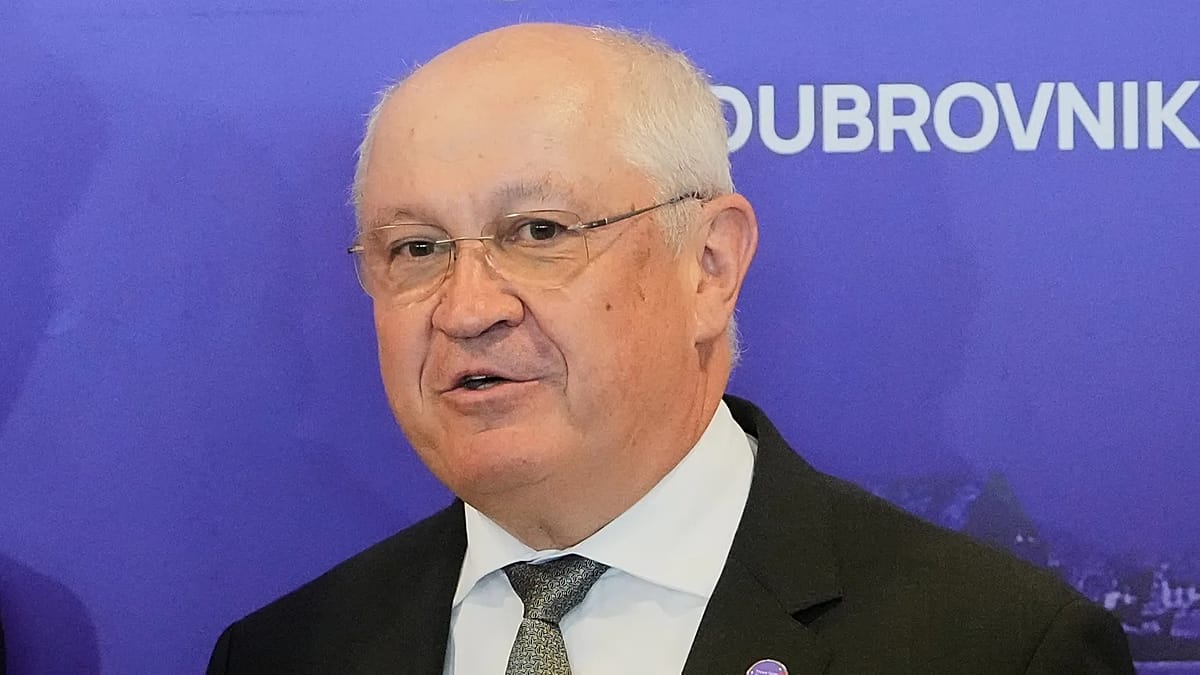
Political transitions can reshape more than government ministries—they can influence investor confidence, development pipelines, and the future of high-end real estate. The news that the Moldovan prime minister resigns after just eight months in office is therefore worth watching not only from a geopolitical angle, but also through the lens of luxury architecture, luxury design, and premium interiors.
Alexandru Munteanu announced his resignation, saying he could no longer fulfill his mandate in line with his principles and convictions. President Maia Sandu responded by confirming that consultations with political parties will begin to select a new prime minister, while stressing that Moldova’s broader direction—reforms and EU accession—remains unchanged.
For design-led sectors, this moment matters. Political stability, regulatory consistency, and reform momentum often play a decisive role in attracting capital for boutique hotels, upscale residential projects, heritage restorations, and contemporary mixed-use developments. As the Moldovan prime minister resigns, the country’s design and property ecosystem enters a period of close observation.
Why the Moldovan Prime Minister Resigns Matters to Luxury Architecture
When the Moldovan prime minister resigns, the immediate headlines focus on governance. Yet for architects, developers, and interior specifiers, the deeper question is how leadership change affects project confidence.
Munteanu, who took office in November 2025, came from a finance and investment background, including roles at the National Bank of Moldova, the World Bank, and private investment firm 4i Capital Partners. That profile had signaled a potentially pragmatic environment for economic management. His departure introduces short-term uncertainty, especially as Moldova continues balancing domestic reform with its EU ambitions.
In luxury architecture, uncertainty can affect:
- Cross-border investment in residential and hospitality developments
- Timelines for planning approvals and public-private partnerships
- Confidence in infrastructure upgrades that support premium real estate
- Demand for imported finishes, bespoke furnishings, and specialist craftsmanship
Still, President Sandu’s message was designed to reassure markets. By reiterating Moldova’s commitment to reform and EU accession, she signaled continuity in the country’s strategic trajectory even as the Moldovan prime minister resigns.
Moldova’s Evolving Luxury Design Landscape
Moldova may not yet dominate conversations around European luxury design, but it has several qualities that make it increasingly interesting: layered architectural history, a growing entrepreneurial class, and an opportunity to define a fresh design identity tied to regional craft and contemporary living.
Heritage Meets Modern Refinement
One of Moldova’s strongest design advantages is its architectural mix. From Soviet-era urban fabric to neoclassical details and vernacular rural structures, the country offers a wide palette for adaptive reuse and sophisticated restoration.
In premium design circles, that often translates into opportunities such as:
- Transforming historic buildings into boutique hospitality spaces
- Elevating traditional materials through modern interior applications
- Creating minimalist luxury residences with strong local character
- Reviving artisanal workmanship in wood, stone, textiles, and metal
If reform momentum holds, international designers may increasingly view Moldova as a market where authenticity and value intersect.
Investor Sentiment and Design-Led Development
Whenever the Moldovan prime minister resigns, investors reassess risk. In luxury development, sentiment matters because high-end projects are often discretionary rather than purely essential. Buyers and backers look for confidence in rule-making, procurement transparency, and long-term economic direction.
The source reporting also notes controversy around MoldATSA, Moldova’s state-owned air navigation service provider, amid media scrutiny over inflated salaries. While that issue is separate from architecture, governance controversies can influence how international capital prices risk across sectors.
For luxury developers, the key indicators to watch now include:
- The speed of appointing a new prime minister
- The tone of coalition consultations and political consensus
- Whether reform messaging remains consistent
- Signals from EU accession discussions
- The broader business climate for investment and construction
How Political Stability Shapes Luxury Interiors
Luxury interiors depend on more than aesthetics. They are tightly linked to supply chains, import conditions, skilled labor access, and buyer confidence. As the Moldovan prime minister resigns, designers working on premium homes, hospitality concepts, or branded residences will be evaluating whether the policy environment remains supportive.
High-end interiors in emerging European markets often rely on a hybrid sourcing model:
- Local artisans for custom millwork and decorative detailing
- Regional suppliers for stone, lighting, and specialist surfaces
- Western European brands for kitchens, fixtures, and furniture
When political continuity is preserved, these ecosystems can mature quickly. Moldova’s potential lies in pairing international luxury standards with local material culture, producing interiors that feel both elevated and rooted in place.
What Comes Next After the Moldovan Prime Minister Resigns?
President Sandu has made clear that party consultations will begin quickly, and she strongly rejected claims that Munteanu had been prevented from acting against abuses. Her public stance suggests an effort to contain speculation and project institutional control.
For those in luxury architecture and luxury interiors, the practical takeaway is measured caution rather than alarm. One resignation does not erase a market’s long-term potential, especially if a clear reform agenda remains in place. In fact, periods of political transition sometimes create a sharper focus on modernization, transparency, and international positioning—all of which can benefit design-conscious sectors.
Moldova’s appeal will likely depend on whether it can turn policy continuity into tangible conditions for development: reliable governance, improved infrastructure, and greater openness to investment. If that happens, the country could become increasingly attractive for boutique real estate, curated hospitality, and high-end residential design.
Conclusion
The fact that the Moldovan prime minister resigns is significant far beyond politics. For luxury architecture, luxury design, and luxury interiors, leadership changes can influence everything from investment appetite to the pace of premium development. Yet Moldova’s broader reform narrative appears intact, and that continuity may prove more important than the resignation itself.
The clearest takeaway is this: as the Moldovan prime minister resigns, Moldova enters a short period of uncertainty, but its long-term design potential will be defined by what happens next—stable governance, credible reforms, and the confidence to build beautifully at a higher level.