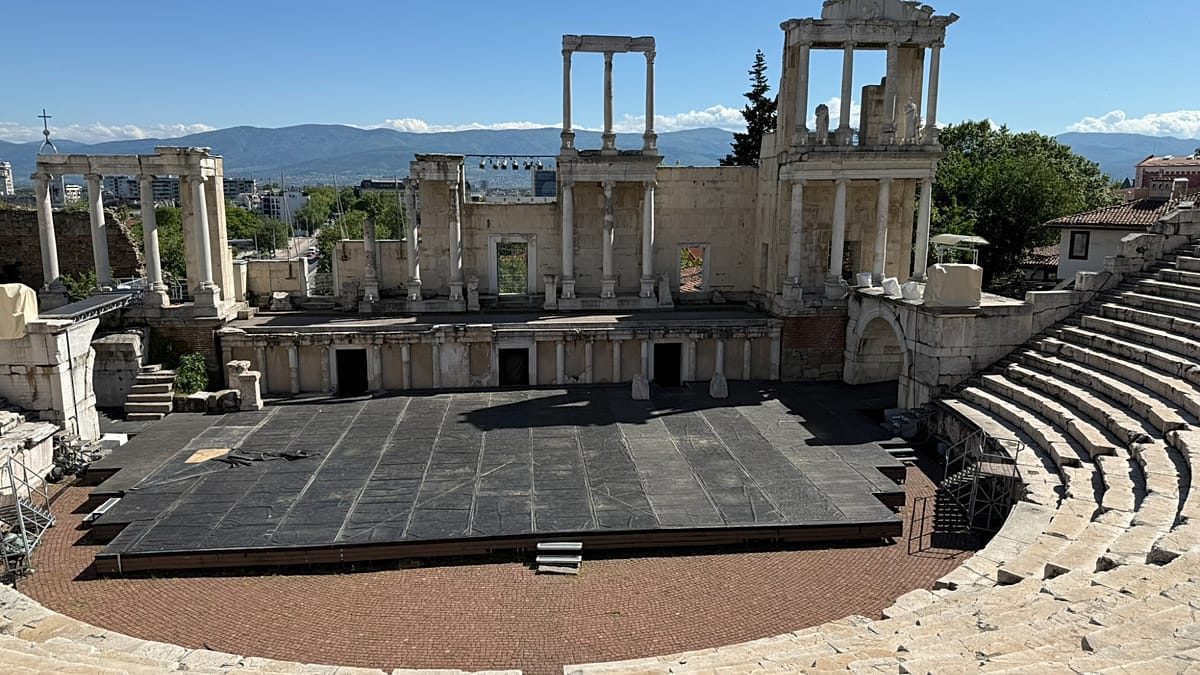
Plovdiv travel guide searches are about to surge—and for good reason. Bulgaria’s second city blends Roman archaeology, Bulgarian Revival mansions, Ottoman landmarks and a quietly sophisticated creative scene, making it a compelling destination for travellers drawn to luxury architecture, luxury design and storied interiors.
Often overshadowed by Europe’s bigger-name heritage cities, Plovdiv offers something rarer: world-class history without the heavy crowds. As the oldest continuously inhabited city in Europe, it layers Thracian, Macedonian, Roman, Byzantine, Ottoman and Bulgarian influences into one remarkably walkable destination. If you have just two days, this Plovdiv travel guide will help you experience its most elegant cultural highlights, from amphitheatres and hillside ruins to beautifully preserved 19th-century houses.
Why Plovdiv deserves a place on every design-led itinerary
The appeal of Plovdiv lies in its contrasts. Monumental Roman remains sit minutes from intimate cobblestone lanes. Ottoman architecture meets richly decorated Bulgarian Revival homes. Minimal contemporary bars in Kapana coexist with archaeological sites that date back thousands of years.
For travellers interested in built heritage, this city is especially rewarding because it reveals how architecture evolves across empires. A smart Plovdiv travel guide is not just about ticking off landmarks—it is about understanding how form, ornament and urban life have shaped one place over millennia.
- Ancient prestige: Roman theatre, stadium and layered archaeological zones
- Design value: painted ceilings, carved woodwork and period furnishings in historic homes
- Cultural atmosphere: independent galleries, craft-driven food spots and creative nightlife
- Manageable scale: ideal for a 48-hour city break
Plovdiv travel guide: what to see in 48 hours
1. Start with the Stadium of Philippopolis
Begin on the city’s main pedestrian spine, where the remains of the ancient Stadium of Philippopolis emerge dramatically beneath the modern streetscape. Built in the 1st century AD, the stadium once held around 30,000 spectators for athletic contests and gladiatorial events.
Only a section is visible today, but that partial reveal is part of its fascination. It is an urban palimpsest: Roman engineering embedded beneath shops, cafés and daily city life. Any strong Plovdiv travel guide should include this stop first because it instantly introduces the city’s defining theme—history layered into the present.
2. Explore the Old Town’s Bulgarian Revival houses
Plovdiv’s Old Town is the architectural heart of the city. Its winding cobbled streets are lined with some of the finest Bulgarian Revival houses in the country, many painted in soft earth tones or deep jewel shades and crowned with symmetrical facades, bay windows and decorative interiors.
Among the most notable are:
- Hindliyan House – admired for its preserved interior décor and period atmosphere
- Balabanov House – known for its elegant proportions and cultural exhibitions
- Stambolyan House – a refined example of elite 19th-century domestic design
- Nedkovich House – another key stop for architectural detail lovers
For readers seeking luxury interiors inspiration, this is where Plovdiv shines. The houses reveal a domestic design language shaped by trade wealth, craftsmanship and a love of ornament, from painted walls to carved ceilings and carefully arranged reception spaces. In any curated Plovdiv travel guide, these homes are essential.
3. Visit the Ancient Theatre of Philippopolis
The Ancient Theatre is one of Plovdiv’s most extraordinary landmarks and among the best-preserved Roman theatres in the world. Originally used between the 1st and 5th centuries, it was rediscovered in the 20th century and later restored as a performance venue.
By day, the site offers commanding views and an appreciation of Roman urban planning. By night, it returns to its original purpose through concerts and seasonal performances, including summer opera events. The combination of archaeology and live culture gives this monument unusual vitality.
If your itinerary allows, book a performance. A Plovdiv travel guide focused on experience—not just sightseeing—should always recommend seeing the theatre in use.
4. Discover Dzhumaya Mosque
To understand Plovdiv fully, look beyond the Roman legacy. Dzhumaya Mosque provides a striking window into the city’s Ottoman period. Rebuilt in the 15th century on an earlier religious site, it is one of the Balkans’ notable early Ottoman monuments.
Its alternating brick-and-stone construction reflects the crosscurrents of Byzantine and Bulgarian influence, making it particularly interesting for architecture enthusiasts. Modest dress is required if entering, but even from the exterior, the building adds depth to the city’s visual identity.
5. Climb Nebet Tepe for sunset
Nebet Tepe is both an archaeological complex and one of the best viewpoints in Plovdiv. The hill contains traces of settlement dating back to prehistory, along with fortification remnants from multiple eras.
Come in the late afternoon and stay for sunset. The elevated perspective makes it easy to grasp how the city expanded across its historic hills and why this site was strategically important for centuries. In this Plovdiv travel guide, Nebet Tepe is the ideal reflective finale to a day of intensive cultural exploration.
Where to eat and drink: Kapana’s creative energy
No modern Plovdiv travel guide is complete without Kapana, the former craftsmen’s district turned creative quarter. Revitalised in recent years, it now channels the city’s design-forward side through independent restaurants, bars and cafés.
Places often recommended include:
- Cat and Mouse for craft beer
- Mekitsa and Coffee for a traditional fried dough treat in a casual setting
- Fresh Pasta for an easy, satisfying meal
- The Turtle House for a post-dinner drink
Kapana is less about formal luxury and more about cultivated atmosphere—small-scale, creative and stylish. It is the contemporary counterpoint to the grandeur of the Old Town.
How to get to Plovdiv
Plovdiv is accessible enough for a short break yet still feels under-the-radar. Direct flights connect the city with selected European airports, while Sofia is a practical gateway for many travellers. From the Bulgarian capital, Plovdiv can be reached in roughly two hours and 15 minutes by bus or just under three hours by train.
That ease of access makes this Plovdiv travel guide especially relevant for travellers planning a long weekend centred on heritage, architecture and interiors rather than a rushed day trip.
Final thoughts: why Plovdiv stands out
The best reason to follow a Plovdiv travel guide is simple: few European cities offer this much architectural depth in such a compact, elegant setting. Plovdiv combines Roman spectacle, Ottoman legacy, Revival-era domestic beauty and a fresh creative scene without losing its sense of authenticity.
For lovers of luxury architecture, luxury design and evocative interiors, it is a destination that rewards slow looking. Go now, before the secret is fully out, and give yourself at least 48 hours to let the city’s layers unfold.