

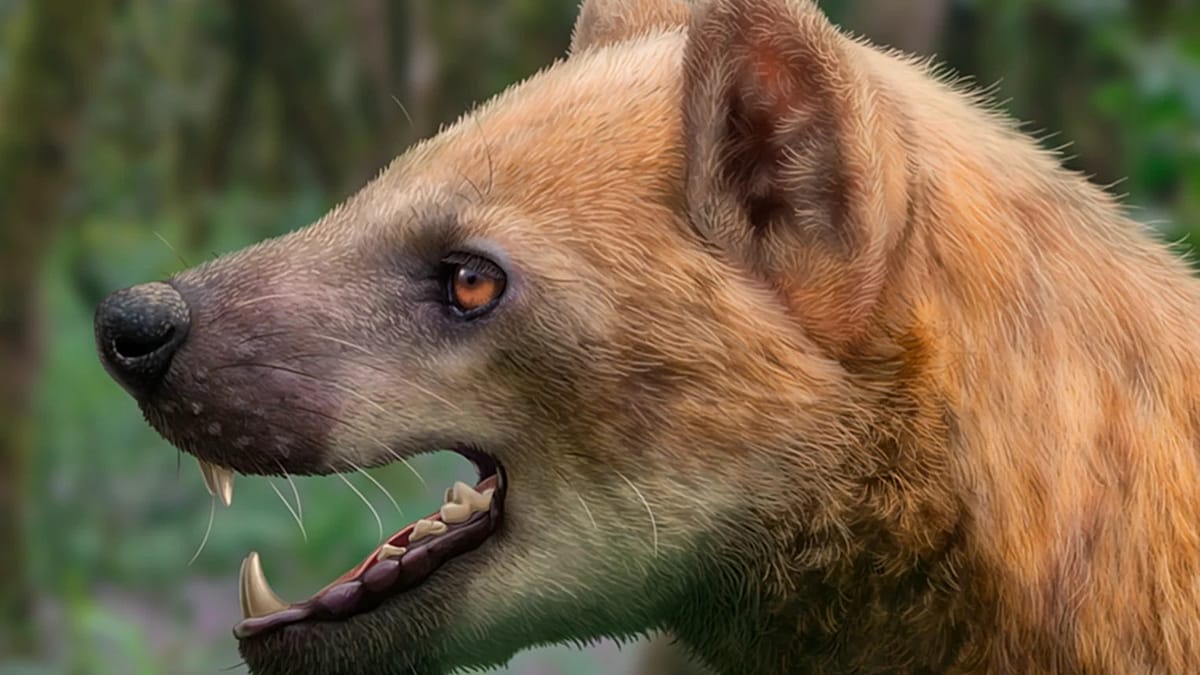
A remarkable bear-dog discovery in Catalonia is opening a fresh window onto a world that feels surprisingly relevant to today’s design imagination. Far beyond paleontology, this find evokes an ancient setting of tropical lagoons, layered ecosystems, and dramatic natural forms that continue to inspire luxury architecture, luxury design, and luxury interiors.
Spanish scientists have identified a previously unknown amphicyonid species, Paludocyon moyasolai, from fossil remains discovered at Els Casots in Subirats, near Barcelona. While the animal lived around 15.9 million years ago during the Miocene, the story behind this discovery is also a story about place: how landscapes shape life, how preservation depends on environment, and how natural history can influence the aesthetic language of refined spaces today.
The Bear-Dog Discovery in Catalonia: Why It Matters
The newly described species belongs to the extinct amphicyonids, often called “bear-dogs” because they combined certain dog-like and bear-like characteristics without being true members of either group. Researchers concluded that the fossil skull, first unearthed in the 1990s, represented an entirely new species after closer reassessment began during doctoral work in 2014 and was confirmed through recent study.
Named in honor of paleontologist Salvador Moyà-Solà, Paludocyon moyasolai is now a standout find from Els Casots, one of Europe’s most important Miocene fossil sites. The animal was not a giant apex predator. Instead, it appears to have been a medium-sized carnivore, roughly the size of a large dog and likely weighing between 50 and 70 kilos.
What makes this bear-dog discovery in Catalonia especially important is the quality of the fossil material. The preserved skull, substantial dentition, and an isolated lower molar gave scientists enough evidence to distinguish it from previously known species in the same genus.
A Prehistoric Catalonia Shaped by Water, Forest, and Survival
The landscape this animal inhabited was dramatically different from modern-day Catalonia. Around 15.9 million years ago, the region was home to a shallow lagoon bordered by tropical forest. Crocodiles, snakes, fish, and a broad range of mammals shared the habitat, creating a dense and competitive ecosystem.
For design-minded readers, that environmental picture is compelling. It suggests a prehistoric geography defined by:
- Reflective water surfaces and wetland textures
- Lush forest canopies and layered greenery
- Dense biodiversity with dynamic predator-prey balance
- Natural sediment and mud systems that aided preservation
These elements are not just scientific details. They echo many of the materials, tones, and spatial concepts now associated with biophilic luxury interiors and site-sensitive architecture. Organic layering, earthy palettes, and the interplay between water and structure remain central to high-end residential and hospitality design.
How Fossils Inform Luxury Architecture and Design Thinking
At first glance, a Miocene carnivore may seem far removed from luxury architecture. Yet the bear-dog discovery in Catalonia highlights the enduring importance of landscape memory, material history, and ecological context—all increasingly influential in premium design sectors.
1. Place as a design narrative
Luxury spaces are no longer defined by finishes alone. Increasingly, they are shaped by story. A site with deep geological and ecological heritage can inspire architecture that feels rooted rather than generic. Catalonia’s fossil-rich terrain reinforces the value of designing with regional identity in mind.
2. Natural forms drive timeless aesthetics
The Miocene setting of Els Casots offers a masterclass in composition: water, forest, open clearings, and wildlife interaction. Today, designers translate similar principles into interiors through curved forms, tactile stone, rich woods, bronze accents, and layered organic textures.
3. Preservation has design parallels
The fossils survived because bodies became trapped in mud and were protected from decay. In a different sense, architecture also depends on preservation—of materials, heritage, and environment. Adaptive reuse, sustainable sourcing, and climate-responsive construction all reflect that same respect for long-term endurance.
What Scientists Learned From Paludocyon moyasolai
The research team determined that this animal likely had a varied diet. Its unusually developed posterior molars suggest it was a mesocarnivore, meaning it ate meat but was not exclusively dependent on large prey. It probably hunted small to medium-sized animals such as primitive deer, bovids, and ancestral pigs.
That dietary flexibility matters because it helps scientists understand how carnivores coexisted in the Miocene. The same fossil site also yielded evidence of a second, much larger amphicyonid species that has not yet been formally described.
In broader Miocene carnivore research across Spain, scientists have used stable isotope analysis on fossil tooth enamel to reconstruct diets and habitat use. This method allows researchers to identify:
- What prey animals likely consumed
- Whether species hunted in forests or more open landscapes
- How strongly carnivores competed with one another
- How fauna adapted to environmental change over time
The bear-dog discovery in Catalonia adds an earlier chapter to that larger story, helping refine the evolutionary tree of amphicyonids and deepening our understanding of extinction, adaptation, and ecological competition.
Why This Discovery Resonates Beyond Science
There is a reason discoveries like this capture public imagination. They reconnect us with landscapes that existed long before cities, roads, and buildings. For professionals and enthusiasts in luxury design, that connection can be more than poetic—it can be practical.
Ancient ecosystems remind us that the most compelling environments are multi-sensory and layered. They balance openness with shelter, drama with restraint, and beauty with functionality. Those same principles define exceptional luxury interiors and architecture today.
From lagoon-inspired reflective surfaces to forest-toned materials and sculptural forms shaped by nature, prehistoric environments continue to influence modern creative direction. Catalonia, already renowned for architectural innovation, now also offers a vivid prehistoric reference point.
Conclusion: The Bear-Dog Discovery in Catalonia as a Design Inspiration
The bear-dog discovery in Catalonia is more than a paleontological milestone. It is a reminder that every landscape carries hidden layers of identity, and that the deepest design inspiration often comes from nature’s oldest stories. As scientists piece together the Miocene world of Paludocyon moyasolai, architects and designers can take note: the past still shapes how we imagine beauty, place, and permanence.
In that sense, this bear-dog discovery in Catalonia offers both scientific value and creative fuel—proof that even a fossil skull can transform the way we see landscapes, heritage, and the spaces we build today.