

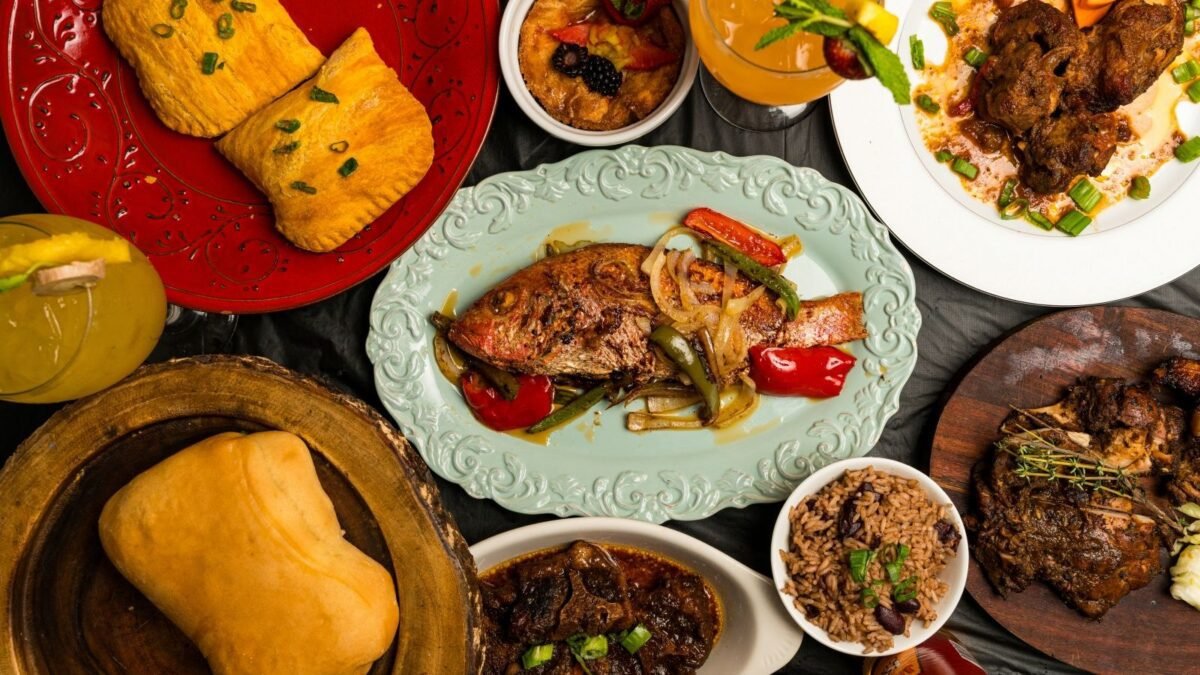
Behind the region’s most beloved plates lies a far more complicated story than sunshine and spice. For Irish readers discovering Caribbean foods with dark and unexpected histories, these dishes reveal how luxury dining traditions can trace their roots to empire, migration, resistance, and survival.
Today, many of these recipes appear on refined tasting menus, in luxury restaurants, and in design-led home kitchens across Ireland. Yet their origins are tied to sugar plantations, enslavement, indenture, and colonial rule—proof that food heritage is often as layered as flavour itself.
Caribbean Foods with Dark and Unexpected Histories: 10 Dishes That Tell a Bigger Story
1. Black cake
This rich celebration cake evolved from British fruitcake, but Caribbean cooks transformed it with rum-soaked fruit and dark sugar linked to the colonial sugar trade.
2. Roti
Now a staple from Trinidad to modern food halls in Ireland, roti arrived through Indian indentured labour after slavery, carrying traditions that adapted to Caribbean ingredients.
3. Saltfish
Salt cod was imported as cheap plantation provision before becoming central to Jamaica’s national dish, ackee and saltfish.
4. Conkies
In Barbados, these banana-leaf parcels outlived Guy Fawkes celebrations and were absorbed into the island’s own independence season.
5. Jerk
Jerk’s story reflects Taíno knowledge, African culinary memory, and Maroon resistance in Jamaica’s interior.
6. Bammy
This cassava flatbread preserves Indigenous expertise in safely preparing a root that can be toxic if mishandled.
7. Souse
Once built from unwanted pork cuts assigned to the enslaved, souse became a proud Barbadian tradition.
8. Garlic pork
Guyanese garlic pork points to Portuguese migration from Madeira during major labour shifts in the post-emancipation era.
9. Rum
Rum’s glamorous image obscures its deep connection to plantation sugar and slavery.
10. Soup joumou
Perhaps the most powerful of all Caribbean foods with dark and unexpected histories, Haiti’s soup joumou turned exclusion into a national symbol of freedom.
Why This Matters for Ireland’s Food Culture
- It adds depth to Caribbean-inspired menus in Ireland
- It helps luxury dining audiences appreciate origin and context
- It shows how cuisine can preserve memory as much as taste
The real lesson of caribbean foods with dark and unexpected histories is simple: great dishes are not only delicious, they are historical records. For chefs, diners, and cultural readers in Ireland, understanding these stories brings far greater meaning to every plate.