Ireland Travel is often defined by castles, coastal drives, and postcard villages, but some of the island’s most unforgettable experiences lie underground. Just outside Kilkenny City, Dunmore Cave offers a rare blend of natural spectacle, archaeological intrigue, and Viking-era history that makes it one of Ireland’s most compelling luxury travel detours.
Set in County Kilkenny near Ballyfoyle, Dunmore Cave is a limestone cave system formed more than 300 million years ago. Though relatively compact at around a quarter mile of passages, it descends roughly 150 feet below ground and delivers an atmospheric journey through dramatic chambers, calcite formations, and one of the darkest legends in Irish history. For travelers planning an elevated Ireland Travel itinerary, this is the kind of off-the-beaten-path experience that adds depth, story, and exclusivity to a classic Kilkenny visit.
Why Dunmore Cave Deserves a Place on Your Ireland Travel Itinerary
Dunmore Cave stands apart because it combines three experiences in one destination:
- Geological beauty shaped over millions of years
- Archaeological significance tied to human remains and Viking-era discoveries
- Myth and medieval history preserved in Irish annals and folklore
Many travelers come to Kilkenny for its castle, food scene, and elegant countryside stays. Adding Dunmore Cave creates a richer sense of place, especially for those who want Ireland Travel experiences that feel distinctive rather than predictable. It is ideal for curious visitors who appreciate heritage, guided interpretation, and memorable settings beyond the usual tourist trail.
A 300-Million-Year-Old Natural Wonder in County Kilkenny
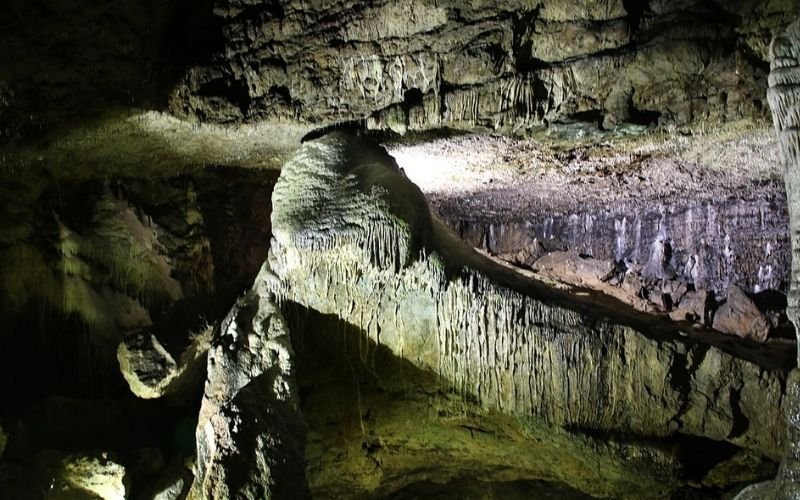
Dunmore Cave was formed in limestone over an immense geological timescale, and today it is celebrated for some of the most striking calcite formations in Ireland. As visitors descend via stairs and walkways, the cave reveals an otherworldly interior of mineral deposits, columns, and textured rock surfaces dramatically enhanced by modern lighting.
The Market Cross and Other Highlights
The standout feature is the famous Market Cross, a towering calcite column rising about 19 feet high. Its distant cross-like shape gives it an almost sculptural presence, making it one of the cave’s signature sights. Visitors may also spot evidence of former bat habitation, including small skeletal remains encased in calcite, which adds another layer of natural history to the experience.
For travelers interested in geology, cave tourism, or unusual Irish attractions, Dunmore Cave proves that Ireland Travel can be every bit as dramatic below ground as it is along the Wild Atlantic coast.
The Dark History Behind Dunmore Cave
Dunmore Cave is not only beautiful; it is also deeply tied to Ireland’s medieval past. Early Irish sources referred to the cave as Dearc Fearna, or the Cave of the Alders, and it appears in the 9th-century Triads of Ireland as one of the three darkest places on the island. That reputation became even more chilling in later historical records.
The Viking Massacre of 928 AD
According to the Annals of the Four Masters, Dunmore Cave was the site of a massacre in 928 AD. The account describes how raiders associated with Viking Dublin attacked and plundered Dearc Fearna, killing a vast number of people sheltering there. Whether approached as history, memory, or legend shaped by the annals, the event has defined the cave’s enduring mystique.
This fusion of beauty and brutality is part of what makes the site so compelling for cultural Ireland Travel. It is not merely a scenic stop; it is a place where landscape and story are inseparable.
Archaeology and Rediscovery
Modern understanding of Dunmore Cave has been built over centuries of observation and excavation. One of the earliest written descriptions came from Bishop George Berkeley, who visited as a boy and later documented the cave in detail. In the 19th century, physician Arthur Wynne Foot, together with Reverend James Graves and Peter Burtchaell, investigated the cave and recorded significant human remains.
More recently, archaeology added yet another dimension to the site. In 1999, a hoard of 43 silver and bronze objects was found in the cave, including silver ingots and finely woven conical buttons dated to around 970 AD. These discoveries strengthened Dunmore Cave’s connection to Viking-age Ireland and elevated its importance for historians and visitors alike.
For those seeking meaningful Ireland Travel experiences, this is where heritage tourism becomes immersive: every chamber feels linked to a deeper timeline of geology, faith, conflict, and survival.
What to Expect When Visiting Dunmore Cave
Dunmore Cave lies about 6.8 miles from Kilkenny City, making it an easy addition to a refined County Kilkenny day trip. Admission is by guided tour only, which enhances the visit by providing context around the cave’s geology, folklore, and archaeological finds.
Visitor Essentials
- Location: Near Ballyfoyle, County Kilkenny
- Access: Guided tours from the visitor centre
- Opening: Generally open seven days a week, with tours starting from 9:30 am
- Terrain: Stairs and walkways throughout the cave
- Accessibility: Not wheelchair-accessible
Because the cave visit is structured and intimate, it works especially well for luxury-minded travelers who value curated experiences over crowded attractions. Pair it with a boutique hotel in Kilkenny, a private food tour, or a countryside drive for a polished Ireland Travel itinerary that balances culture and comfort.
How to Add Dunmore Cave to a Luxury Kilkenny Escape
If you are planning a premium stay in southeast Ireland, Dunmore Cave fits naturally into a slower, more intentional style of travel. Consider combining your visit with:
- A stay at a heritage hotel or upscale country house near Kilkenny
- A private guided tour of Kilkenny Castle and medieval mile
- Fine dining focused on local produce and Irish craft beverages
- A scenic drive through the Kilkenny countryside and nearby artisan villages
This approach transforms a simple cave stop into a layered Ireland Travel experience centered on story, design, and place. Rather than rushing between landmarks, you engage with one of Ireland’s most intriguing hidden gems in a way that feels thoughtful and memorable.
Conclusion: A Different Side of Ireland Travel
Dunmore Cave offers a side of Ireland Travel that many visitors miss: ancient, atmospheric, and rich with legend. With its extraordinary calcite formations, archaeological discoveries, and haunting Viking history, it is one of County Kilkenny’s most fascinating attractions. If you want your next Irish journey to go beyond the expected, Dunmore Cave is the kind of unforgettable detour that turns a good itinerary into a remarkable one.