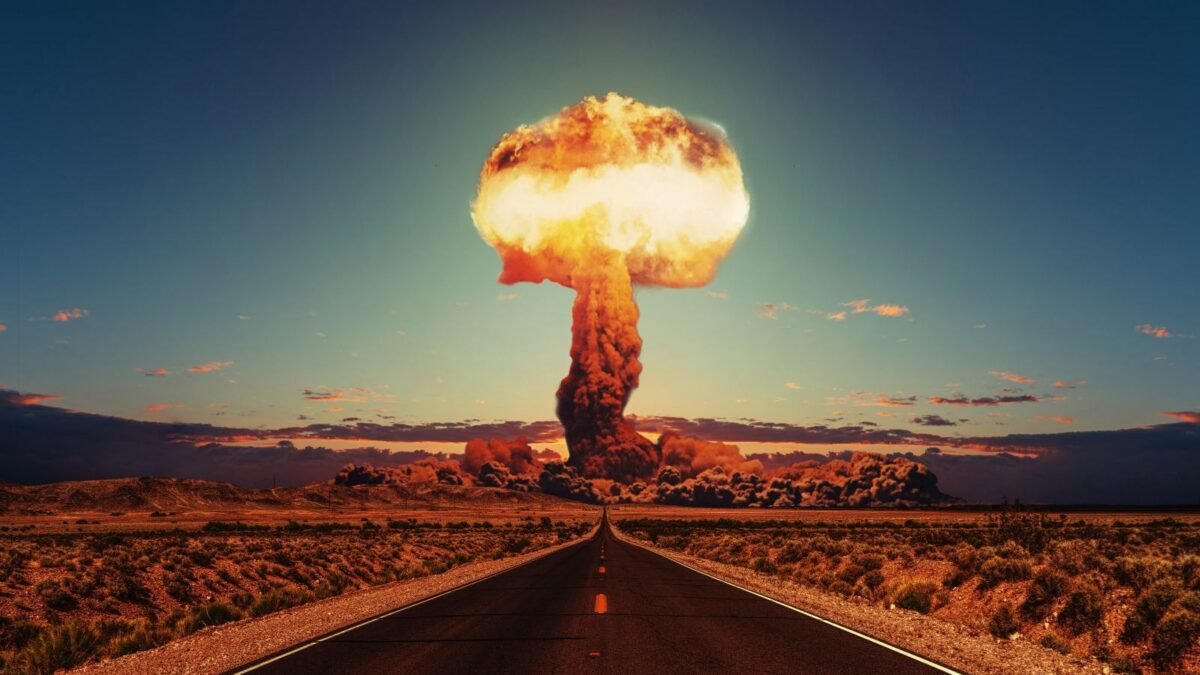
Nuclear fallout was never meant to become a long-term global archive, yet that is exactly what happened. In this remarkable countdown, the hidden legacy of atomic testing reveals itself in ice, coral, wildlife, and even forensic science—an unexpectedly gripping subject for readers who usually browse ireland travel inspiration or curate a best luxury travel bucket list for 2026.
While this story sits far from the world of luxury travel ireland, it offers the same kind of fascination found in the most memorable journeys: the discovery that places and objects carry histories far beyond what we see on the surface. Here are ten of the strangest ways nuclear testing still leaves detectable fingerprints across the planet.
How Nuclear Fallout Became a Global Time Stamp
Atmospheric nuclear tests in the 1950s and early 1960s released radioactive isotopes that spread through air, oceans, soil, plants, animals, and human bodies. Scientists now call one of the most important markers the “bomb pulse,” a spike in carbon-14 that functions almost like a timestamp.
That timestamp has become useful in surprising fields:
- Climate and atmospheric research
- Marine science
- Wildlife conservation
- Criminal investigations
- Archaeology and age estimation
For readers planning best places to visit in ireland or comparing best luxury destinations, this is a reminder that every landscape preserves clues—some far more unsettling than scenic.
Top 10 Unexpected Clues Left Behind by Nuclear Testing
1. Antarctic ice preserved Pacific bomb fallout
Ice cores from East Antarctica contain chlorine-36 linked to hydrogen bomb tests in the Pacific. That means fallout traveled astonishing distances before being locked into snowfall.
2. Caribbean coral recorded tests like annual rings
Coral skeletons captured bomb-produced uranium-236, creating a year-by-year ocean record that now helps researchers study water movement and contamination pathways.
3. Honey still carries traces from Cold War testing
Researchers found cesium-137 in many North American honey samples. The levels are considered too low to threaten health, but the persistence shows how fallout lingers in ecosystems for decades.
4. German wild boars still test radioactive
Wild boar contamination in Bavaria is not only a Chernobyl story. Studies suggest older weapons testing also contributes, especially through fungi and truffles that absorb cesium from soil.
5. Seized heroin can be dated with the bomb pulse
Because poppies absorbed altered carbon-14 levels, scientists can estimate when narcotics were produced—useful in separating fresh production from old stockpiles.
6. Elephant tusks expose poaching timelines
Ivory can be tested against the bomb-pulse curve to estimate when an elephant died, helping authorities challenge false claims about “old” legal stock.
7. Baby teeth became evidence of fallout exposure
Nearly 300,000 donated baby teeth from children in St. Louis helped track strontium-90 levels, showing how deeply atmospheric testing entered daily life through food and milk.
8. Unidentified human remains can be narrowed by date
Carbon signatures in teeth and tissue help forensic teams estimate year of birth or death, turning the nuclear age into an unexpected investigative tool.
9. Brain cells revealed their lifespan
Scientists used bomb-pulse dating to show that some neurons in the adult human brain are as old as the individual, changing how researchers understand cell turnover.
10. A Greenland shark turned out to be centuries old
Radiocarbon analysis of eye-lens proteins showed that some Greenland sharks may live for several centuries, making them among the longest-lived vertebrates ever studied.
Why This Story Resonates Beyond Science
The enduring impact of nuclear testing is a lesson in unintended consequences. Whether your interests lean toward top 10 ireland travel experiences, best scenic drives in ireland, best private tours ireland, or the refined world of best 5 star hotels ireland and best luxury hotels ireland, this story speaks to a universal truth: history leaves material traces, often in the least expected places.
It is also why modern travelers increasingly seek depth alongside comfort, from ireland luxury vacation packages and luxury ireland tours to thoughtfully curated cultural itineraries by best premium travel agencies.
Conclusion
The most striking part of this list is not just that nuclear tests changed the world, but that their evidence still survives in ordinary and extraordinary places alike. For anyone drawn to discovery—whether through science stories or ireland travel planning—the takeaway is clear: the past never disappears completely; it settles into the world and waits to be found.