





Harry Kane’s Match-Winning Drama: Leadership, Pressure and the Design of England’s Escape
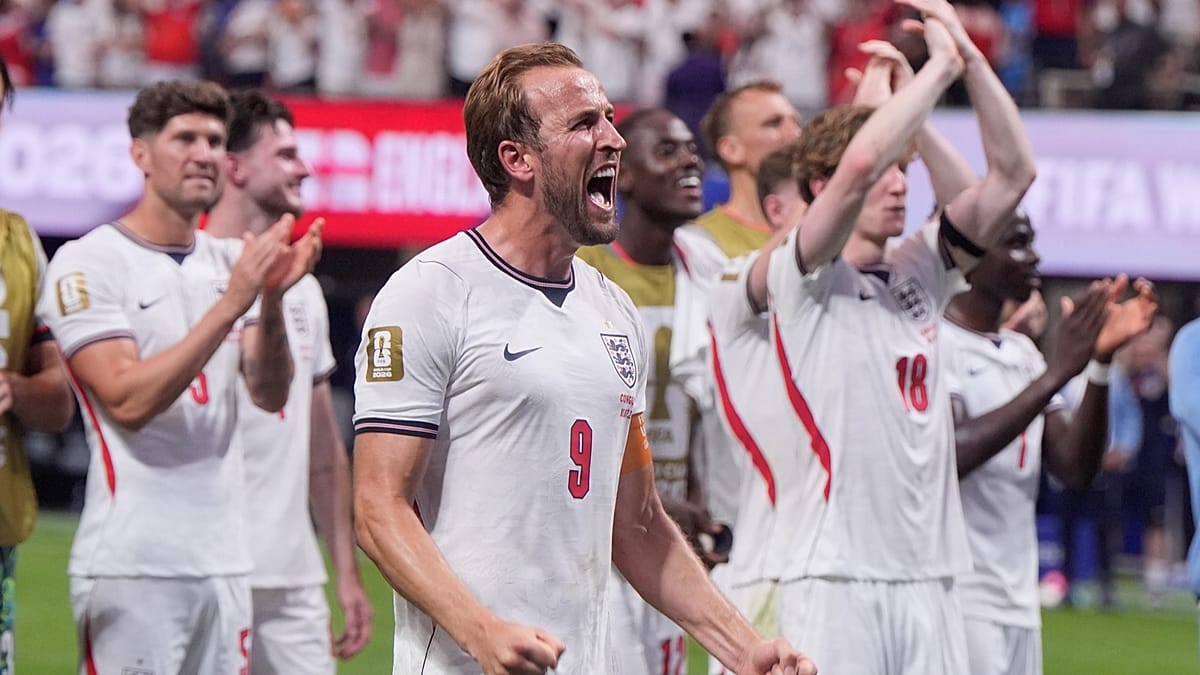
In tournament football, one moment can change everything. Harry Kane delivered exactly that kind of turning point as England survived a major scare against DR Congo, producing a comeback that revealed not just elite finishing, but the architecture of leadership under pressure.
England’s 2-1 victory in Atlanta was anything but routine. After falling behind early, Thomas Tuchel’s side looked vulnerable, tense and dangerously close to a shocking exit. Yet Harry Kane once again became the decisive figure, scoring twice late in the match to send the Three Lions into the World Cup round of 16 and set up a high-profile clash with Mexico.
Harry Kane rescues England in a high-pressure World Cup test
The game started in the worst possible fashion for England. DR Congo stunned the favorites with an early goal from Brian Cipenga after just seven minutes, immediately shifting the emotional balance of the contest. England had more of the ball and gradually applied pressure, but the underdogs stayed organized and forced the Three Lions into a frustrating evening.
As the match wore on, England needed a figure capable of imposing calm and quality in the decisive moments. Harry Kane answered that call. In the 75th minute, he met Anthony Gordon’s cross with a crucial header to level the score. Then, with the match drifting toward extra time, Kane struck again in the 86th minute with a superb finish into the top corner.
The comeback underlined several themes that define top-level knockout football:
- Patience when the game state turns hostile
- Leadership from experienced players
- Depth and impact from the bench
- Clinical finishing when chances finally arrive
- Mental resilience after an early setback
For England, the result mattered as much psychologically as tactically. Surviving this kind of scare can sharpen a team for the rounds ahead.
How Harry Kane changed the match
Composure in the defining moments
What separates elite strikers from very good ones is often not volume of chances, but clarity under pressure. Harry Kane demonstrated that distinction in both goals. His equalizer was classic center-forward play: intelligent movement, timing and a precise header. His winner, by contrast, showcased technique and authority, struck with conviction when the stakes were highest.
Kane’s own post-match comments reflected England’s mindset. He described the team’s need to keep going and trust that their moment would come. That message captured the emotional rhythm of the game: not panic, but persistence.
A captain built for tournament football
Harry Kane’s influence extends beyond scoring. He provides structure to England’s attacking play, offers a focal point under pressure and sets the emotional tone for teammates. With five goals at this World Cup and a growing record in major tournaments, he continues to define England’s modern era on the biggest stage.
His latest brace also strengthened a remarkable body of work in international football. More importantly, it reinforced a familiar truth: when England need a solution, Harry Kane is still the player most likely to provide it.
Thomas Tuchel’s England passed a resilience test
While the spotlight naturally falls on Harry Kane, this result also says plenty about Thomas Tuchel’s team. England did not play a flawless match, and for long spells they lacked sharpness in the final third. But they kept control of their belief, continued to push and were rewarded late.
Tuchel pointed to the team’s response after the poor start, emphasizing how England regained territory and momentum as the game developed. His substitutes also played an important role, helping shift the tempo and sustain attacking pressure.
Key takeaways from England’s performance include:
- Response to adversity: Conceding early could have triggered panic, but England stayed in the contest.
- Attacking persistence: The equalizer came from repeated pressure rather than a single isolated chance.
- Squad contribution: Fresh legs and tactical adjustments helped unlock the game late on.
- Big-player delivery: Harry Kane turned a dangerous situation into a winning one.
That combination of belief, tactical flexibility and elite finishing is often what carries teams deep into World Cups.
Why this win matters before England face Mexico
The reward for England is a round-of-16 showdown with co-hosts Mexico at the iconic Estadio Azteca. It is the kind of fixture that defines World Cup narratives: historic venue, passionate atmosphere and no shortage of pressure. After this escape act, England will know they must raise their level.
At the same time, narrow victories can become the foundation for title-chasing campaigns. Teams that go far in knockout tournaments often survive one chaotic, uncomfortable match that forces them to reveal their character. England may look back on this game as exactly that.
Against Mexico, several factors will be critical:
- Stronger concentration in the opening stages
- More fluid chance creation from wide areas
- Better control against transitions
- Continued reliance on Harry Kane’s finishing and leadership
The challenge is obvious, but so is the opportunity. If England pair their attacking talent with a cleaner overall performance, they remain one of the most dangerous sides left in the competition.
Harry Kane and the value of proven stars
Modern football often celebrates systems, pressing structures and tactical innovation. All of that matters. But matches like this are a reminder that tournaments are still shaped by players who can own the moment. Harry Kane did exactly that against DR Congo.
His two goals were not simply statistics; they were interventions of authority. He rescued England from one of the biggest shocks of the tournament and transformed a night of anxiety into one of relief and renewed ambition. For a team with serious World Cup hopes, that kind of intervention can be priceless.
As England prepare for the next round, the central lesson is clear. Talent alone is never enough in knockout football. Belief, patience and decisive leadership matter just as much. And when those qualities are needed most, Harry Kane remains England’s most reliable answer.
In the end, Harry Kane was the difference, the captain who steadied the structure when it threatened to crack. If England are to build a genuine path toward the latter stages, they will need more nights like this from Harry Kane — dramatic, decisive and impossible to ignore.