

Milan’s Urban Animal Parliament Reimagines Biodiversity in Luxury Architecture
What if the future of luxury architecture were shaped not only by human taste, but also by the species that share our cities? Milan’s latest civic experiment suggests that high-end design, urban prestige and ecological intelligence may soon become inseparable.
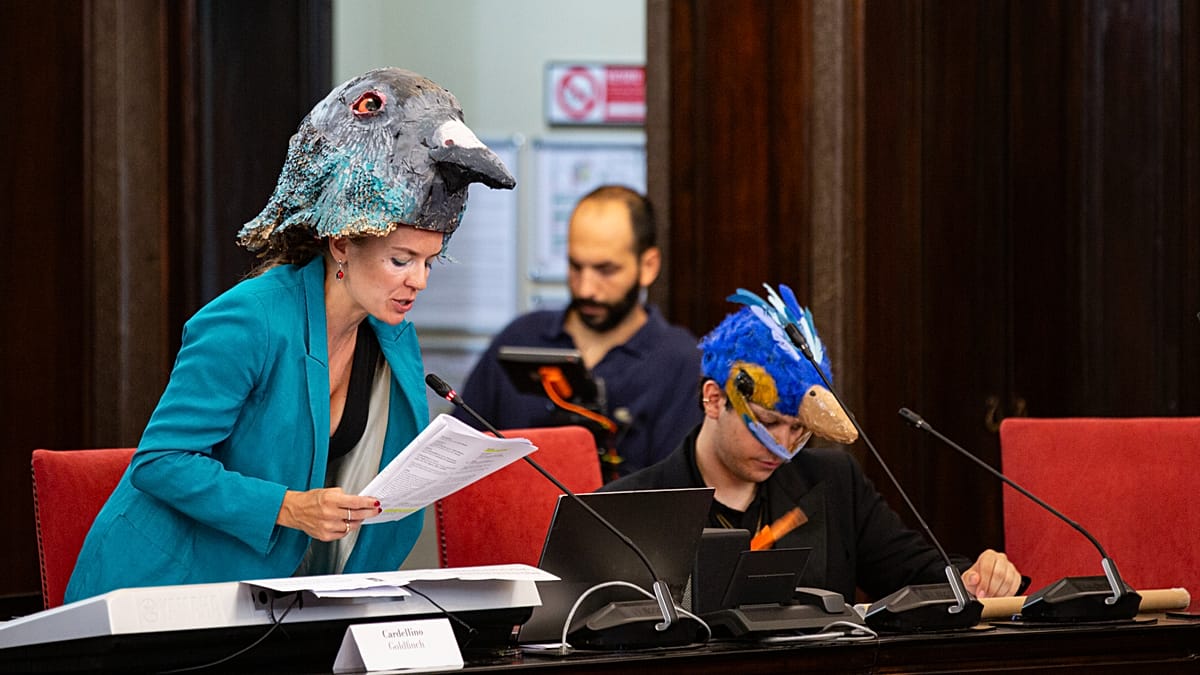
At Milan City Hall, an imaginative new forum called the Urban Animal Parliament invited pigeons, frogs, foxes, beetles, swifts and other urban species into the planning conversation. Represented by masked human speakers, these animals became symbolic participants in debates about demolition, infrastructure, waterways and public space. While theatrical in format, the message was serious: cities cannot claim design excellence if they ignore biodiversity.
For readers focused on luxury architecture, luxury design and luxury interiors, the significance runs deeper than a charming headline. This initiative points to a new standard of urban sophistication—one where elegant buildings, heritage restorations and premium public spaces are judged not just by appearance, but by how well they support life.
Why the Urban Animal Parliament Matters for Luxury Architecture
The Urban Animal Parliament reframes architecture as part of a living ecosystem rather than a standalone object. In a design capital like Milan, that has major implications. It suggests that future-forward developments must consider migratory birds, small mammals, aquatic species and pollinators alongside human residents, visitors and investors.
This shift aligns with broader trends in luxury architecture, where exclusivity is being replaced by a more nuanced idea of value:
- Environmental performance is now central to prestige.
- Adaptive reuse is more desirable than wasteful demolition.
- Landscape integration adds both beauty and resilience.
- Biodiversity-conscious planning signals cultural leadership.
In practical terms, a building’s luxury status may increasingly depend on whether it creates habitat, preserves ecological corridors or reduces conflict between urban growth and wildlife.
From Theatrical Concept to Design Strategy
The Milan initiative emerged from a collaboration between the Urban Planning Laboratory of the Polytechnic University of Milan, the Piccolo Teatro di Milano and the City of Milan. It also builds on the earlier Animals in the City project presented in Paris, developed by designer Andrea Branzi and architect Stefano Boeri.
Boeri, widely associated with vertical forest design, has long argued that cities should be conceived for multiple species. The Urban Animal Parliament turns that philosophy into a public planning tool, using performance and storytelling to expose the hidden consequences of urban development.
Among the issues raised were:
- The proposed demolition of San Siro Stadium, which serves as nesting habitat for swifts.
- The need for green corridors instead of additional surface parking.
- The reopening of Milan’s Navigli canals and its mixed effects on different species.
- The ecological potential of abandoned sites and neglected structures.
These are not fringe concerns. They sit at the intersection of mobility, heritage, waterfront design, public policy and sustainable real estate—core topics in contemporary luxury development.
Biodiversity as a Marker of Refined Urban Design
For decades, premium architecture often celebrated control: polished surfaces, rigid edges and highly managed landscapes. Today, the most compelling luxury design increasingly embraces complexity, seasonality and coexistence.
The Urban Animal Parliament highlights a simple truth: a city rich in biodiversity is often more beautiful, more breathable and more enduring. Green roofs, planted façades, reopened waterways, shaded courtyards and habitat-sensitive lighting are no longer just sustainability features. They are design assets.
How this influences luxury projects
- Residential architecture: High-end housing can integrate nesting spaces, native planting and quieter microhabitats without compromising elegance.
- Hospitality design: Luxury hotels increasingly use biophilic interiors, water features and ecological landscaping to deliver wellness and distinction.
- Cultural buildings: Museums, theatres and civic landmarks can become biodiversity anchors through retrofitting and landscape design.
- Mixed-use districts: Premium developments benefit from ecological connectivity that improves livability and long-term value.
In this context, biodiversity becomes part of the sensory experience of luxury interiors and exteriors alike: birdsong from a courtyard, filtered daylight through layered planting, natural cooling from restored water systems and richer material storytelling tied to place.
The Case for Adaptive Reuse Over Demolition
One of the most compelling ideas connected to the Urban Animal Parliament is the reuse of abandoned sites as biodiversity hubs. Organisers pointed to the former Marchiondi Spagliardi complex, a notable brutalist structure in Milan, as an example of how neglected architecture might be reimagined for ecological and civic value.
This reflects a powerful principle in luxury architecture: heritage and sustainability are strongest when they work together. Restoring buildings rather than replacing them can protect embodied carbon, preserve cultural memory and create new habitats.
Why adaptive reuse is gaining prestige
- It blends historical character with contemporary design excellence.
- It supports lower-impact development models.
- It opens opportunities for curated landscapes and ecological restoration.
- It creates emotionally resonant spaces that feel authentic, not generic.
For architects and developers, this approach offers a smarter definition of exclusivity—one rooted in rarity, stewardship and longevity.
What Designers and City Leaders Can Learn
The broader lesson of the Urban Animal Parliament is that urban quality must be measured across species. A city designed only for human convenience is often less healthy, less resilient and ultimately less desirable.
Luxury design professionals can translate this idea into action by prioritising:
- Native planting palettes and pollinator-friendly landscapes
- Bird-safe glass and façade detailing
- Continuous green corridors between parks and waterways
- Sensitive lighting that reduces disruption to nocturnal species
- Restoration of canals, wetlands and underused urban edges
These interventions do more than protect wildlife. They elevate the identity of a project and future-proof its relevance in an era when buyers, cities and institutions increasingly expect environmental intelligence.
Conclusion: A New Luxury Defined by Coexistence
Milan’s Urban Animal Parliament may have used humor and performance to make its point, but the underlying message is transformative. The next chapter of luxury architecture will not be defined solely by rare materials, iconic silhouettes or prestigious addresses. It will also be defined by whether buildings and neighborhoods make room for life in all its forms.
For architects, interior designers and urban visionaries, that is the real takeaway: the most sophisticated spaces of the future will be those that merge beauty, heritage and biodiversity. In that sense, the Urban Animal Parliament is more than a civic curiosity—it is a blueprint for a more intelligent, more humane and more luxurious city.