

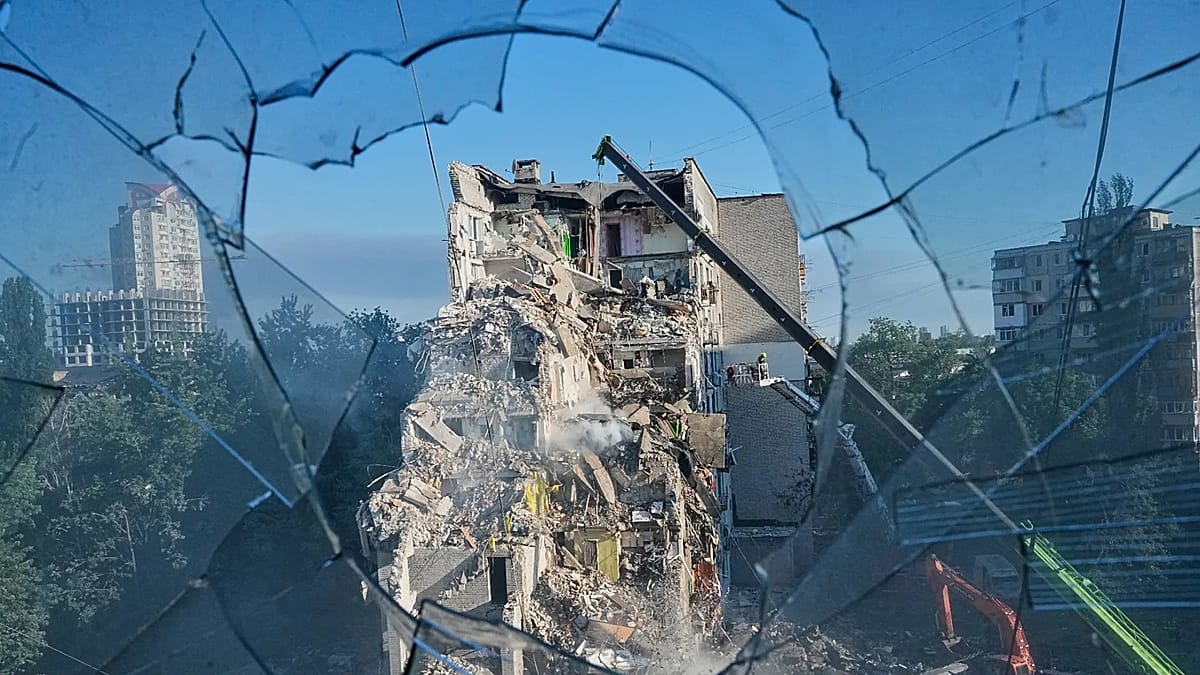
Security is no longer a back-of-house concern in premium real estate. As geopolitical instability intensifies across Europe, EU sanctions on Russian drone makers are becoming relevant far beyond foreign policy circles, influencing how architects, designers, and developers think about resilience, privacy, and the future of high-end spaces.
The European Union’s latest move follows a wave of deadly strikes on Kyiv and signals a sharper focus on the military-industrial networks behind drone warfare. While the sanctions are political in nature, their ripple effects touch adjacent industries, including luxury architecture, luxury design, and luxury interiors, where safety technology, secure materials, and discreet defensive planning are increasingly part of the conversation.
Why EU Sanctions on Russian Drone Makers Matter
According to reports from Brussels, the new measures will target entities tied to Russia’s military-industrial complex, specifically firms involved in manufacturing components for Shahed- and Geran-type drones. EU foreign policy chief Kaja Kallas said the bloc would continue raising pressure on Moscow after massive overnight strikes on Kyiv killed and injured civilians.
Rather than waiting for a broader sanctions package, the EU is reportedly using a rolling mechanism to fast-track new listings. That procedural shift matters. It suggests a more agile sanctions architecture, one designed to respond quickly to battlefield developments and supply-chain intelligence.
For observers in the design and property sectors, this is significant for three reasons:
- It reinforces that aerial threats are now a persistent European security concern.
- It may tighten access to drone components, surveillance systems, and dual-use technologies across the region.
- It raises the profile of protective design in luxury residential and hospitality projects.
Luxury Architecture in an Age of Aerial Risk
Traditionally, luxury architecture has emphasized openness: panoramic glazing, expansive terraces, rooftop amenities, and seamless indoor-outdoor living. But in a world where drones can be used for surveillance, disruption, or worse, architects are being pushed to balance transparency with protection.
The discussion around EU sanctions on Russian drone makers underscores a broader reality: built environments must now account for new categories of risk. For elite homes, embassies, branded residences, and ultra-luxury hotels, this could reshape design priorities in subtle yet important ways.
Design shifts already gaining relevance
- Layered privacy: Landscaped buffers, screened courtyards, and recessed terraces offer beauty while limiting visibility from above.
- Advanced glazing: High-performance laminated glass can improve both acoustic comfort and impact resistance.
- Protected rooftop design: Rooftops may evolve from exposed leisure decks into more controlled, multifunctional spaces.
- Integrated monitoring: Sensor-based perimeter systems can be embedded discreetly into architecture without undermining aesthetics.
- Resilient materials: Façade systems and structural choices may increasingly factor in durability under stress scenarios.
None of this means luxury will become bunker-like. Instead, the future likely belongs to projects that conceal resilience within elegant, highly livable environments.
Luxury Interiors and the Rise of Discreet Security
The luxury interiors market has long prized serenity, comfort, and effortless functionality. Those values remain unchanged, but the toolkit is expanding. As EU sanctions on Russian drone makers keep attention on modern conflict technologies, affluent clients are showing greater interest in interiors that support continuity during emergencies.
In practice, that can mean:
- Backup energy and air systems hidden within custom millwork or service cores
- Safe rooms designed as refined lounges, dressing suites, or private offices
- Acoustic treatments that enhance both comfort and privacy
- Smart-home controls with secure, redundant communication layers
- Interior layouts that provide protected internal circulation
The most sophisticated projects do not advertise these features. In luxury design, visible security can feel intrusive. The goal is to integrate preparedness so seamlessly that it becomes part of the home’s elegance rather than a disruption of it.
Sanctions, Supply Chains, and High-End Design Specification
Another reason EU sanctions on Russian drone makers matter to the architecture and interiors world is supply-chain scrutiny. Sanctions often trigger more rigorous due diligence around sourcing, components, compliance, and vendor relationships. For developers of premium projects, that can influence procurement decisions for everything from building systems to surveillance technology.
What developers and designers may watch closely
- Technology provenance: Where smart sensors, control systems, and security hardware originate
- Compliance exposure: Whether suppliers have links to sanctioned entities or restricted trade networks
- Lead times: How geopolitical friction affects delivery of specialist systems
- Replacement strategies: Whether European-made alternatives can meet luxury performance standards
This trend aligns with a wider movement in luxury construction toward trusted sourcing, transparency, and regional manufacturing. Clients at the top end of the market increasingly want not just beauty, but certainty.
The New Definition of Luxury Resilience
In premium real estate, resilience is becoming a design language of its own. It includes physical security, yes, but also independence, continuity, and peace of mind. The conversation sparked by EU sanctions on Russian drone makers highlights how quickly geopolitical events can influence expectations around the built environment.
For architects and interior designers, the challenge is nuanced. They must preserve openness, craftsmanship, and emotional warmth while embedding technologies and planning principles once associated mainly with critical infrastructure.
The most forward-looking luxury projects may increasingly feature:
- Discreet hardening of vulnerable zones
- Private wellness and refuge spaces
- Redundant utilities and communications
- Landscape design that improves both beauty and perimeter control
- Holistic security planning from concept stage onward
This is especially relevant in urban penthouses, diplomatic residences, coastal villas, and trophy assets where visibility, symbolism, and privacy are all heightened.
Conclusion
The immediate purpose of EU sanctions on Russian drone makers is to increase pressure on the networks enabling attacks on civilians. But the implications reach further, sharpening Europe’s focus on aerial threats, supply-chain trust, and resilient infrastructure. For luxury architecture, luxury design, and luxury interiors, the takeaway is clear: the next era of premium living will not be defined by aesthetics alone, but by how intelligently beauty and security work together.