

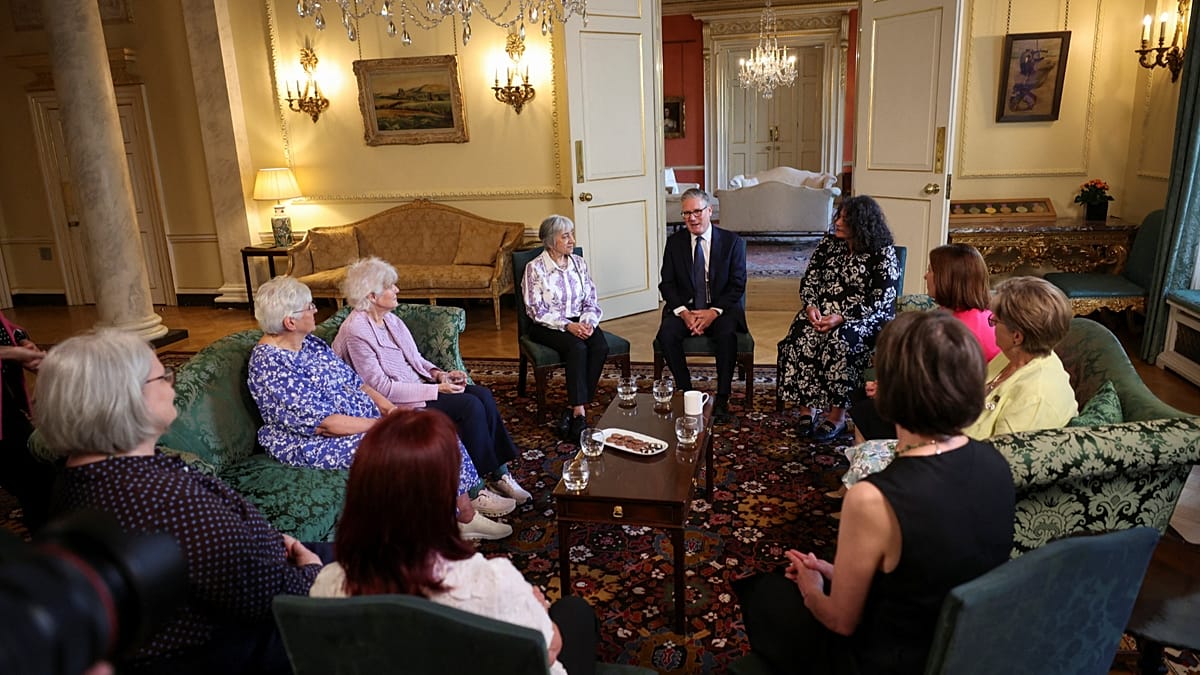
Architecture is never neutral. The spaces society builds to shelter, discipline, conceal, or care for people often outlast the policies that created them. Keir Starmer’s state apology for the UK’s forced adoption practices has reopened a painful historical chapter, but it also invites a broader conversation about how institutional design shaped the lives of vulnerable women and children for decades.
While the story is rooted in politics, justice, and social history, it also speaks directly to luxury architecture, luxury design, and luxury interiors: the built environment reflects cultural values. When institutions were used to hide unmarried pregnant women from public view, architecture became part of a system of control. Today, designers and architects increasingly argue that spaces must do the opposite — restoring dignity, privacy, comfort, and emotional safety.
Keir Starmer’s State Apology and Why It Matters
UK Prime Minister Keir Starmer formally apologised for the state’s role in decades of forced adoptions involving babies born to unmarried mothers in England and Wales. Between 1949 and 1976, around 185,000 babies were adopted, with many mothers later saying they were pressured, misled, coerced, or shamed into surrendering their children.
The apology marked a significant policy shift. Previous UK leadership had resisted taking responsibility, arguing that the state had not actively backed the practices. Starmer instead acknowledged that public systems, local authorities, health services, and faith-based or voluntary institutions operated within a framework that enabled these outcomes.
His message was clear: these were not isolated incidents but deeply embedded practices. That distinction matters because it places responsibility not only on individual actors but on the institutions, environments, and social structures that normalised harm.
How Architecture Supported Institutional Power
To understand the deeper cultural significance of Keir Starmer’s state apology, it helps to look beyond legislation and into the spaces where these experiences unfolded. Many unmarried pregnant women were sent away to maternity homes, religious institutions, or other facilities designed to keep them out of sight. These places were often presented as protective, but for many women they functioned as instruments of silence and stigma.
The hidden geography of shame
Institutional environments can reinforce social exclusion in subtle yet powerful ways. Common spatial features historically associated with such systems included:
- Remote or secluded locations that separated women from family and community
- Strictly controlled circulation and limited private space
- Clinical or austere interiors that discouraged emotional comfort
- Rules embedded into spatial design, from supervised rooms to restricted access points
In this sense, architecture did not merely house a policy problem; it helped operationalise it. Luxury design professionals today often discuss emotional architecture, sensory wellbeing, and human-centred planning. These ideas gain even more weight when viewed against historical examples of spaces that denied autonomy and compassion.
From Institutional Interiors to Human-Centred Design
If older systems used architecture to conceal and control, contemporary luxury interiors can offer a useful counterpoint. The best high-end environments are no longer defined only by prestige materials or visual drama. Increasingly, they are shaped by wellness, privacy, softness, acoustic comfort, and psychological ease.
That shift has implications far beyond private residences. Designers working on healthcare, hospitality, retreats, and residential care settings are rethinking what dignity looks like in spatial terms. In many cases, the design principles associated with luxury interiors are becoming tools for humane care.
Design principles that restore dignity
- Privacy without isolation: Spaces should allow retreat and confidentiality while maintaining connection and support.
- Natural light and calm materiality: Warm woods, tactile fabrics, and daylight can reduce stress and create a sense of safety.
- Choice and autonomy: Flexible layouts and personal control over lighting, seating, and storage can strengthen agency.
- Domestic rather than punitive aesthetics: Residential warmth often supports emotional wellbeing better than institutional minimalism.
- Trauma-informed planning: Design should consider how space affects memory, vulnerability, and recovery.
These ideas are especially relevant as architects and interior designers increasingly work on projects tied to mental health, family care, women’s wellbeing, and therapeutic environments.
What Luxury Architecture Can Learn From Historical Harm
Luxury architecture often positions itself at the forefront of innovation, but true leadership in design is also ethical. Keir Starmer’s state apology is a reminder that beautiful buildings alone are not enough; the real question is what systems they serve and how people feel inside them.
For architects, developers, and interior specialists, there are important lessons here:
- Spaces carry ideology as much as style
- Exclusivity can easily become exclusion if not handled thoughtfully
- Care environments deserve the same design intelligence as elite homes or hotels
- Material luxury should be matched by emotional and social responsibility
This is where luxury design can evolve. Rather than treating comfort as a premium extra, the industry can frame dignity, peace, and humane spatial experience as essential design values.
A Wider Cultural Shift Beyond the Apology
Keir Starmer’s state apology also included practical support measures, such as improved access to adoption records and mental health assistance for affected mothers and children. Those steps matter because acknowledgment without structural follow-through rarely delivers meaningful repair.
In cultural terms, the apology may also prompt a reassessment of how Britain remembers institutions once viewed as respectable or necessary. For the design world, that creates an opening to examine the legacy of institutional buildings, adaptive reuse, and how former sites of control might be transformed into places of reflection, healing, or community benefit.
Across luxury architecture and luxury interiors, there is growing interest in narrative-led spaces — environments that tell stories, preserve memory, and create emotional resonance. When approached with sensitivity, design can help societies confront difficult histories rather than bury them.
Conclusion: Keir Starmer’s State Apology Is Also a Design Story
Keir Starmer’s state apology is foremost a landmark moment of recognition for mothers, children, and families affected by forced adoption in the UK. But it is also a powerful reminder that institutions are experienced through rooms, corridors, thresholds, and interiors — through architecture itself.
For professionals in luxury architecture, luxury design, and luxury interiors, the takeaway is clear: space can either reinforce shame or restore dignity. The most meaningful design is not just visually refined; it is morally aware, emotionally intelligent, and deeply human.