

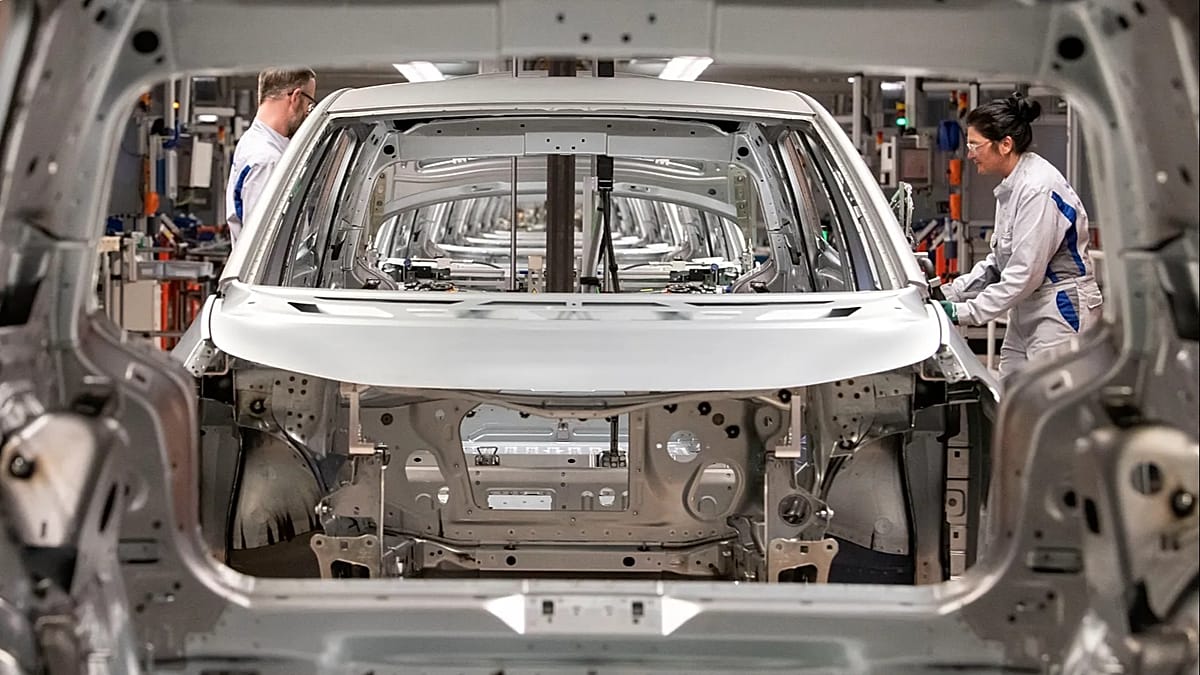
Europe’s latest automotive policy fight is about far more than cars. The intensifying debate over the Made in Europe strategy reveals how deeply manufacturing, design excellence and industrial identity are connected across the continent’s luxury sectors.
As Brussels weighs new rules to protect electric vehicle production from rising Chinese competition, automakers and suppliers are clashing over one central question: what truly counts as European value? For anyone following luxury architecture, luxury design and luxury interiors, this dispute offers a revealing look at how Europe defines craftsmanship, innovation and strategic autonomy in a global market.
Why the Made in Europe Strategy Matters Now
The European Union is preparing an Industrial Accelerator Act aimed at strengthening the region’s electric vehicle industry. At the heart of the proposal is a Made in Europe requirement that would favor EVs built largely with European components when public money or procurement programs are involved.
The proposed threshold is 70% local content. In practical terms, that means vehicles seeking support under the scheme would need a substantial majority of their parts and components to come from Europe.
The policy is a response to mounting pressure from Chinese manufacturers, whose scale, cost competitiveness and rapid EV expansion have unsettled Europe’s industrial base. With jobs, supply chains and long-term manufacturing capacity at stake, the debate has quickly become one of the most consequential industrial policy battles in the EU.
Suppliers vs. Carmakers: Two Visions of Made in Europe
The dispute has split two major pillars of the automotive ecosystem.
The suppliers’ position
The European Association of Automotive Suppliers, CLEPA, supports the European Commission’s component-based model. Its argument is straightforward: if Europe wants to preserve real industrial capacity, it must measure where the physical parts are actually made.
According to a study cited by CLEPA, many plug-in hybrid and battery-electric vehicles already built in Europe contain roughly 80% to 90% European-made components. From that perspective, the Commission’s 70% benchmark is demanding but realistic.
CLEPA argues that this version of Made in Europe protects factory floors, skilled technical jobs and the existing supplier network that underpins the continent’s industrial strength.
The manufacturers’ position
The European Automobile Manufacturers’ Association, ACEA, wants a broader method for calculating European value. Rather than focusing narrowly on parts, it argues regulators should assess the finished vehicle as a whole.
That approach would account not only for components but also for:
- Research and development
- Advanced engineering
- Vehicle design
- Highly skilled labor
- Integrated production expertise
From the manufacturers’ perspective, a car’s value is not limited to the origin of each part. It also includes the intellectual capital and technical sophistication embedded in the final product.
What Is Really at Stake in the Made in Europe Debate?
This disagreement may sound technical, but the consequences are significant. CLEPA has warned that a broader accounting model could dilute the parts requirement, effectively allowing a lower share of European-made components while still qualifying as Made in Europe.
Its concern is that such a shift would weaken incentives to source locally and could put as many as 350,000 jobs at risk across the supplier base. That is a major warning for a region where industrial employment remains a cornerstone of economic stability.
The key tension is clear:
- Component-based rules prioritize production location and supply chain resilience.
- Finished-vehicle rules emphasize innovation, engineering and the broader value creation process.
Both sides claim to defend Europe’s future. One is trying to protect manufacturing depth; the other wants policymakers to recognize higher-value knowledge work as part of European competitiveness.
Lessons for Luxury Architecture, Luxury Design and Luxury Interiors
At first glance, this may seem distant from luxury architecture or interior design. In reality, the same themes are shaping premium design industries across Europe.
Luxury markets increasingly depend on origin, material authenticity and specialist craftsmanship. Whether the product is a handcrafted lighting system, bespoke stonework, artisan metal detailing or custom architectural joinery, the same question emerges: what makes something genuinely European?
The Made in Europe discussion mirrors a wider luxury-sector challenge:
- Is value defined by where materials are fabricated?
- Does design authorship carry equal weight?
- Should engineering and creative direction count as much as physical production?
In luxury interiors, for example, a piece may be conceived in Milan, engineered in გერმany, assembled in Eastern Europe and finished with imported raw materials. In luxury architecture, a building can embody European design language while relying on a globally dispersed supply chain. The car industry’s dispute shows how difficult it has become to assign value in a premium economy built on both craftsmanship and cross-border complexity.
Why European Craft and Industrial Identity Are Converging
There is also a deeper cultural dimension. Europe’s luxury reputation has long rested on precision, heritage and specialized know-how. The automotive sector shares those same strengths with high-end furniture, architectural fabrication and interior product design.
That is why the Made in Europe framework matters beyond transport policy. It reflects a wider effort to preserve:
- Regional production ecosystems
- Skilled labor and apprenticeships
- Design-led manufacturing
- Supply chain transparency
- Strategic independence in key sectors
For luxury brands and design houses, this trend could ultimately raise the value of verified local sourcing and European production credentials. Clients in premium categories increasingly want not just beauty, but provenance.
What Happens Next?
The proposed rules are still under discussion among EU member states and the European Parliament, so the final shape of the law may change. But the direction of travel is unmistakable: Europe is trying to defend its industrial base while redefining what local value means in a globalized era.
If stricter component thresholds prevail, suppliers may gain stronger protection and local manufacturing may become more attractive. If the broader methodology wins, automakers could secure more flexibility while still claiming substantial European identity through design, R&D and engineering.
Either way, the policy battle is likely to influence future standards for how “European-made” is understood across industries.
Conclusion: Made in Europe Is Becoming a Luxury Signal
The clash over the EU’s automotive rules is ultimately a debate about more than compliance. It is a test of how Europe values labor, innovation, materials and place. In that sense, the Made in Europe argument speaks directly to luxury architecture, luxury design and luxury interiors, where authenticity and origin increasingly shape prestige.
The takeaway is simple: in the years ahead, Made in Europe may become not just an industrial policy label, but a premium marker of trust, craftsmanship and strategic value.