



Lampedusa’s Threshold: What Europe’s Most Symbolic Island Reveals About Space, Memory and Human-Centred Design
Some places are designed; others are defined by what humanity asks them to hold. Lampedusa design now stands at that difficult intersection, where landscape, memorial space, civic architecture and social responsibility meet on one small Mediterranean island.
Pope Leo XIV’s visit to Lampedusa placed global attention on an environment already charged with meaning: a port of arrival, a holiday destination, a memorial landscape and a frontline of Europe’s migration debate. For readers interested in luxury architecture, luxury interiors and luxury design, the story is not about opulence. It is about how space communicates dignity, compassion, symbolism and cultural responsibility. In that sense, Lampedusa design offers a powerful lesson for architects, developers and designers shaping high-end spaces with deeper human value.
Why Lampedusa design matters beyond politics
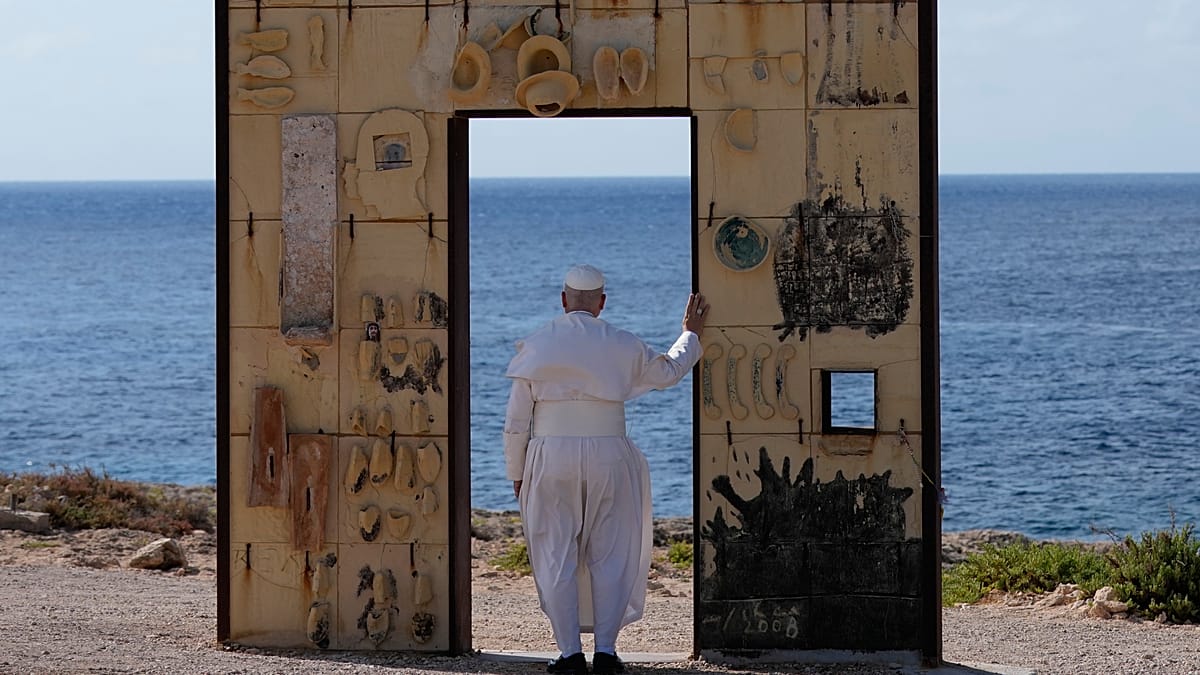
Lampedusa is often described through crisis. Yet the island also reveals how built environments can become moral landscapes. During his visit, the pope moved through a sequence of highly symbolic spaces: the Cemetery of the Nameless, the Porta d’Europa monument, the quay where migrant boats arrive and the sports ground where thousands gathered for Mass. Each location demonstrates that Lampedusa design is not merely aesthetic; it is spatial storytelling.
What makes these places significant is their layered function:
- Memorial — honouring lives lost at sea
- Civic — receiving residents, volunteers and institutions
- Symbolic — representing Europe’s border and conscience
- Experiential — shaping how visitors feel, move and reflect
In luxury sectors, designers increasingly talk about narrative-led spaces, emotional design and authenticity. Lampedusa shows what that looks like when the stakes are real. Materials, views, thresholds and public monuments all help tell a story that no polished branding campaign could replicate.
Lampedusa design and the architecture of remembrance
Memorial spaces that speak through material
One of the most moving elements of the pope’s visit was his stop at the Cemetery of the Nameless, where migrant graves are marked with crosses made from the wood of wrecked boats. This detail is architecturally profound. Salvaged material transforms tragedy into testimony. In design terms, it is a masterclass in adaptive symbolism.
For architects and interior designers, this approach reflects several enduring principles:
- Material can carry memory
- Objects from lived events create emotional authenticity
- Minimal interventions often communicate more powerfully than grand gestures
This is where Lampedusa design intersects with the best of contemporary luxury: not excess, but meaning. The most refined spaces today are often those that use restraint, local relevance and tactile honesty to create a lasting impression.
The power of the threshold
The Porta d’Europa sculpture overlooking the Mediterranean functions as both landmark and threshold. Arches and gateways have long been central to architecture, representing transition, arrival and hope. In Lampedusa, that symbolism becomes especially potent. The monument faces the sea that has brought both survival and loss, turning a simple passage form into a profound civic statement.
Thresholds matter in luxury design too. Grand entrances, framed vistas, ceremonial circulation and transitional courtyards all shape perception. Lampedusa design reminds us that the best thresholds do more than impress; they prepare people emotionally for what lies beyond.
What luxury architecture can learn from Lampedusa
At first glance, a migration island may seem far removed from the worlds of high-end residences, boutique hospitality or collectible design. Yet the deeper lessons are surprisingly relevant. Today’s most admired luxury environments are moving toward human-centred design, place specificity and cultural depth rather than generic prestige.
From Lampedusa, designers can draw several insights:
- Context is everything: Spaces should respond to geography, climate and local history
- Views have narrative value: A sea horizon is not only scenic; it can also frame reflection
- Monuments create identity: Public art and symbolic features can define an entire destination
- Simplicity can feel more elevated than spectacle: Emotional resonance often outlasts visual excess
- Design should support dignity: Whether in a private villa or a public facility, humane planning matters
This is why Lampedusa design belongs in broader design conversations. It challenges the industry to think beyond finish palettes and signature forms, asking instead how space can care for people and embody values.
The island as a case study in emotional placemaking
Hospitality, tourism and moral contrast
In his remarks, Pope Leo XIV highlighted Lampedusa as an island of both migrants and holidaymakers. That contrast is striking from a placemaking perspective. It raises difficult questions about how destinations present beauty while remaining honest about social reality.
For luxury travel, resort architecture and waterfront development, this is increasingly important. Guests now seek experiences with substance, not just scenic consumption. Lampedusa design suggests that destinations can become more meaningful when they acknowledge history, community and human encounter rather than hiding them.
Designing for compassion, not just efficiency
The pope called for Europe to move from emergency management toward coherent long-term strategies. In spatial terms, that implies better reception facilities, more dignified public infrastructure and environments designed for integration rather than mere containment. Good design cannot solve geopolitical problems alone, but it can reduce stress, improve safety and affirm personhood.
That same principle applies to luxury interiors and architecture. The future of premium design lies not only in exclusivity, but in empathy:
- clear circulation
- comfort through natural light and ventilation
- materials that calm rather than overwhelm
- spaces that encourage connection and reflection
Seen this way, Lampedusa design becomes a model for emotionally intelligent environments.
A new definition of meaningful luxury
Luxury is being redefined. Increasingly, it means craft, permanence, authenticity and values-led design. The spaces highlighted during the papal visit to Lampedusa are not luxurious in the conventional sense, but they demonstrate qualities the design world now prizes: atmosphere, symbolic clarity, local materiality and unforgettable emotional impact.
Designers who pay attention to Lampedusa design can rethink what makes a place truly exceptional. It is not only rarity or expense. It is the ability of a space to hold memory, frame humanity and inspire responsibility.
As the island remains a symbol of Europe’s humanitarian challenge, it also stands as a reminder to the design community: the most powerful environments do not simply look beautiful. They help people feel, remember and act. That is the real lesson of Lampedusa design — and perhaps the clearest path toward a more human future in architecture and interiors.