

Lampedusa and the Luxury of Human-Centred Design: What Pope Leo XIV’s Visit Reveals About Europe’s Values
Luxury is often defined by rarity, craftsmanship and beauty. Yet Pope Leo XIV’s visit to Lampedusa invites a deeper question: what does true luxury look like when a place stands at the crossroads of hospitality, memory and human dignity? As the world watched Pope Leo XIV’s visit to Lampedusa, the island became more than a political symbol of migration in Europe. It also emerged as a powerful case study in how places, public monuments and civic spaces can express compassion through design.
For readers interested in luxury brands, luxury decor and luxury design, this moment may seem far removed from the usual conversations about interiors, architecture or high-end living. But the visual language of Lampedusa during the papal visit tells a compelling story: design is never only aesthetic. It can also shape remembrance, belonging and the moral identity of a destination.
Pope Leo XIV’s Visit to Lampedusa and the Meaning of Place
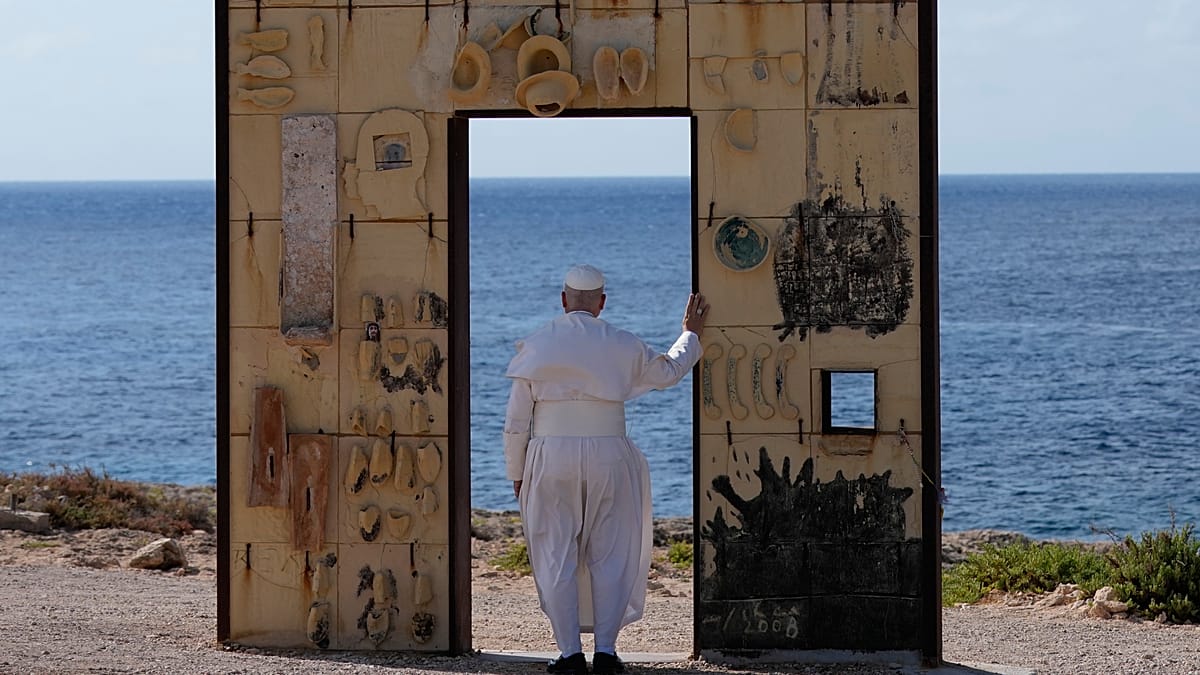
Pope Leo XIV’s visit to Lampedusa carried deep symbolism from the moment he arrived. The pontiff travelled first to the Cemetery of the Nameless in Cala Pisana, where migrants who died at sea are buried beneath crosses made from the wood of wrecked boats. He then visited the Porta d’Europa, the ceramic-and-iron monument overlooking the Mediterranean, before continuing to Molo Favarolo, where a plaque was blessed in tribute to Pope Francis and the quay was renamed Molo Francesco.
These are not merely locations. They are examples of how physical environments communicate values. In luxury design, materials, placement and emotional resonance matter enormously. Lampedusa’s memorial spaces show that the most powerful design is often rooted in narrative rather than excess.
- Reclaimed wood from boats becomes a material of remembrance.
- Monumental sculpture transforms a seafront into a site of reflection.
- A renamed quay turns infrastructure into a civic symbol.
In other words, the island’s landscape demonstrates that meaningful design can elevate ordinary or painful spaces into places of collective memory.
Why This Story Matters to Luxury Design
At first glance, migration and luxury may appear unrelated. Yet the best luxury design has always been about more than display. It is about intention, cultural intelligence and the ability to create environments that move people. Pope Leo XIV’s visit to Lampedusa highlights a growing shift in global design values: authenticity now matters as much as opulence.
Across hospitality, residential interiors and branded experiences, consumers increasingly want spaces that feel human, ethical and emotionally literate. This applies to:
- Luxury hotels that incorporate local history rather than generic glamour
- High-end interiors that prioritise craftsmanship and storytelling
- Premium brands that align aesthetics with social conscience
- Destination design that respects community identity
Lampedusa, though not a conventional luxury destination, offers a lesson many elite brands can learn from: places become unforgettable when they stand for something real.
From Spectacle to Substance
Modern luxury is moving away from visual excess for its own sake. The most admired spaces today often blend restraint with emotional depth. During Pope Leo XIV’s visit to Lampedusa, the imagery that resonated most was not grandeur but sincerity: the sea, the wind, the weathered memorials, the football gifted by a child migrant, and the stark horizon watched over by patrol ships.
This kind of visual truth has enormous relevance for luxury creatives. Designers, architects and brand directors are increasingly challenged to create experiences that feel grounded rather than performative. Lampedusa shows how atmosphere, symbolism and material history can leave a stronger impression than polished perfection.
Hospitality, Ethics and the Future of European Luxury
Before celebrating Mass, the pope addressed the wider European migrant crisis, urging institutions and civil society to move beyond emergency management towards coherent, humane long-term strategies. That message was political, spiritual and cultural all at once. It also intersects with a major conversation in luxury hospitality: what does responsible welcome really mean?
Europe’s finest properties and design-led destinations often market themselves around service, comfort and belonging. But Pope Leo XIV’s visit to Lampedusa reminds us that hospitality is, at its core, an ethical practice. The island receives both migrants and holidaymakers, a contrast the pope explicitly referenced when warning against an “invisible wall” between those in peril and those at leisure.
For the luxury sector, that contrast is worth reflecting on. Future-facing brands may need to think beyond sustainability checklists and ask broader questions about social impact, regional inequality and community engagement.
What Luxury Brands Can Learn
There are several takeaways for luxury brands, designers and developers:
- Design with memory in mind: Spaces gain depth when they acknowledge local history.
- Use materials with meaning: Provenance and symbolism can be as valuable as rarity.
- Champion human-centred storytelling: Audiences connect with authenticity over abstraction.
- Redefine exclusivity: Today’s prestige often comes from discernment, responsibility and cultural sensitivity.
- Create places that invite reflection: Emotional intelligence is becoming a hallmark of premium design.
Lampedusa as a Symbol Beyond Politics
Pope Leo XIV’s visit to Lampedusa was undeniably a major European news event, but it was also a visual meditation on how societies express care. The island’s key landmarks framed the pope’s message with remarkable clarity. A cemetery, a sculpture, a harbour and a sports ground became the stage for a broader appeal: do not look away from suffering, and do not let indifference shape public life.
For those working in luxury decor and luxury design, this is a reminder that spaces carry moral weight. Whether one is curating a private residence, designing a flagship boutique or planning a high-end retreat, every environment tells people what matters. The finest design does not only impress; it reveals values.
In that sense, Lampedusa offers an unexpected but timely design lesson for Europe and beyond. Beauty without conscience can feel empty. But beauty anchored in empathy, context and purpose becomes lasting.
Conclusion: The Real Luxury Is Humanity
In the end, Pope Leo XIV’s visit to Lampedusa was about migration, memory and Europe’s responsibilities. Yet it also pointed to something larger: the idea that the most powerful spaces are those that honour human dignity. For luxury brands and design professionals, the takeaway is clear. True luxury is no longer just about refinement or exclusivity. It is about creating places, objects and experiences that are beautiful, meaningful and unmistakably human.