
Architecture News: Construction Begins on Frank Gehry’s Dar al Funoon Abu Dhabi
Architecture news rarely arrives with this much cultural weight. Construction has officially begun on Dar al Funoon Abu Dhabi, a major new performing arts destination designed by the late Frank Gehry and poised to become one of the most significant luxury architecture landmarks in the Middle East.
Set on Saadiyat Island, Dar al Funoon—translated as “House of the Arts”—is being developed by Abu Dhabi’s Department of Culture and Tourism as a global center for live performance, artistic exchange, and year-round programming. Expected to open in 2030, the project expands Abu Dhabi’s already ambitious cultural district while adding one of Gehry’s final works to the city’s evolving skyline.
Architecture News: Why Dar al Funoon Abu Dhabi Matters
In the world of architecture news, few projects combine star power, civic ambition, and cultural purpose as effectively as Dar al Funoon. More than a new building, the institution is intended to serve as a permanent home for opera, ballet, theatre, jazz, and multidisciplinary live arts, while also functioning as a platform for residencies, touring productions, and collaborations with international companies.
That mission is especially significant in Abu Dhabi, which has steadily positioned itself as a global cultural capital. The city’s recognition as a UNESCO Creative City of Music in 2021 reinforced its long-term investment in arts infrastructure, and Dar al Funoon appears set to deepen that commitment through a venue designed for both prestige performances and community engagement.
For readers tracking luxury design and cultural real estate, this is the kind of architecture news that signals a broader shift: iconic architecture is increasingly expected to do more than impress visually. It must also create public value, support programming, and shape a city’s international identity.
Frank Gehry’s Final Vision for a Performing Arts Landmark
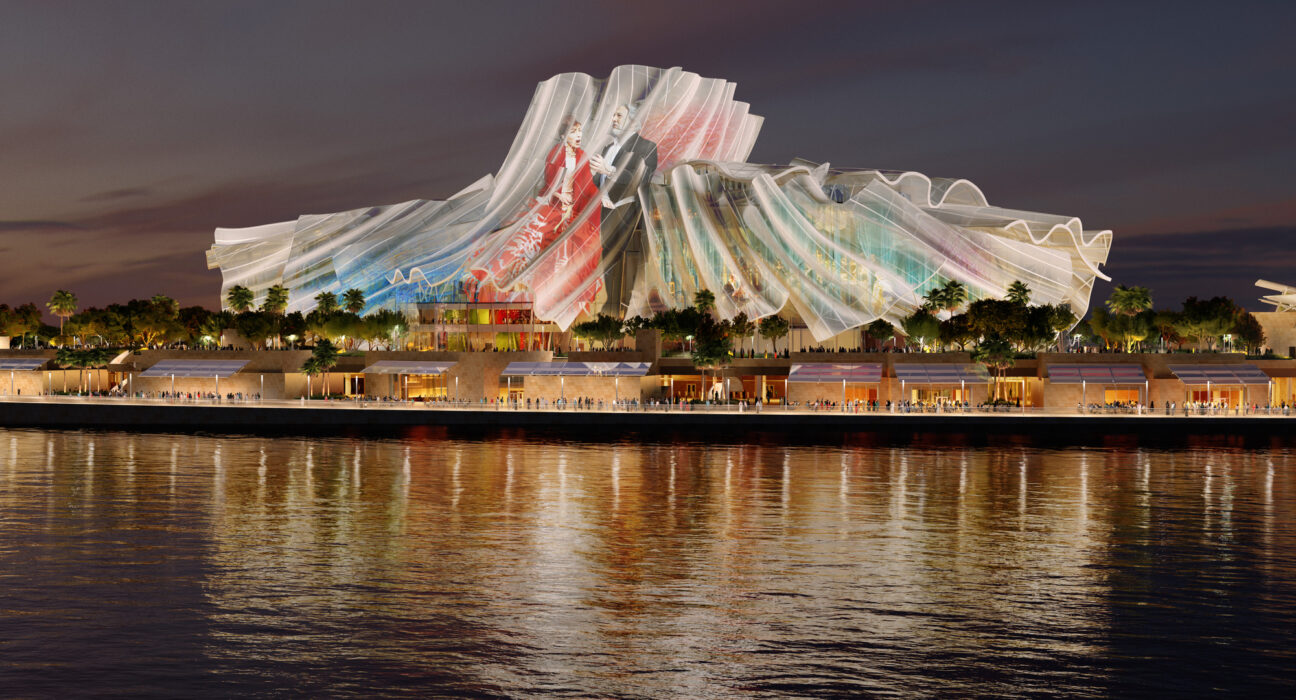
Dar al Funoon stands out not only because of its scale, but because it is among Frank Gehry’s final designs. Known for transforming architecture into sculptural movement, Gehry approached this project as what officials describe as a “living expression of music and performance.” That idea is visible in the proposed exterior, which appears to ripple across the site in soft, undulating forms reminiscent of draped fabric.
The building’s transparent façade is equally important. Rather than sealing performance spaces away from the city, the design aims to reveal cultural activity to the public, making the institution feel open, contemporary, and urban. This balance between spectacle and accessibility has long defined Gehry’s most influential work, and it makes this architecture news especially compelling for those interested in the future of museum and performing arts design.
In luxury architecture terms, Dar al Funoon is not about ornament for its own sake. Its visual drama is tied directly to function, atmosphere, and the emotional energy of live performance.
A Flexible Venue Designed for 365 Days of Culture
One of the most notable aspects of this architecture news story is the project’s adaptability. Dar al Funoon is being planned as a highly flexible arts complex capable of hosting programming every day and night of the year. That operational model reflects how contemporary cultural institutions are evolving into mixed-use destinations rather than single-purpose performance halls.
Key venue features
- A multipurpose performance hall with more than 2,000 seats
- A 3,500-seat open-air amphitheatre for festivals and large-scale events
- A 400-seat studio theatre for experimental and community productions
- A 250-seat jazz venue for intimate performances
- Total capacity of more than 6,000 across the complex
The facilities are also expected to include world-class acoustics, an orchestra pit for up to 120 musicians, plus food, beverage, retail, and rooftop event spaces. These layers matter because they position the project as a luxury lifestyle destination as much as a performing arts institution.
For audiences, that means Dar al Funoon is likely to become a place where architecture, hospitality, and cultural programming intersect—an increasingly important formula in premium urban development.
Saadiyat Island’s Growing Cultural District
This architecture news arrives within the wider context of Saadiyat Island, Abu Dhabi’s flagship cultural district in the United Arab Emirates. The island has become a showcase for globally recognized architecture, bringing together major institutions designed by some of the world’s leading architects.
Dar al Funoon will join an elite group of neighboring landmarks, including:
- Louvre Abu Dhabi by Jean Nouvel
- Zayed National Museum by Foster + Partners
- Natural History Museum Abu Dhabi by Mecanoo
- Abrahamic Family House by Adjaye Associates
- The upcoming Guggenheim Abu Dhabi, also linked to Frank Gehry
That concentration of design talent makes Saadiyat Island one of the most closely watched destinations in global architecture news. It is not simply a cluster of signature buildings; it is a curated cultural ecosystem designed to attract tourism, investment, and international creative exchange.
For the luxury home and luxury decor audience, this district also offers a lesson in how place branding works at the highest level. Architecture becomes part of a broader lifestyle narrative—one that connects art, travel, exclusivity, and urban identity.
What This Project Means for Luxury Architecture and Design
From a market perspective, Dar al Funoon reflects several powerful trends shaping contemporary luxury architecture:
1. Cultural buildings as lifestyle anchors
Prestige institutions are increasingly designed to support hospitality, retail, dining, and events, turning them into all-day destinations.
2. Iconic form paired with public openness
Today’s landmark architecture must feel visually striking while remaining inviting and socially connected.
3. Flexibility as a premium feature
Adaptable spaces are no longer just practical—they are essential to long-term cultural relevance and financial sustainability.
4. Cities using design to define global identity
Abu Dhabi continues to leverage architecture and cultural infrastructure as tools for soft power, tourism growth, and international prestige.
This is why the latest architecture news about Dar al Funoon resonates beyond the arts sector. It speaks to how ambitious cities are using design excellence to shape experience, influence, and legacy.
Looking Ahead to 2030
With construction now underway, attention will turn to how Gehry’s final vision is realized over the coming years. If completed as planned, Dar al Funoon Abu Dhabi could become one of the defining performing arts venues of the decade—both for its architectural presence and for its role in expanding the cultural ambitions of the region.
For anyone following architecture news, this is a project worth watching closely. It merges Frank Gehry’s sculptural imagination with Abu Dhabi’s long-range cultural strategy, creating a landmark that could influence future conversations around luxury design, performing arts architecture, and destination-making on a global scale.
In short, this architecture news story is about far more than a groundbreaking ceremony. Dar al Funoon represents the next chapter in Abu Dhabi’s cultural evolution—and one of the last opportunities to see a new Frank Gehry masterpiece take shape.