

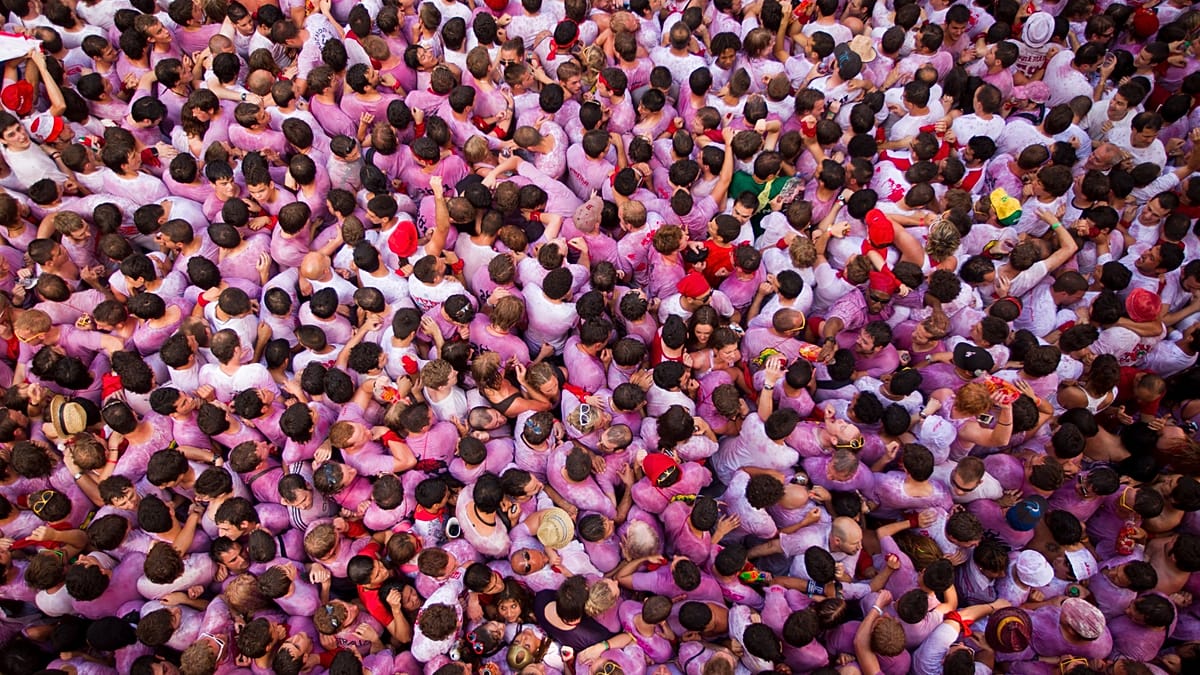
Every July, Pamplona transforms into one of Europe’s most visually charged urban stages, where ritual, movement and civic identity converge in a single dramatic setting. San Fermín 2026 is no exception: with the traditional chupinazo rocket launched before a packed Town Hall Square, the city has once again opened nine days of festivities that reveal as much about architecture and design as they do about tradition.
For readers interested in luxury architecture, luxury design and luxury interiors, San Fermín offers an unexpected lens. Beyond the red scarves and white clothing, the festival is a masterclass in how historic urban fabric, civic space, ceremonial design and crowd choreography create an unforgettable public experience. In San Fermín 2026, Pamplona demonstrates how heritage cities can host massive global events while preserving atmosphere, identity and architectural character.
San Fermín 2026 and the Power of Civic Architecture
The official start of San Fermín 2026 came with the iconic chupinazo from Pamplona’s City Hall, where thousands gathered in the square below. This moment is more than a festival trigger; it is an architectural performance rooted in place. The façade of the Ayuntamiento becomes a ceremonial backdrop, while the plaza functions as an open-air amphitheatre.
What makes this compelling from a design perspective is the relationship between monumentality and intimacy. Pamplona’s historic core is not oversized, yet it can hold immense emotional energy. The city’s built environment amplifies tradition through:
- Layered stone façades and historic balconies that frame public rituals
- Compact streets that intensify anticipation and movement
- Civic squares designed for gathering, spectacle and visibility
- Architectural continuity that reinforces a strong sense of place
In San Fermín 2026, the setting proves that great public design does not always rely on scale alone. Proportion, enclosure and cultural memory are equally important.
Why Pamplona’s Historic Urban Design Feels So Luxurious
Luxury is often associated with private residences, boutique hotels or curated interiors, but Pamplona shows that cities themselves can embody a refined design language. During San Fermín 2026, the old town becomes an immersive environment defined by craftsmanship, permanence and atmosphere.
Materiality and Heritage
The city’s historic architecture relies on enduring materials that communicate quality: stone, wrought iron, timber details and textured plaster. These elements age gracefully, giving streets and squares the layered richness that luxury designers frequently try to recreate in contemporary spaces.
Spatial Drama
One reason the festival feels so powerful is the sequencing of space. Narrow lanes open suddenly into larger plazas, creating contrast and drama. This is a principle commonly used in high-end hospitality and residential design: compress, reveal and reward the viewer with a memorable experience.
Authenticity Over Excess
Unlike overtly ornamental settings, Pamplona’s appeal lies in authenticity. Its beauty is embedded in urban continuity and cultural use, not decorative spectacle. That makes San Fermín 2026 especially relevant to today’s luxury audience, which increasingly values heritage, provenance and emotional resonance.
The Chupinazo as a Study in Event Design
The rocket launch that opens San Fermín 2026 is one of Europe’s most recognisable public ceremonies. From an event-design standpoint, it is remarkably efficient: a single balcony, a formal announcement, a symbolic rocket and a square filled with coordinated colour.
This year, representatives from Navarre’s Accident and Emergency Subdirectorate were chosen to fire the rocket, a decision made by public vote and intended as a tribute to healthcare professionals who support the festival, especially during the bull runs. That choice adds a contemporary civic layer to an age-old ritual, showing how festivals can evolve while staying rooted in tradition.
The visual identity of the event also deserves attention. The white outfits and red neckerchiefs create a disciplined, instantly recognisable palette that turns the crowd itself into a design element. Few festivals achieve such coherence without feeling staged.
Designing for Movement, Risk and Ritual
No discussion of San Fermín 2026 is complete without the encierro, or bull run, which begins on Tuesday at 8:00. The route covers 848 metres from the Santo Domingo pens to the bullring, and it remains one of the world’s most famous and dangerous festival traditions.
From an urban-design perspective, the route is a highly specific corridor of movement. It depends on barriers, sightlines, timing and emergency access. The architecture is not passive; it actively shapes how the event unfolds.
Key design considerations include:
- Route definition: Historic streets create a clear, legible path.
- Containment: Temporary infrastructure works with permanent architecture to manage flow.
- Observation points: Balconies, windows and upper levels become premium vantage spaces.
- Emergency readiness: Medical and support services must integrate seamlessly into the urban plan.
Authorities have also warned of intense heat, with temperatures in Navarre potentially reaching 40ºC, prompting reinforced medical and emergency services. That operational response highlights a modern design challenge: how to protect public wellbeing in heritage settings during high-density events.
What Luxury Designers Can Learn from San Fermín 2026
For architects and interior designers, San Fermín 2026 offers several lessons that extend beyond festival culture.
Experience Is the Ultimate Luxury
Pamplona reminds us that memorable environments are multisensory. Sound, colour, procession, anticipation and public ritual can be as impactful as material finishes.
Place Identity Matters
The festival could not simply be transplanted elsewhere and retain the same meaning. Its power comes from the bond between tradition and setting, a useful reminder for luxury projects seeking authenticity.
Design Should Support Community
At its best, luxury design is not only beautiful but functional, emotionally intelligent and socially aware. Pamplona’s civic spaces succeed because they bring people together while preserving historical character.
A Festival Where Architecture Becomes the Main Character
As Pamplona enters nine days of celebration, San Fermín 2026 stands out not only as a major cultural event but as a vivid example of architecture in action. The packed Town Hall Square, the ceremonial balcony, the historic streets and the carefully managed festival route all show how built environments can elevate tradition into something unforgettable.
The takeaway is clear: San Fermín 2026 is more than a festival headline. It is a living case study in heritage urbanism, public design and the enduring luxury of place. For anyone fascinated by architecture, interiors and cultural design, Pamplona offers a powerful lesson in how cities can stage identity with elegance, intensity and timeless appeal.