
Serbia’s EU Bid Meets a Luxury-Era Test in Design, Investment and Governance
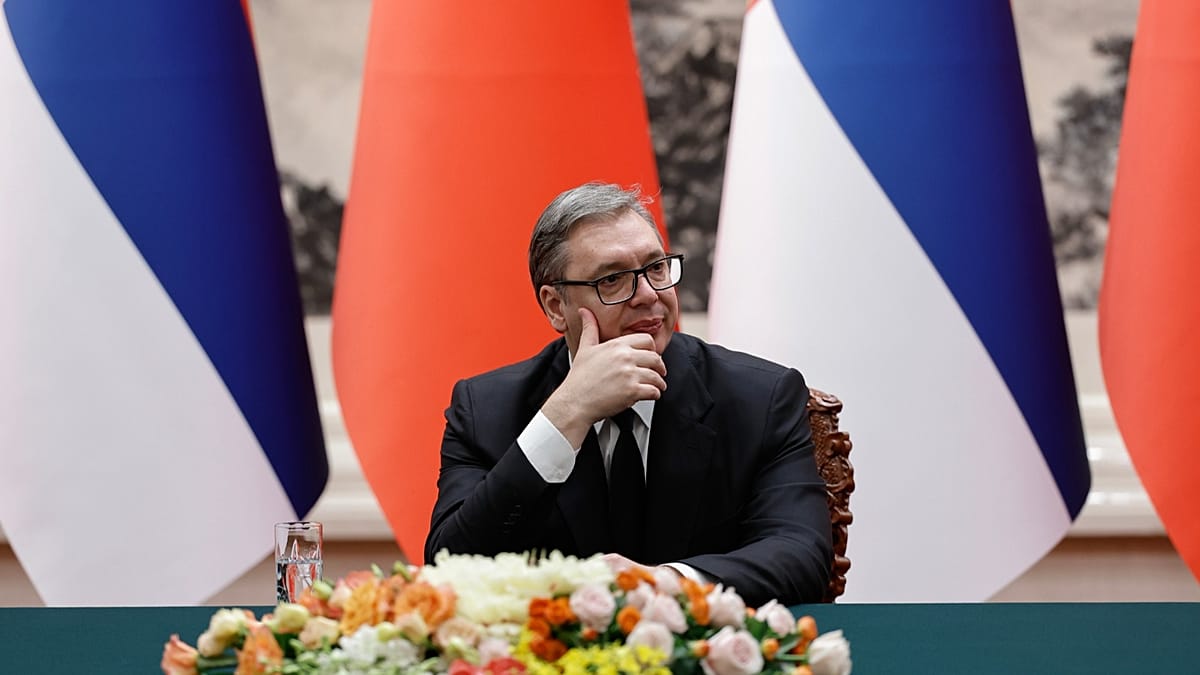
Luxury markets thrive on one thing above all: confidence. That is why the latest debate over Serbia EU accession matters far beyond Brussels policy circles. For luxury brands, luxury decor investors and luxury design businesses watching Southeast Europe, Serbia’s political and regulatory direction could shape everything from cross-border expansion to high-end real estate sentiment.
The European Commission is signaling that Serbia may have taken enough recent steps to justify movement on Cluster 3 of its accession talks. Yet many EU member states remain unconvinced, arguing that rule-of-law concerns, judicial independence and democratic standards still cast a long shadow. The result is a high-stakes balancing act with implications not just for diplomacy, but for the premium economy that depends on stability, transparency and long-term trust.
Why Serbia EU accession matters to luxury brands and design markets
At first glance, accession negotiations may seem distant from the world of luxury retail or interior aesthetics. In reality, Serbia EU accession is closely tied to the investment climate that premium sectors rely on.
Serbia is the largest economy in the Western Balkans and a strategically important market. If the country progresses toward deeper EU integration, it could improve investor confidence, boost infrastructure planning and make the region more attractive for:
- Luxury real estate development
- High-end hospitality projects
- Designer furniture and decor imports
- Flagship boutique expansion
- Cross-border architecture and procurement partnerships
For luxury businesses, regulatory predictability is often as important as consumer demand. When accession momentum builds, it can create a perception of modernization and institutional alignment with European standards. When momentum stalls, caution tends to return.
The Brussels divide over Serbia EU accession
The current dispute centers on whether Serbia’s repeal of controversial judiciary laws is enough to reopen meaningful progress in talks. The European Commission has reportedly argued that Belgrade has addressed specific backsliding concerns and improved the capacity of the Prosecutor’s Office for Organised Crime. Still, it also acknowledges that more work is needed in the judicial and prosecutorial system.
This split has exposed two competing schools of thought inside the EU.
1. The strategic engagement camp
Some officials believe that keeping Serbia EU accession moving is the best way to maintain influence in the Western Balkans. Their view is that rewarding concrete steps encourages more reforms and prevents Serbia from drifting away from the European project.
Supporters of this approach argue:
- Serbia responded to recommendations from the Venice Commission
- Incremental reform should be acknowledged
- Disengagement could weaken EU leverage
- Regional stability depends in part on sustained dialogue
2. The standards-first camp
Other member states are warning against moving too quickly. In their view, repealing problematic laws is welcome but insufficient. They argue it merely restores the previous baseline rather than proving deep reform.
Their concerns include:
- Judicial independence
- Corruption and enforcement gaps
- Democratic governance standards
- Broader rule-of-law credibility
For this group, opening new chapters without stronger fundamentals risks weakening the integrity of the EU enlargement process.
Rule of law and why premium investors care
The heart of the debate is not only Cluster 3, but the wider issue of institutional reliability. That matters enormously for luxury-led sectors, where projects are capital-intensive and reputation-sensitive.
Luxury property developers, bespoke design houses and premium hospitality operators typically assess a market using factors such as:
- Contract enforcement
- Procurement transparency
- Construction oversight
- Political continuity
- Consumer confidence among affluent buyers
Recent EU assessments have raised concerns about Serbia’s progress on anti-corruption measures, democratic governance and state interference in parts of the economy. Those signals can influence how quickly global brands move into a market or how aggressively they price long-term opportunities.
In the luxury decor and luxury design space, where imported materials, artisan partnerships and cross-border logistics are common, legal and regulatory consistency is essential. If Serbia EU accession gains credibility, it may support a more favorable narrative around premium development. If uncertainty deepens, brands may delay commitments.
Political uncertainty adds another layer
The situation has become even more complex following President Aleksandar Vučić’s announcement that he intends to resign and trigger elections within months. While some observers see the move as a potential reset, others view it as a tactical maneuver that may preserve rather than reduce his influence.
For markets, perception matters. Political transitions can create optimism, but only if investors believe institutions are becoming more accountable and elections will be free and fair. Otherwise, a leadership change can look cosmetic rather than structural.
That distinction is critical for luxury sectors. Premium consumers and international operators are highly responsive to narrative. A country seen as reforming in substance can attract design-led hospitality, branded residences and upscale retail. A country seen as politically ambiguous may struggle to convert interest into signed deals.
What this means for luxury brands, luxury decor and luxury design
For businesses in the premium segment, the Serbia story is one to watch closely. Serbia EU accession is not just a diplomatic process; it is a signal about governance quality and future market maturity.
Possible upside if talks advance
- Stronger investor confidence in Serbian urban development
- More interest in luxury mixed-use projects
- Higher appeal for boutique hotels and designer retail
- Improved perception among European suppliers and partners
Risks if divisions persist
- Delayed foreign investment decisions
- Higher caution from premium developers
- Slower growth in luxury interiors and branded real estate
- A persistent gap between market potential and market execution
Serbia remains an intriguing market with cultural depth, rising urban ambition and regional importance. But luxury growth rarely follows potential alone. It follows trust, policy clarity and durable institutional progress.
Conclusion: Serbia EU accession is now a confidence story
The latest clash between the European Commission and member states shows that Serbia EU accession has entered a decisive phase. The core question is simple: should incremental reform be rewarded now, or should Brussels hold the line until broader democratic improvements are clearly secured?
For luxury brands, luxury decor firms and luxury design investors, the answer matters. Serbia EU accession is ultimately a confidence story, and confidence is the currency that powers every premium market. Until governance concerns are matched by credible, lasting reform, Serbia’s luxury-era potential will remain promising, but not fully unlocked.