
Los Angeles is preparing for one of its most anticipated cultural debuts, and for followers of Architecture news, the announcement is a major milestone. The Lucas Museum of Narrative Art, designed by MAD Architects, is officially set to open on September 22, 2026, bringing a bold new landmark to Exposition Park and expanding the city’s already impressive cultural landscape.
Founded by George Lucas and Mellody Hobson, the museum is conceived as a home for narrative art in all its forms—works that tell stories through image, symbolism, and visual imagination. Beyond its collection, the project is drawing attention for its futuristic architecture, expansive public landscape, and the way it transforms a former parking lot into a civic destination. For readers tracking luxury architecture and cultural design, this is one of the most significant museum openings on the horizon.
Architecture News: A Landmark Opening for Los Angeles
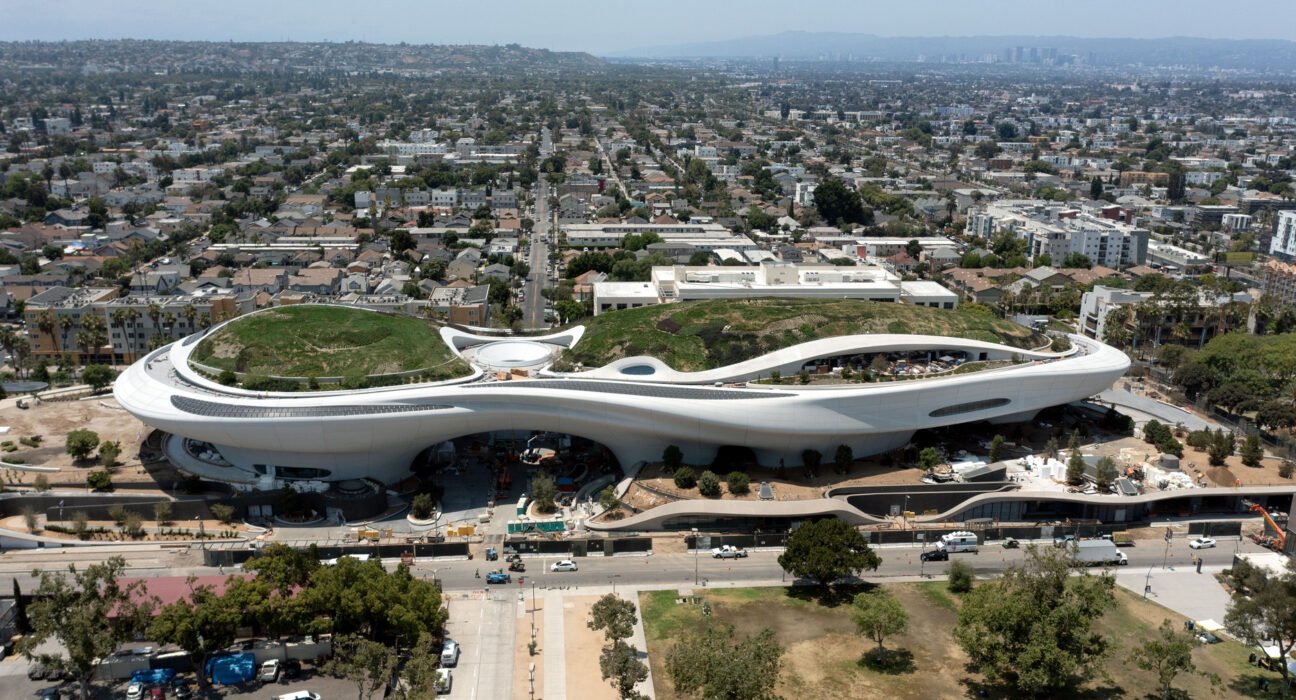
The Lucas Museum of Narrative Art will open in the heart of Exposition Park, one of Los Angeles’ most important cultural districts. The 11-acre site was previously used as surface parking, but it has been reimagined as a 300,000-square-foot museum surrounded by generous green space and pedestrian-friendly outdoor areas.
This development matters not only because of the institution itself, but because it reflects a larger urban trend: replacing car-centric land use with architecture that prioritizes culture, landscape, and public life. In that sense, the project is as much about city-making as it is about exhibition design.
The museum will join neighboring institutions including:
- Natural History Museum of Los Angeles County
- California African American Museum
- California Science Center
Together, these destinations make Exposition Park one of Southern California’s most dynamic civic and educational hubs.
MAD Architects’ Vision: Sculptural Form Meets Public Space
Designed by Ma Yansong of MAD Architects, with landscape architecture by Mia Lehrer of Studio-MLA and Stantec as executive architect, the Lucas Museum continues MAD’s exploration of fluid, organic forms. The building appears elevated and sculpted, hovering across much of the site to create shaded areas below while giving the structure a striking, almost otherworldly presence.
This design language has become a signature for MAD Architects, whose projects often blur the boundaries between architecture, landscape, and art. Here, that approach feels especially fitting. A museum dedicated to storytelling is housed in a building that tells a story of movement, imagination, and transformation.
Why the design stands out
- Curving, futuristic massing creates a strong visual identity
- Elevated volume allows for shaded public areas at ground level
- Landscape integration softens the monumental scale
- Public pathways and gathering spaces improve campus connectivity
For those following luxury design and iconic cultural architecture, the museum represents a sophisticated blend of engineering, sculptural ambition, and urban generosity.
What Will Be Inside the Lucas Museum?
The scale of the program is one reason this project has remained central in Architecture news coverage. The museum will house 35 galleries totaling 100,000 square feet, along with a broad mix of public-facing amenities that expand the visitor experience well beyond conventional exhibition halls.
Planned spaces include:
- Two theaters
- A library
- Community and education spaces
- A cafe and restaurant
- A museum store
This balance of exhibition, education, and hospitality positions the museum as a full-day destination. It also aligns with contemporary museum planning, where dining, learning, and informal gathering are increasingly essential parts of the architectural brief.
In luxury architecture terms, the museum is notable for how it merges grand cultural ambition with visitor comfort, programming flexibility, and carefully designed public amenities.
A Collection Centered on Storytelling
The Lucas Museum’s permanent collection includes more than 40,000 works of narrative art, spanning multiple eras and media. Rather than limiting itself to one discipline, the institution embraces a wide range of visual storytelling traditions, from illustration and painting to comic art, photography, muralism, and cinematic artifacts.
Artists represented in the collection include major names across different genres, such as:
- Norman Rockwell
- Kadir Nelson
- Jessie Willcox Smith
- N. C. Wyeth
- Beatrix Potter
- Judith F. Baca
- Frida Kahlo
- Maxfield Parrish
The collection also includes influential comic artists like Jack Kirby, Alison Bechdel, Chris Ware, and Robert Crumb, as well as photographers such as Gordon Parks, Henri Cartier-Bresson, and Dorothea Lange.
This broad curatorial vision gives the museum unusual depth. It recognizes narrative art as a serious cultural force that crosses boundaries between fine art, popular culture, publishing, and film history.
A New Approach to Museum Curation
Rather than organizing galleries strictly by chronology or medium, the museum plans to group works around themes tied to the human experience. Subjects such as family, work, community, play, and adventure will guide visitors through the collection.
This thematic approach may prove to be one of the institution’s defining strengths. It makes the museum more accessible to a broad audience while allowing surprising conversations between works from different periods and traditions.
What this means for visitors
- More intuitive gallery journeys
- Stronger emotional connections between artworks
- Cross-disciplinary storytelling across painting, comics, photography, and film
- A museum experience built around ideas, not just categories
The institution also plans to present documentaries and moving-image content related to artists and filmmakers, further expanding how stories are contextualized and understood.
Why This Project Matters in Luxury Architecture and Design
For audiences interested in luxury home decor and luxury design, a museum project may seem adjacent rather than central. Yet the Lucas Museum demonstrates many of the same values that define top-tier design: material sophistication, spatial drama, seamless indoor-outdoor relationships, and a strong emotional concept behind every formal decision.
It also reflects how high-end architecture increasingly emphasizes experience over ornament. The luxury here is not excess, but refinement—an ambitious cultural building shaped to inspire curiosity, comfort, and civic pride.
In the wider context of Architecture news, the project joins a global wave of major museum developments, from contemporary art institutions in Asia to long-awaited cultural openings in New York, Cairo, and Los Angeles. The Lucas Museum stands out because it combines a singular architectural identity with a collection designed to appeal to both scholars and the broader public.
Conclusion: A Cultural Destination Worth Watching
As opening day approaches, the Lucas Museum of Narrative Art is poised to become one of Los Angeles’ defining new landmarks. Its combination of visionary architecture, expansive landscape design, and a collection devoted to visual storytelling gives it significance far beyond a typical museum launch.
For anyone following Architecture news, luxury architecture, or the future of cultural design, this is a project worth watching closely. By September 2026, Los Angeles will gain not just a museum, but a striking new space where architecture, art, and public life meet.