
Architecture news rarely captures the tension between preservation, urban renewal, and corporate reinvestment as vividly as Chicago’s Thompson Center. Once threatened with demolition, Helmut Jahn’s postmodern landmark is now being reimagined by Google as a dynamic destination for offices, retail, art, and public life in the heart of the Loop.
Google’s latest renderings reveal a project that goes beyond a standard office retrofit. Instead, the redesign positions the James R. Thompson Center as a civic-minded, mixed-use environment where architecture, culture, and community programming intersect. For design enthusiasts tracking luxury architecture and transformative adaptive reuse, this is one of the most significant urban redevelopment stories in the U.S. right now.
Architecture News From Chicago: A Landmark Escapes Demolition
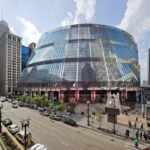
The Thompson Center has long been one of Chicago’s most debated buildings. Designed by architect Helmut Jahn and completed in 1985, the structure reinterpreted the traditional state capitol concept with a bold inside-out approach. Its dramatic curved glass atrium, transparent corner entrance, and vibrant postmodern language made it instantly recognizable.
But the building also became known for practical problems. Over the years, critics pointed to:
- High maintenance costs
- Poor climate control
- Leak and structural concerns
- The financial burden of operating such a complex civic building
Because of those issues, Illinois officials repeatedly discussed selling the site and potentially clearing it for redevelopment. Preservationists, architecture critics, and advocacy groups argued that demolishing the Thompson Center would erase an important chapter of postmodern architecture. Their efforts helped shift the conversation from replacement to restoration.
Why Google’s Thompson Center Project Matters
This piece of architecture news matters because it reflects a larger change in how cities and developers value aging landmarks. Rather than treating difficult buildings as disposable, major institutions are increasingly recognizing the environmental, cultural, and urban benefits of adaptive reuse.
Google’s involvement was a turning point. After developer The Prime Group acquired the property in 2022 with a commitment to renovation, Google announced plans to purchase the building once the work was completed. That move effectively removed the immediate demolition threat and gave the project long-term momentum.
For Chicago, the implications are substantial. Google has been part of the city since opening its first office there in 2000, and its local workforce has expanded to more than 2,000 employees. Relocating into the Thompson Center signals continued confidence in downtown Chicago while anchoring a major preservation-led redevelopment in one of the city’s most visible locations.
The New Vision: Work, Culture, and Community Under One Roof
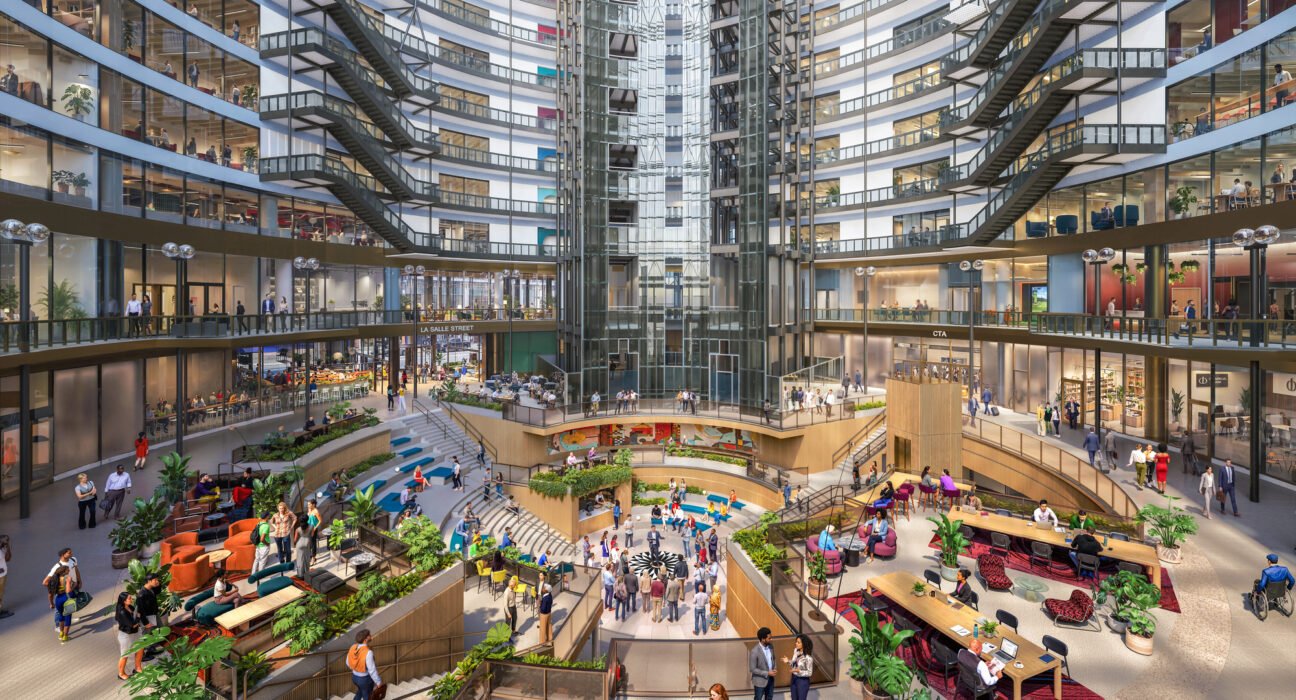
The redesign was developed with Architecture Plus Information (A+I), now part of Perkins&Will, and aims to weave the building more deeply into daily life in the Loop. This is not just a workplace upgrade. It is a reprogramming of the property as a public-facing urban destination.
Key Design Features in the Latest Renderings
The newly released images highlight several major interventions that reshape the building experience:
- An expanded central opening beneath the 17-story atrium
- A dramatic cascading staircase with terraced seating
- Integrated retail and food offerings
- Flexible areas for seasonal events and cultural programming
- A renewed public plaza designed to attract foot traffic and activity
These gestures suggest a more inviting and experiential interior environment, one that balances workplace function with civic openness. In luxury design terms, the emphasis is less about exclusivity and more about high-impact spatial experience: monumental circulation, sculptural forms, layered public amenities, and a renewed sense of grandeur.
Art and Public Engagement as Core Elements
Another compelling aspect of this architecture news story is the project’s cultural dimension. The plaza will feature Vector, a 30-foot sculpture by artist Sanford Biggers inspired by quilt patterns. Google is also partnering with After School Matters, a Chicago nonprofit that creates paid opportunities for teens, who will contribute a large-scale commissioned artwork for the atrium.
That combination of architecture, public art, and youth engagement gives the redevelopment broader civic value. It positions the Thompson Center not simply as a restored building, but as a platform for community presence and cultural production.
A Postmodern Icon Reconsidered
For years, the Thompson Center represented the challenge of preserving late-20th-century architecture. Unlike older masonry landmarks, postmodern and glass-heavy buildings often face skepticism when their performance declines. Yet many are historically important, formally daring, and central to the identity of their cities.
This architecture news moment shows how perceptions are changing. Instead of dismissing the Thompson Center as obsolete, the redevelopment treats its most distinctive qualities as assets. Its soaring atrium, urban scale, and visual drama become the foundation for a new chapter.
That approach aligns with a wider international pattern. Across major cities, designers are transforming existing structures rather than tearing them down. Adaptive reuse has become a hallmark of forward-thinking luxury architecture because it combines sustainability, heritage value, and design innovation in a single strategy.
What This Means for Chicago’s Design Future
The Thompson Center sits on a full city block in the Loop, making its future unusually consequential. A successful redesign could help strengthen downtown foot traffic, support local retail, and reinforce Chicago’s status as a city where architectural ambition still shapes public identity.
It also sends a message to owners of other complex buildings: thoughtful reinvention can be more powerful than demolition. In a market increasingly attentive to sustainability and placemaking, preserving embodied carbon and revitalizing landmark structures can deliver both cultural prestige and long-term economic value.
From a luxury architecture perspective, the project stands out because it elevates everyday urban experience. Instead of creating a sealed corporate enclave, the plan appears to embrace openness, mixed-use energy, and a richly layered public realm. That design philosophy is likely to resonate far beyond Chicago.
Conclusion
The latest architecture news around Google’s Thompson Center redevelopment marks a decisive victory for preservation-minded design. What was once a candidate for demolition is becoming a renewed civic landmark shaped by adaptive reuse, public art, and contemporary workplace thinking.
For anyone watching the future of luxury architecture, urban redevelopment, and postmodern preservation, the Thompson Center offers a clear takeaway: great buildings do not always need replacing. Sometimes, the boldest design move is to transform what already exists into something even more relevant for the city around it.