Architecture news this week reveals a profession balancing urgent social needs with ambitious design innovation. From a new European housing rights initiative to museum and waterfront competition shortlists, the latest developments show how architecture is shaping cities through adaptive reuse, public space, sustainability, and high-design cultural projects.
For readers interested in luxury architecture, luxury home design, and the broader future of the built environment, the week’s biggest stories offer a clear message: the most compelling projects today combine beauty, civic value, and long-term resilience.
Architecture News Highlights a Stronger Focus on Housing and Reuse
One of the most important stories in recent architecture news is the European Citizens’ Initiative, “Right to Housing! Now and Forever.” The campaign calls for affordable, sustainable, and equitable housing across the European Union, with special emphasis on making better use of existing building stock rather than relying solely on new construction.
This approach reflects a growing consensus in contemporary architecture: upgrading, converting, and preserving buildings can be just as transformative as building from scratch. It also aligns with luxury design trends that increasingly value heritage, craftsmanship, and sustainability.
Several projects reinforce this direction:
- Chicago’s Thompson Center is being reimagined instead of demolished, preserving a major postmodern landmark while adapting it for work, culture, and community life.
- The African Futures Institute in Accra has established its headquarters in a converted warehouse, showing how reuse can support architecture education, research, and public programming.
- Oxford’s Ellison Institute of Technology, designed by Foster + Partners, retains a substantial portion of existing structures while creating new research environments.
Across global cities, adaptive reuse is no longer a compromise. It is becoming a design strategy that combines environmental intelligence with spatial richness.
Landmark Projects Drive Global Architecture News
Beyond housing and reuse, this week’s architecture news also features major cultural and infrastructure openings in North America and Europe. These projects demonstrate how large-scale architecture continues to define city identities while responding to new expectations around sustainability and public engagement.
Los Angeles and Toronto Deliver Ambitious New Spaces
In Los Angeles, MAD Architects’ Lucas Museum of Narrative Art has officially opened, adding a bold new cultural destination to the city’s architectural landscape. Its arrival marks a notable moment for museum design, where sculptural form and visitor experience are expected to work together seamlessly.
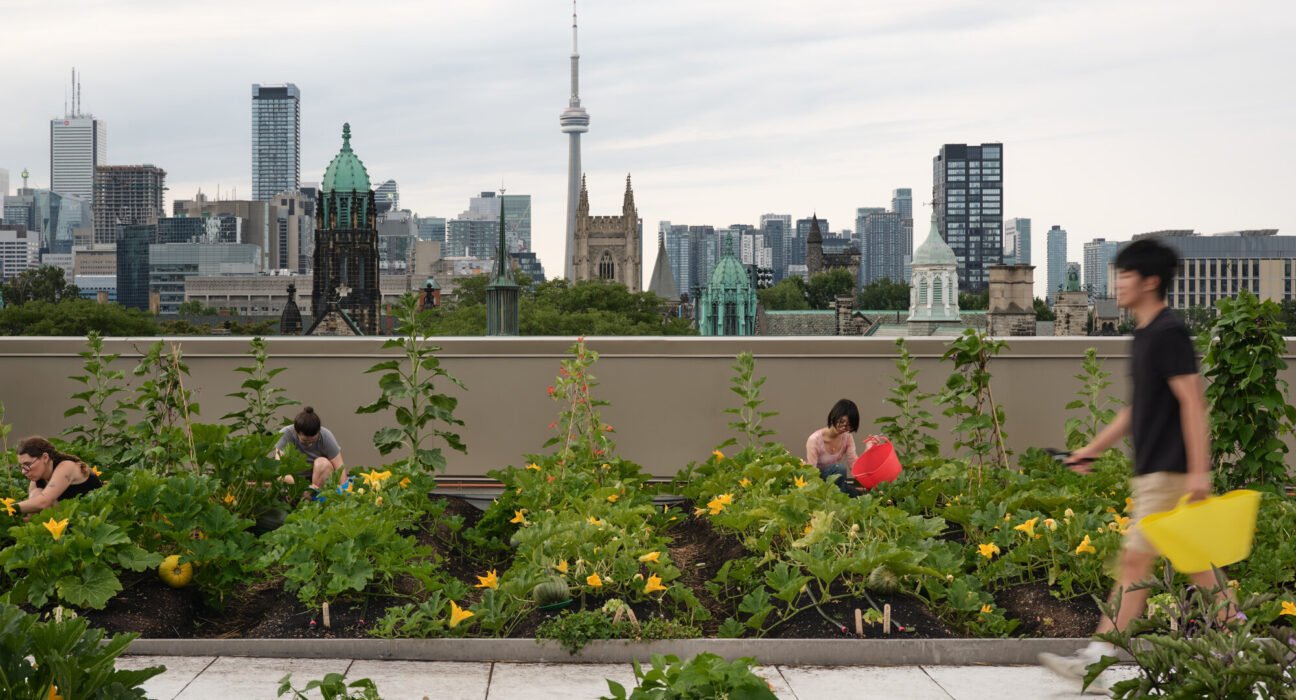
In Toronto, Mecanoo and RDHA have completed the Lawson Centre for Sustainability at Trinity College. The project stands out for its integrated farm-to-table concept, combining:
- rooftop urban agriculture
- community-oriented kitchen spaces
- student housing
- sustainability-focused programming
For luxury home and luxury decor audiences, the project is especially relevant because it reflects a growing design movement toward wellness, local food systems, and lifestyle-driven architecture.
Spain Advances Major Infrastructure and Temporary Design
Spain also features prominently in this round of architecture news. A team led by Sener with RSHP and ERRE has been selected for Valencia Central Station, a major underground transport hub that will also refurbish the historic Valencia Nord Station. It is a notable example of infrastructure meeting heritage conservation.
Meanwhile in Madrid, BIG has opened Macondo Park, a temporary cultural landscape tied to a high-profile concert residency. The project was designed for disassembly and reuse after the event, proving that even temporary architecture can be resource-conscious and visually striking.
Competition Shortlists Put Public Space and Heritage in the Spotlight
Some of the most exciting architecture news this week comes from competition shortlists, where globally recognized firms are shaping the future of treasured public and cultural sites.
Musée Picasso in Paris Moves Toward a New Era
The Musée national Picasso-Paris has entered a new phase in its Picasso 2030 transformation, with five finalist teams selected for the redesign of the museum and its landscape. The brief includes a sculpture garden, a contemporary wing for temporary exhibitions, and the reorganization of existing public spaces inside the historic Hôtel Salé.
The shortlist includes respected names such as Lina Ghotmeh, RCR, Stanton Williams, and Francesca Torzo. What makes this project especially compelling is its complexity: the winning proposal must balance the demands of a global museum with the sensitivity required by a protected heritage setting.
It is a perfect case study in how luxury architecture today often means refinement, cultural depth, and landscape integration rather than excess.
Portland Waterfront Park Competition Narrows the Field
In the United States, Portland has shortlisted three teams for the redesign of Governor Tom McCall Waterfront Park: BIG, Studio Egret West, and SWA Group. The competition centers on transforming the 30-acre riverfront site into a more ecological, inclusive, and active civic destination.
The design brief prioritizes:
- better access to the river
- ecological restoration
- inclusive public space
- year-round programming
- stronger connections to existing landmarks
As cities rethink waterfronts worldwide, this project stands out as a model for landscape architecture that serves both environmental and social goals.
Dubai and Oxford Show the Future of High-Performance Design
Among the most visually dramatic items in this week’s architecture news is SOM’s design for Dubai Holding Headquarters. The tower introduces circular floor plates, suspended structural systems, garden terraces, and a façade calibrated for solar performance. The result is a highly engineered workplace that also aims to feel open, green, and connected to the city.
Equally notable is Foster + Partners’ latest work in Oxford for the Ellison Institute of Technology. Rather than erase what was already there, the design repurposes partly built structures and adds shared atria, flexible laboratories, auditoriums, and a rooftop greenhouse. It is a sophisticated reminder that innovation often comes from intelligent adaptation.
Together, these projects highlight key themes shaping current design discourse:
- sustainability through reuse and efficiency
- workplaces designed around wellbeing
- blending advanced engineering with landscape
- spaces that encourage collaboration and community
What This Week’s Architecture News Means for Luxury Design
The clearest takeaway from this week’s architecture news is that architectural excellence is increasingly measured by more than image alone. Whether the project is a museum in Paris, a research campus in Oxford, or a headquarters in Dubai, success now depends on how well a design addresses climate, culture, flexibility, and public life.
For those following luxury architecture, luxury home decor, and luxury design trends, this shift matters. The new standard of prestige is not only iconic form, but purposeful form—spaces that feel elevated while also performing responsibly. In that sense, the most important architecture news is not just about what is being built, but how intelligently the future is being designed.