Architecture news this week reveals a clear shift in how cities are investing in culture, public life, and long-term urban identity. From landmark museums in Sydney to waterfront regeneration in Bratislava, the latest developments show how architecture is increasingly being used to create civic value, elevate design quality, and deliver more meaningful cultural experiences.
For readers interested in luxury architecture, luxury design, and the future of refined urban living, these projects offer more than headlines. They point to a broader global movement: cultural buildings and mixed-use masterplans are becoming signature destinations that blend design excellence, public access, heritage, and placemaking.
Architecture News Highlights a New Era for Cultural Institutions
The strongest theme in this round of architecture news is the rise of cultural architecture as a catalyst for citymaking. Museums, art foundations, educational hubs, and event spaces are no longer standalone buildings. They are increasingly conceived as integrated public destinations that bring together exhibitions, learning, performance, landscape, and community engagement.
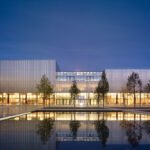
In Sydney, the newly opened Powerhouse Parramatta Museum by Moreau Kusunoki and Genton stands out as one of Australia’s most significant cultural infrastructure projects. Located in Western Sydney, the museum combines gallery spaces with educational facilities and public programming, helping expand access to culture beyond traditional city-centre institutions. Its significance lies not only in scale, but in the way it positions architecture as a driver of broader urban development.
Elsewhere, the Sharjah Architecture Triennial continues to push discourse around civic space and collective futures. Its latest edition brings together participants through lectures, performances, screenings, and discussions, reinforcing the role of architecture as both a physical practice and a cultural framework.
These stories in architecture news underscore a growing expectation that cultural buildings should do more than house collections. They must support public life, invite diverse audiences, and form a lasting relationship with their urban setting.
Major Museum Expansions Put Flexibility and Experience First
Another major development in architecture news is the transformation of existing institutions to meet changing expectations around art, education, and visitor experience. Rather than simply adding square footage, today’s museum expansions are being designed around flexibility, multipurpose use, and stronger public engagement.
In Miami’s Design District, Gensler has been selected to lead the renovation and expansion of the Institute of Contemporary Art’s second building. The project, expected to open in 2027, will add 30,000 square feet and double the institution’s capacity through eight galleries, educational areas, and a flexible venue for public events. This approach reflects a larger design trend in which museums must accommodate rotating exhibitions, learning programmes, and community use within a single architectural framework.
In Dubai, Sumayya Vally of Counterspace has unveiled plans for the Elie Khouri Art Foundation’s permanent home. The project transforms an existing villa in Jumeirah 1 into a contemporary art institution while preserving aspects of its domestic identity. Galleries, gardens, pavilions, and educational spaces will coexist within a setting that feels intimate rather than monumental.
For luxury design observers, this is an especially compelling direction. Adaptive reuse and carefully layered spatial experiences often produce richer environments than entirely new construction, particularly when landscape, materiality, and memory are allowed to shape the final design.
Why these museum projects matter
- They expand access to art and education
- They prioritize flexible, multi-use programming
- They connect architecture with urban regeneration
- They show how adaptive reuse can create distinctive cultural destinations
Waterfront Redevelopment Drives the Next Wave of Architecture News
Among the most ambitious items in this week’s architecture news is KCAP’s award-winning proposal for Bratislava’s Winter Harbour redevelopment. Although the scheme placed second in the international competition, it attracted attention for its balanced approach to heritage, public access, and climate resilience.
The 45-hectare former industrial harbour is envisioned as a mixed-use district with around 10,400 homes, 5,800 workplaces, and three new parks. Just as important, the plan would reopen five kilometres of Danube waterfront to the public. Historic cranes, rail tracks, warehouses, and the 1904 pumping station are retained and woven into a new urban fabric, preserving industrial memory while supporting contemporary life.
The proposal also introduces flood-responsive landscape planning, allowing large portions of the waterfront to remain floodable. In a time when climate adaptation is central to responsible planning, this kind of strategy represents the future of high-quality urban redevelopment.
For those following architecture news through the lens of luxury home and luxury real estate trends, waterfront masterplans like this are particularly influential. They set the tone for how future residential districts may combine premium living, walkability, heritage character, and ecological resilience.
Key features of the Bratislava proposal
- Mixed-use development with housing and workplaces
- Three new parks and expanded public realm
- Reopened access to the Danube waterfront
- Preservation of industrial heritage elements
- Flood-adaptive landscape design
Stadium Districts and Global Alliances Expand the Scope of Architecture News
This week’s architecture news also shows that cultural and urban transformation is no longer limited to museums alone. In London, Populous has been appointed to develop a spatial strategy for London Stadium and its surrounding site in Queen Elizabeth Olympic Park. The study will explore leisure, hospitality, conference, and mixed-use development opportunities, alongside improvements to public space and connectivity.
This kind of planning reflects the growing importance of destination districts, where sports, entertainment, hospitality, and landscape design converge. For luxury architecture and luxury decor markets, these districts often influence adjacent residential demand, retail design, and high-end lifestyle offerings.
At the institutional level, the newly announced alliance between MoMA, Centre Pompidou, and M+ signals another important shift in architecture news: global collaboration is becoming a strategic extension of physical space. Through shared exhibitions, research, loans, and conservation efforts, these museums are expanding cultural reach without sacrificing their individual identities. In practical terms, architecture becomes the platform for international exchange as much as local engagement.
What This Week’s Architecture News Means for Design-Led Cities
The bigger takeaway from this cycle of architecture news is that cultural and civic projects are increasingly expected to perform on multiple levels. They must be visually compelling, socially inclusive, environmentally responsive, and economically meaningful. The best projects are not simply iconic objects; they are complete frameworks for experience.
Several common threads stand out:
- Culture is being used as a foundation for urban renewal
- Public programming is now central to architectural value
- Adaptive reuse is gaining importance in premium design circles
- Landscape and resilience strategies are shaping major masterplans
- Global institutions are collaborating in ways that extend architectural influence
In short, architecture news this week offers a revealing snapshot of where the industry is headed. Whether through a new museum in Sydney, an art foundation in Dubai, or a reimagined waterfront in Bratislava, the message is consistent: the most important projects today are designing not just buildings, but cultural ecosystems.
For anyone tracking luxury architecture, luxury home decor inspiration, or the future of citymaking, that is the clearest lesson from this week’s architecture news.