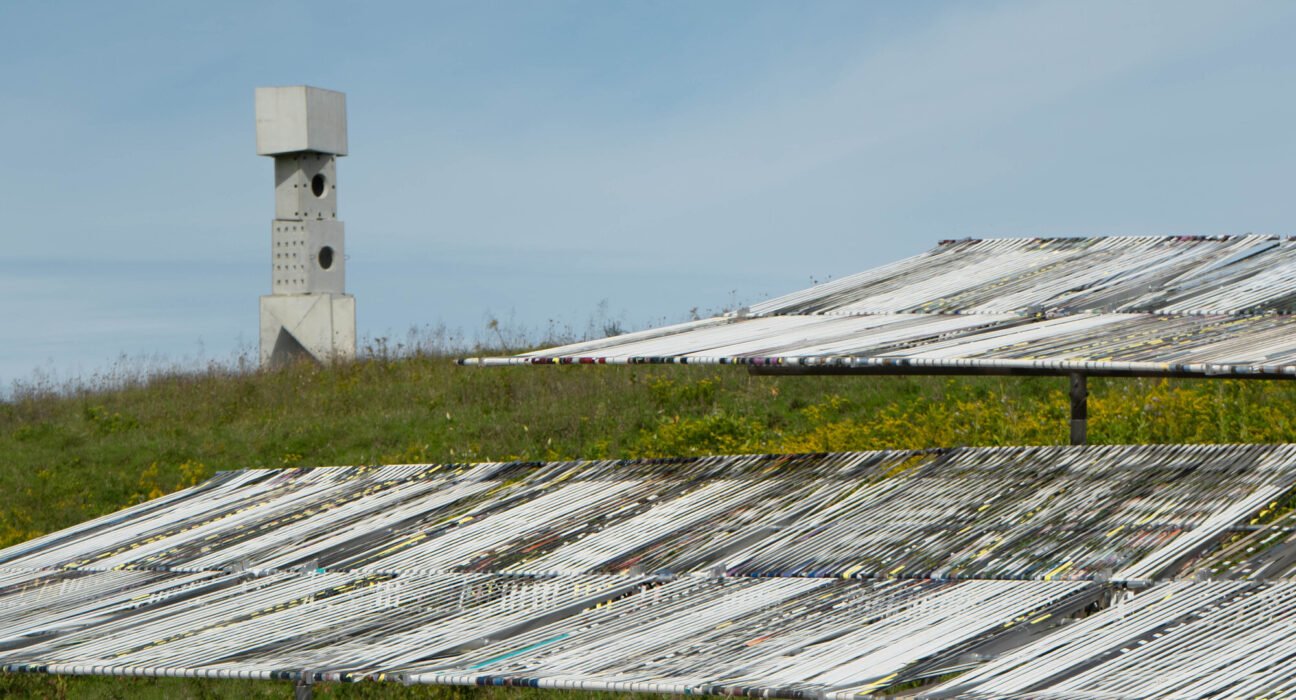
Architecture news rarely captures movement, memory, and spatial culture in a single story as elegantly as TAELON7’s Limbo Engawa. The installation’s journey from Accra to Art Omi in New York highlights how contemporary design can translate place, ritual, and luxury spatial thinking across continents.
Positioned at the intersection of art, architecture, and immersive environment design, Limbo Engawa reflects a growing global appetite for spaces that do more than impress visually. In today’s high-end design landscape, the most compelling projects invite pause, transition, and reflection—qualities that resonate deeply across luxury architecture, luxury decor, and curated residential aesthetics.
Architecture News: Why Limbo Engawa Matters
In the world of architecture news, installations often serve as testing grounds for larger ideas. Rather than functioning as static sculpture, Limbo Engawa appears to operate as a threshold space—an environment that encourages visitors to experience architecture as sequence, atmosphere, and encounter.
The title itself is revealing. “Engawa” traditionally refers to the intermediary zone between interior and exterior in Japanese architecture, often understood as a veranda-like edge that softens boundaries between built form and landscape. Paired with the word “limbo,” the project suggests a suspended condition: a place between geographies, identities, climates, and meanings. That conceptual layering gives the installation an unusual richness and explains why it stands out in current architecture news.
Its move from Accra to upstate New York is more than a logistical shift. It reframes the work in a new cultural and environmental context, allowing audiences to compare how setting transforms perception. What may feel urban, tropical, and socially charged in Ghana can take on a quieter, more contemplative dimension within Art Omi’s art-and-landscape setting.
From Accra to Art Omi: A Cross-Continental Design Dialogue
The relocation of Limbo Engawa underscores a key theme in contemporary architecture news: design is increasingly mobile, international, and context-aware. Projects are no longer defined solely by a fixed site; instead, they can evolve as they encounter new terrains and audiences.
Moving an installation from Accra to New York creates a dialogue between:
- West African urban energy and rural American landscape calm
- Public cultural exchange and institutional art presentation
- Climate-responsive spatial thinking and gallery-adjacent installation practice
- Local material expression and global design discourse
This kind of transnational movement is especially relevant for luxury design audiences. High-end architecture today values craftsmanship and exclusivity, but it also increasingly values narrative. A project like Limbo Engawa carries a story of migration, reinterpretation, and layered cultural reference—qualities that elevate it beyond aesthetics alone.
What Luxury Architecture Can Learn From the Installation
Although Limbo Engawa belongs to the world of artistic installation, its ideas are highly applicable to luxury architecture and luxury home design. The best residential environments often rely on subtle transitions rather than grand gestures. Thresholds, framed views, filtered light, and in-between zones can create a profound sense of refinement.
The power of transitional spaces
One of the clearest lessons from this architecture news story is the importance of designing spaces between spaces. In luxury homes, these might include:
- Covered terraces that mediate between garden and interior
- Gallery corridors that slow movement through a residence
- Courtyards that bring light and ventilation into private areas
- Window seats, loggias, and screened pavilions for quiet retreat
These architectural moments often define a property’s emotional character more than primary rooms do. They create rhythm, intimacy, and sensory richness.
Materiality as atmosphere
Another takeaway is the role of material expression. Even when details vary by site, installations like Limbo Engawa typically gain strength from texture, shadow, and tactile contrast. For luxury interiors and luxury home decor, that translates into:
- Natural woods with visible grain
- Stone surfaces that age gracefully
- Layered textiles that soften hard architectural lines
- Handcrafted finishes that emphasize individuality
In premium residential design, material selection is not merely decorative. It builds mood, authenticity, and permanence.
Why This Story Resonates in Luxury Design
There is a reason this piece of architecture news aligns so naturally with luxury categories. Today’s affluent clients and design enthusiasts are drawn to spaces that feel culturally literate, emotionally intelligent, and visually restrained. Flashy excess has given way to experiential luxury—homes and environments that offer calm, meaning, and connection to place.
Limbo Engawa embodies several values that define this shift:
- Intentionality: every spatial gesture appears concept-driven rather than arbitrary.
- Global perspective: the installation connects multiple geographies without flattening them.
- Immersion: visitors experience the work physically, not just visually.
- Elegance through restraint: subtle spatial ideas often feel more luxurious than overt spectacle.
For readers interested in luxury decor and luxury home decor, the installation is also a reminder that sophisticated spaces are built through editing. The most memorable environments leave room for silence, shadow, and personal interpretation.
A Broader Shift in Architecture News and Cultural Practice
More broadly, this story reflects an evolution in architecture news itself. Coverage is no longer limited to towers, museums, and private residences. Temporary structures, installations, and hybrid art-architecture works now play a major role in shaping design conversations.
These projects matter because they:
- Test new ideas quickly and publicly
- Encourage interdisciplinary collaboration
- Expand architectural discourse beyond conventional buildings
- Invite emotional and sensory forms of engagement
For the luxury sector, that experimentation is invaluable. Many of tomorrow’s most desirable home and hospitality concepts will emerge from these smaller, more agile formats before appearing in large-scale commissions.
Conclusion
As a standout piece of architecture news, TAELON7’s Limbo Engawa demonstrates how design can travel while retaining conceptual depth. Its move from Accra to Art Omi in New York highlights the enduring appeal of threshold spaces, cultural exchange, and atmosphere-driven design.
The clear takeaway is this: whether in an art installation, a luxury residence, or a carefully styled interior, the spaces in between often hold the greatest power. For anyone following architecture news, this project is a compelling example of how contemporary design can be both globally mobile and deeply rooted in spatial meaning.