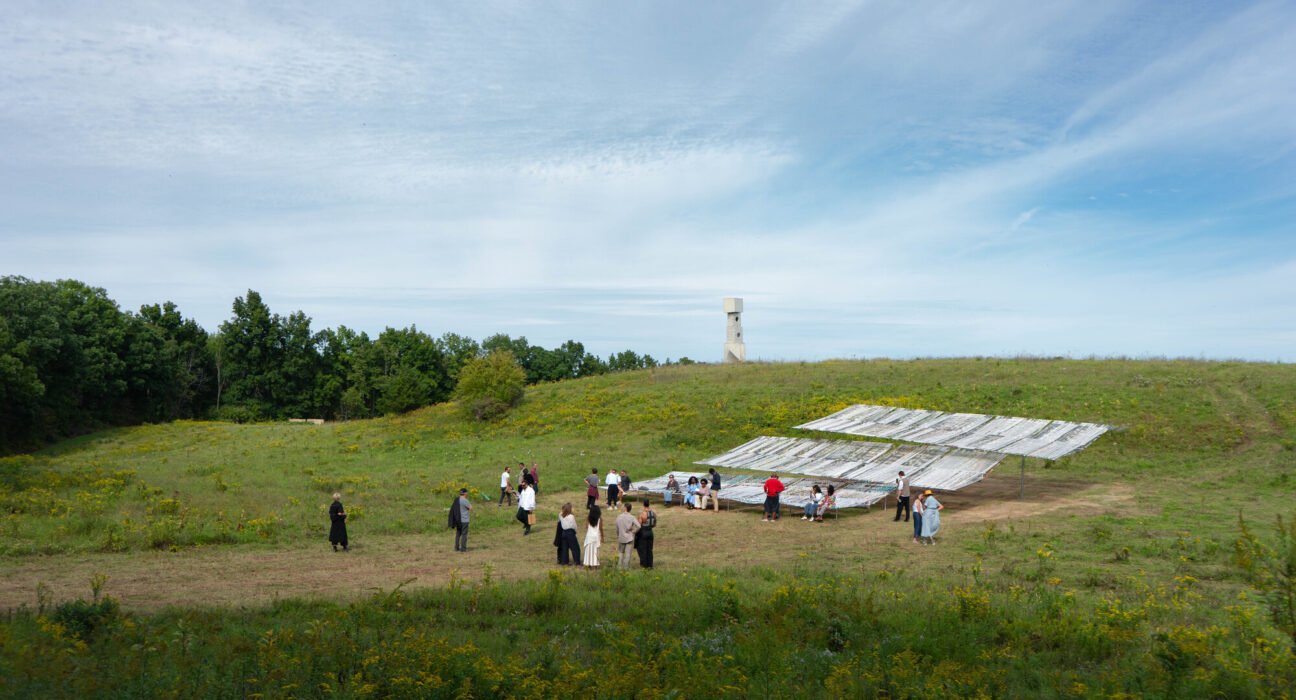
Architecture news rarely captures movement, memory, and atmosphere as elegantly as TAELON7’s Limbo Engawa. Now relocated from Accra to Art Omi in New York, the installation offers a striking example of how contemporary design can shift meaning across geographies while retaining its emotional power.
For readers interested in luxury architecture, luxury decor, and luxury design, this project stands out not because it is lavish in a conventional sense, but because it elevates space through material intelligence, cultural layering, and spatial restraint. In an era when design often competes for attention, Limbo Engawa demonstrates the sophistication of quiet architecture.
Architecture News: Why Limbo Engawa Matters
At its core, Limbo Engawa is an installation about transition. The title itself suggests an in-between condition: “limbo” evokes suspension, while “engawa” references the threshold space common in Japanese architecture, positioned between interior and exterior life. Together, these ideas form a powerful framework for an installation that invites viewers to experience architecture as passage rather than object.
The move from Accra to Art Omi in New York expands the work’s resonance. In Accra, the installation existed within one cultural and environmental context; in upstate New York, it encounters a different landscape, climate, and audience. That relocation is not just logistical—it becomes part of the work’s architectural story.
From an architecture news perspective, this project reflects several important design themes:
- The growing role of temporary installations in architectural discourse
- The importance of cross-cultural references in contemporary design
- The power of threshold spaces in shaping emotional experience
- The way site changes can transform perception and meaning
From Accra to New York: A Shift in Setting
One of the most compelling aspects of this story is the journey itself. When an installation moves from one city to another, it does more than occupy a new site—it begins a new dialogue. Accra and Art Omi are distinct in atmosphere, rhythm, and spatial character, and those differences inevitably influence how the installation is read.
In Accra, viewers may have engaged the work through the lens of urban energy, regional material culture, and local architectural conversations. At Art Omi, known for its landscape-driven art and architecture setting, the same installation can be understood more meditatively, framed by open space and a slower encounter with form.
This is what makes the project notable within architecture news: it highlights how architecture is never entirely fixed. Even when its physical components remain similar, context changes everything. Light, season, surrounding vegetation, and visitor movement all contribute to a renewed spatial experience.
The importance of site-responsive design
Luxury design today increasingly values adaptability over excess. Site-responsive work feels more refined because it acknowledges its environment instead of dominating it. Limbo Engawa embodies that principle by functioning as an experiential piece that can be reinterpreted through place.
For designers and homeowners alike, the lesson is clear: exceptional spaces are often defined by how they mediate their surroundings. Whether in a gallery, garden pavilion, or luxury home, the best design creates a threshold between built form and the world beyond it.
What Limbo Engawa Says About Luxury Architecture
Although the installation belongs to the art and architecture world, its ideas translate beautifully into luxury architecture and luxury home decor. Contemporary luxury is no longer limited to ornate finishes or oversized statements. Instead, it is often expressed through nuance:
- Spatial calm – environments that encourage reflection
- Material authenticity – surfaces and structures that feel honest and tactile
- Cultural depth – references that add meaning without becoming decorative clichés
- Indoor-outdoor flow – seamless transitions between shelter and landscape
Limbo Engawa aligns with all four. Its conceptual emphasis on threshold space makes it especially relevant to luxury homes that prioritize courtyards, terraces, screened walkways, and contemplative transition zones. These are the moments that can make a residence feel curated rather than simply expensive.
For those following architecture news for inspiration, the installation reinforces a growing design truth: the most memorable spaces are often understated. They use proportion, rhythm, and atmosphere to shape experience rather than relying on visual overload.
Luxury decor lessons from the installation
Interior and home decor professionals can also draw practical ideas from this project. The concept of engawa translates well into residential design, particularly in homes where lifestyle and wellbeing are central priorities.
Design takeaways include:
- Using transitional zones such as covered terraces or vestibules to soften room-to-room movement
- Layering natural textures for a more grounded, elevated feel
- Creating visual pauses instead of filling every surface or corner
- Framing views so the landscape becomes part of the decor language
These strategies are especially effective in luxury home projects where serenity, privacy, and craftsmanship matter as much as aesthetics.
Why Installation Design Continues to Shape Architecture News
Temporary architecture has become one of the most dynamic parts of the design world. Installations allow architects and artists to test ideas quickly, engage the public directly, and explore materials or cultural themes in ways that conventional buildings often cannot. That is one reason projects like Limbo Engawa earn attention in architecture news.
They function as design laboratories. A pavilion or installation can reveal how people gather, pause, move, and interpret space. Those insights frequently inform larger architectural commissions, from private residences to hospitality environments and cultural institutions.
In the luxury sector, this matters because clients increasingly want homes and interiors that feel experiential. They are looking for spaces with emotional texture—places that support contemplation, connection, and sensory richness. Installation-based thinking can help deliver that.
A Broader Cultural Conversation
TAELON7’s project also fits into a broader conversation about global design exchange. As architecture becomes more international, the most thoughtful work avoids flattening cultural references into trends. Instead, it uses them as frameworks for deeper engagement. The idea of the threshold, so central to engawa, is one such framework: universally understandable yet culturally specific in origin.
That balance is part of what makes this story compelling for audiences interested in luxury design and refined living. It shows that high-end design can be intellectual, poetic, and place-aware all at once.
In that sense, this piece of architecture news is about more than a relocation. It is about how architecture travels, how meaning shifts, and how design can create continuity between distant places.
Conclusion
As architecture news, the move of TAELON7’s Limbo Engawa from Accra to Art Omi in New York is significant because it demonstrates the enduring value of threshold space, cultural nuance, and site-sensitive design. For anyone working in luxury architecture, luxury decor, or luxury home design, the installation is a reminder that true sophistication often lies in atmosphere, transition, and restraint. In a fast-moving design world, Limbo Engawa proves that quiet spaces can leave the deepest impression.