Architecture news rarely captures the public imagination quite like a major city street being reinvented in real time. London’s Oxford Street has now entered its first traffic-free phase, marking a pivotal shift in how one of the world’s most famous retail corridors will function, feel, and evolve.
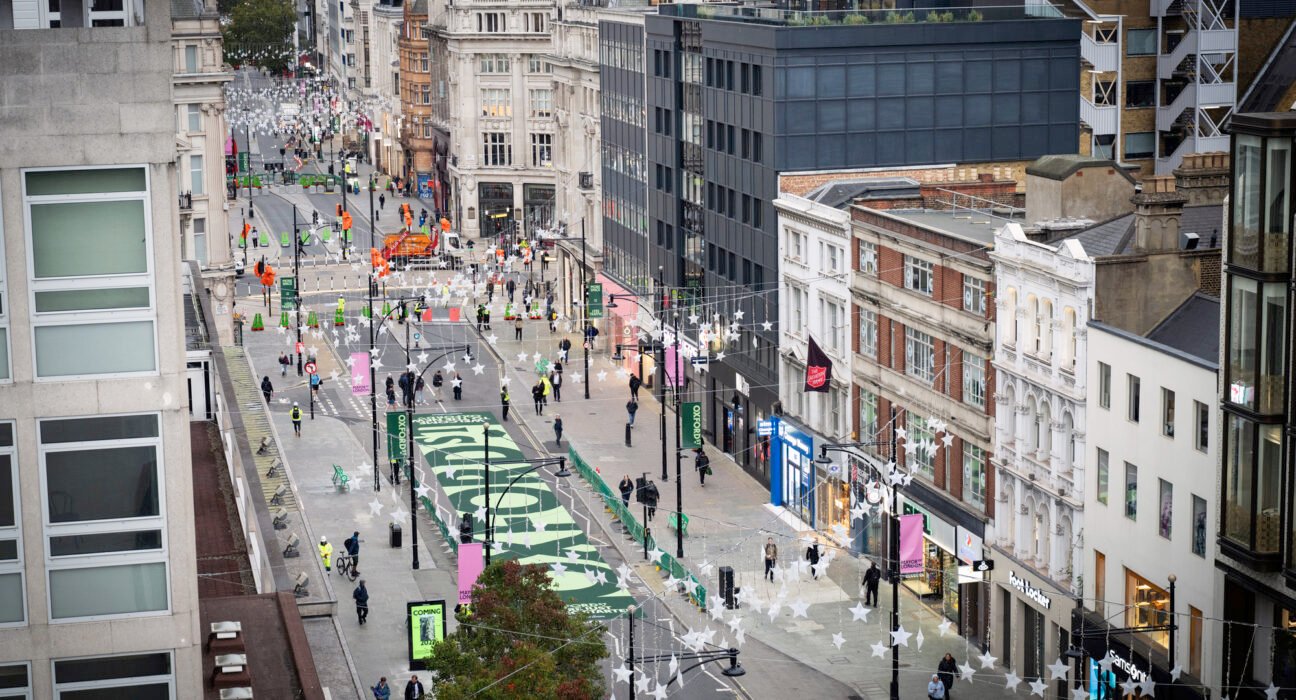
Nearly a kilometer of Oxford Street, stretching from Orchard Street to Great Portland Street, is now closed to private motor vehicles, buses, taxis, cycles, scooters, and pedicabs. The move is the first visible step in a long-debated pedestrianization plan that blends urban design, public realm strategy, sustainability, and placemaking at an unprecedented scale in central London.
Architecture News: Oxford Street Opens Its First Traffic-Free Phase
For followers of architecture news, this is more than a transport update. It is a landmark public space project with implications for luxury retail, hospitality, streetscape design, and the future of high-footfall urban districts.
The idea of pedestrianizing Oxford Street was first floated in 2016 by Mayor Sadiq Khan. Although an earlier proposal stalled in 2018, the initiative was revived in 2024 and later secured majority public support through fresh consultation rounds. Final approval arrived in February 2026, and the first traffic-free section officially opened on October 26.
This phase is being delivered under the leadership of East, the East London-based landscape and urban design practice overseeing the transformation. The broader consultant team includes internationally recognized names in urban strategy, landscape architecture, sustainability, and transport planning, while HawkinsBrown is shaping the long-term design vision for the full route from Marble Arch to Tottenham Court Road.
A Luxury Urban Experience Beyond Retail
Oxford Street has long been associated with shopping, but this redesign points to a broader ambition: turning the corridor into a more layered destination with stronger lifestyle appeal. In luxury architecture and luxury design terms, that means creating a place people want to linger in, not just pass through.
The street’s future character is expected to bring together:
- Flagship retail and premium storefront experiences
- New workplaces and mixed-use destinations
- Leisure, hospitality, and cultural programming
- Improved public seating and social spaces
- Greener, more climate-responsive urban landscaping
This evolution aligns with a wider global pattern seen in top-tier city centers, where the public realm is treated as an extension of the luxury experience. Streets are no longer merely conduits for movement; they are curated environments that influence consumer behavior, dwell time, and brand value.
Design Details Shaping the New Oxford Street
One reason this story stands out in architecture news is the careful attention being paid to transitional design. Rather than waiting for a fully finished masterplan, the project is using interim interventions to test how people interact with the new pedestrian environment.
Surface Materials and Movement
During the transition period, existing road markings are being removed and replaced with a more cohesive paving language. A textured stone surface will help guide movement along the street, while larger pavers will define north-south crossing points. This material strategy is subtle but important: it helps organize circulation without relying on conventional traffic infrastructure.
Street Furniture as Social Infrastructure
Benches made from timber and steel are being placed where they support use without obstructing pedestrian flow. Regular seating intervals are designed to accommodate:
- Resting and waiting
- Casual meetings
- Outdoor eating
- Short pauses during shopping trips
Tables and seating zones are also distinguished by varied surface textures, creating natural stopping points. In luxury home decor terms, this attention to texture, materiality, and function mirrors principles often seen in high-end residential interiors: comfort, clarity, and understated elegance.
Planting and Environmental Performance
Landscape design is another major feature of the project. Tree planting will play a practical and aesthetic role by helping reduce the urban heat island effect, intercept rainwater, capture carbon, and support biodiversity. Trees will initially be grown in large containers before later being planted permanently into the ground.
For readers interested in luxury home, luxury decor, and biophilic design, this reflects a growing crossover between residential design values and public urban environments. Wellness, greenery, and sensory comfort are becoming central to how premium spaces are conceived, whether inside a home or across a major city street.
Why This Matters for Architecture, Design, and City Living
This chapter in architecture news matters because Oxford Street is functioning as a live case study in how iconic streets can be recalibrated for modern urban life. The project is not only about removing vehicles; it is about rewriting the relationship between commerce, mobility, public comfort, and environmental resilience.
Key takeaways include:
- Pedestrian-first design is now central to major city branding. Global shopping districts increasingly compete on experience, not just retail mix.
- Temporary interventions can inform permanent excellence. Testing furniture layouts, movement patterns, and user behavior before full construction reduces long-term design risk.
- Sustainability is inseparable from premium design. Shade, planting, stormwater management, and low-carbon thinking are now expectations, not extras.
- Public space affects economic value. Better streetscapes can strengthen footfall, improve visitor perception, and support adjacent businesses.
The transition phase will also serve as an evidence-gathering period. Built-in sensors in street furniture will monitor movement and duration of use, while feedback will be collected from residents, businesses, workers, accessibility groups, and transport partners. That data will shape the permanent scheme for this section, with construction expected to begin later in 2027 and completion targeted for 2028.
What Comes Next for Oxford Street
Later stages of the project will expand the transformation with more permanent public realm upgrades, including two new public squares near Holles Street and Duke Street. These additions are expected to strengthen Oxford Street’s role not only as a retail destination but also as a civic and cultural one.
For anyone tracking architecture news, the significance is clear: Oxford Street is becoming a model for how historic commercial corridors can adapt to contemporary demands without losing their identity. The combination of pedestrianization, climate-aware landscape design, and luxury-level placemaking suggests a future where urban streets feel more human, more elegant, and far more livable.
In the end, this is why architecture news around Oxford Street resonates so widely. It shows that when design, policy, and public ambition align, even the busiest streets can be transformed into places of comfort, beauty, and long-term value.