Architecture news is increasingly focused on one powerful urban shift: the return of streets to people. From iconic shopping avenues to downtown corridors and inner-city highways, a new wave of pedestrian-first projects is reshaping how luxury cities look, feel, and function.
Across London, New York, Houston, and Stockholm, pedestrianisation is no longer a niche planning idea. It is becoming a sophisticated design strategy tied to retail revival, climate resilience, public wellness, and high-value placemaking. For readers interested in luxury architecture, luxury design, and the future of premium urban living, these four initiatives offer a revealing snapshot of where global cities are headed next.
Architecture News Spotlight: Why Pedestrianisation Matters Now
The latest architecture news shows that walkability has become central to modern city-making. As municipalities confront congestion, emissions, changing shopping habits, and demand for more inviting public space, pedestrianisation is emerging as a flexible tool rather than a one-size-fits-all formula.
What makes these projects especially notable is their variety. Some are moving through formal legislation and consultation. Others are advancing through capital construction, while one remains a research-led vision with strong citizen backing. Together, they show how urban design can elevate everyday streets into destinations.
- Economic renewal: pedestrian zones can support retail and hospitality activity
- Climate adaptation: greener, lower-traffic streets reduce heat and pollution
- Public realm quality: wider walkways, plazas, and seating create a more premium urban experience
- Mobility balance: projects increasingly prioritize walking, cycling, and transit over private vehicles
London’s Oxford Street: Pedestrianisation as Retail Regeneration
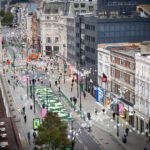
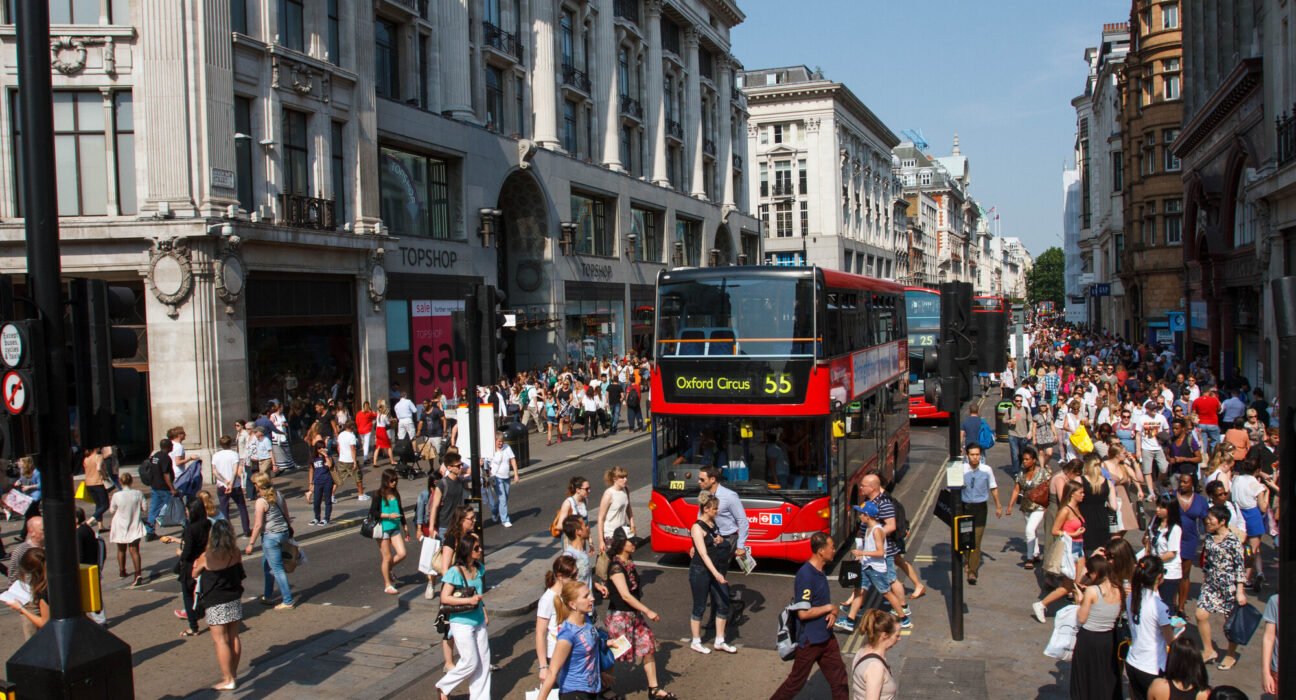
Among the most closely watched stories in architecture news is the future of Oxford Street. Long one of London’s best-known commercial avenues, the street is now at the center of a major transformation aimed at reversing retail decline and improving the public realm.
The initiative began with a formal public consultation launched in February 2025, seeking views on both pedestrianisation and the creation of a new governance structure. Public backing proved substantial, with broad support for a Mayoral Development Corporation and for reducing vehicle dominance on the street.
Since then, the project has moved beyond concept and into statutory and design phases. Transport for London is now leading detailed consultations on traffic and highway changes, while governance reforms are intended to support delivery of a vehicle-free corridor between Orchard Street and Great Portland Street.
For luxury-focused observers, Oxford Street’s reinvention is about more than mobility. It signals how flagship retail districts can be reimagined as high-quality urban experiences, where architecture, landscape, and commerce work together to restore prestige and desirability.
New York’s Paseo Park: From Pandemic Experiment to Permanent Public Space
Another standout in architecture news is New York City’s Paseo Park in Jackson Heights, Queens. What began as a temporary open street during the pandemic has evolved into a long-term plan for the city’s first permanent Open Street.
Stretching 1.3 miles along 34th Avenue, the corridor became a valued public promenade for local residents. Its success helped transform a short-term intervention into a lasting urban design project, backed by the New York City Department of Transportation and shaped by extensive community engagement.
The plan emphasizes:
- Pedestrian-priority shared streets
- Improved plazas and gathering areas
- Landscaping and simplified corridor design
- Multilingual public outreach and workshop feedback
Design work is expected to continue through the coming years, with preliminary phases beginning in 2026 and later schematic and final design stages extending into 2028. In the broader architecture news cycle, Paseo Park stands out as proof that tactical urbanism can mature into permanent civic infrastructure when communities actively shape the outcome.
Houston’s Main Street Promenade: Walkability with a Global Deadline
In Houston, architecture news is tracking a more accelerated form of pedestrianisation. Downtown Houston’s Main Street Promenade is being delivered on a construction timeline tied to the 2026 FIFA Men’s World Cup, giving the project both local significance and international visibility.
The scheme reconfigures seven blocks of Main Street into a more walkable corridor, adding expanded sidewalks, shaded routes, greenery, outdoor dining, plazas, and accessibility upgrades. Rather than a conceptual proposal, this is a project already under construction, with phased closures designed to maintain business activity and pedestrian circulation.
The design reflects a broader shift in how American downtowns position themselves competitively. A high-performing public realm is now viewed as critical infrastructure, not an optional amenity. In premium urban districts, that means streets must support hospitality, events, culture, and daily foot traffic with equal ease.
As architecture news continues to follow Houston’s progress, the promenade may become a model for cities seeking quick but lasting public-realm upgrades ahead of major global events.
Stockholm Superline: A Visionary Green Boulevard for the Future
Not all major stories in architecture news are shovel-ready. Stockholm’s Superline is a powerful example of research-driven urban design, proposing the transformation of the Centralbron motorway into a greener, more people-oriented boulevard.
Developed through the SUPERLINES research project, the initiative combined traffic studies, design scenarios, and citizen participation to imagine an alternative future for a major piece of transport infrastructure. Survey results showed clear public support for replacing the motorway model with a boulevard that better serves the inner city.
The vision includes reducing six traffic lanes to three and reallocating space for:
- Continuous pedestrian routes
- Protected cycling infrastructure
- More greenery and public space
- Improved access to water views
Although the proposal has not yet been adopted for implementation, its significance lies in the evidence it builds for future planning. In today’s architecture news landscape, speculative yet rigorous urban visions often shape tomorrow’s policy decisions.
What These Projects Mean for Luxury Architecture and Design
For the luxury sector, this wave of pedestrianisation carries implications well beyond transport planning. The most desirable districts in the world increasingly rely on exceptional public space. Streets with fewer cars, more planting, better materials, and stronger social life tend to support higher-value real estate, elevated retail environments, and more refined daily experiences.
That is why architecture news around walkable city design matters to luxury homeowners, developers, architects, and design enthusiasts alike. These projects point to a future where prestige is tied not only to buildings, but also to the quality of the spaces between them.
Conclusion: Architecture News Points to a More Walkable Urban Future
The most compelling architecture news today is not just about striking buildings, but about how entire streets are being redesigned for people. London, New York, Houston, and Stockholm each offer a different model, yet all move toward the same goal: creating more resilient, vibrant, and walkable cities.
The takeaway is clear. As pedestrianisation gains momentum, the future of luxury urbanism will be defined by beautiful public realms, smarter mobility, and streets that feel as carefully designed as the architecture that surrounds them. Expect architecture news to keep this conversation front and center.