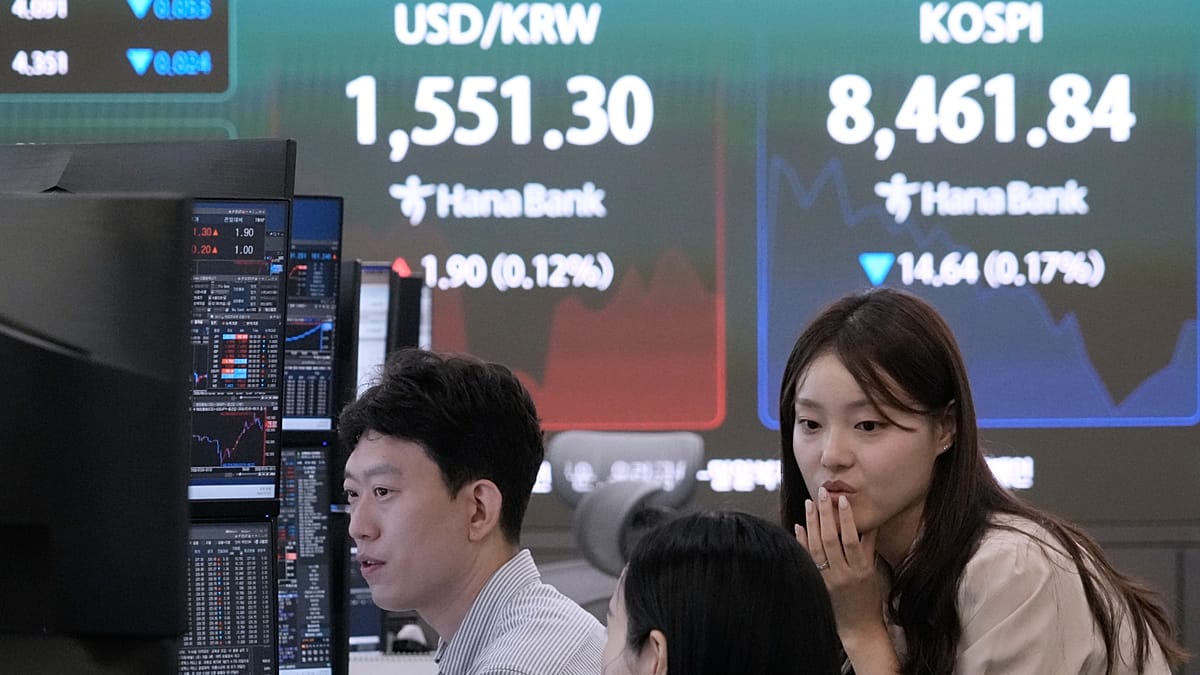
Global market volatility rarely stays confined to trading floors. In 2026, sharp moves in Asian equities, chip stocks and oil prices are sending subtle but meaningful signals into the worlds of luxury architecture, luxury design and high-end interiors. For developers, designers and affluent homeowners, the current climate is becoming a reminder that material sourcing, technology integration and investment timing are all deeply connected to broader economic shifts.
Recent market action shows a clear risk-off mood. Asian stocks fell as semiconductor shares sold off across South Korea, Japan and Taiwan, while European markets opened relatively flat and US futures drifted lower ahead of a closely watched American jobs report. At the same time, oil prices continued to soften, reflecting hopes of improving supply conditions. Together, these developments matter because they influence borrowing costs, construction confidence, imported finishes, smart-home technology pricing and the pace of luxury real estate investment.
Why Global Market Volatility Matters to Luxury Architecture
Global market volatility shapes the financial backdrop for every major luxury build, from waterfront villas to urban penthouses and boutique hospitality projects. When investors become cautious, high-value construction can face a chain reaction:
- Developers may delay project launches until financing conditions improve.
- Clients may reconsider large-scale renovations tied to equity-market wealth.
- Imported materials can fluctuate in cost as currencies and trade sentiment shift.
- Technology-heavy specifications may become more expensive or harder to source.
This matters especially in the luxury segment, where architecture often depends on international supply chains. Bespoke stone from Italy, precision lighting from Germany, engineered glass from Japan and integrated smart systems built on advanced chips all sit within a globally interconnected ecosystem.
The chip sell-off and smart luxury homes
The recent semiconductor retreat is more than a stock-market story. Luxury homes increasingly rely on chip-enabled systems, including climate automation, biometric security, acoustic controls, AI-assisted lighting scenes and energy management. If semiconductor sentiment remains weak and manufacturers trim expectations, the design sector could see short-term uncertainty around lead times, pricing and product rollouts.
That does not mean smart luxury living is slowing down. Instead, global market volatility may push architects and interior designers to specify more flexible systems, modular upgrades and supplier-diverse technology packages that can withstand disruption.
Luxury Design Trends Emerging From Global Market Volatility
Periods of global market volatility often reshape taste as much as budgets. In uncertain economic moments, luxury clients tend to favor design that feels durable, grounded and investment-worthy rather than overtly experimental. That shift is already visible in several directions.
1. Quiet permanence over excess
Designers are leaning into spaces that communicate long-term value. Expect increased interest in:
- Natural stone with strong provenance
- Solid timber detailing and artisanal joinery
- Architectural bronze, brushed metals and hand-finished plaster
- Furniture silhouettes that resist trend cycles
These choices align with a broader desire for assets that feel tangible and enduring when financial markets appear less predictable.
2. Performance-led luxury interiors
As the technology sector faces scrutiny and AI investment is questioned by some analysts, clients are becoming more selective about what “smart” really means. In luxury interiors, that often translates to systems that deliver measurable comfort and convenience rather than novelty alone. Air quality control, discreet integrated shading, thermal efficiency and low-glare lighting are proving more desirable than flashy automation.
In this sense, global market volatility is encouraging a more mature version of luxury design—one where performance and elegance work together.
3. Energy awareness without sacrificing sophistication
Oil prices have pulled back, but energy remains a strategic concern for premium properties. High-net-worth buyers still want homes that are efficient, resilient and future-ready. As a result, luxury architecture continues to emphasize:
- Passive solar orientation
- High-performance glazing
- Advanced insulation envelopes
- Hybrid energy systems and battery storage
- Landscape design that improves microclimate comfort
These decisions support both sustainability goals and long-term property value.
What Developers and Designers Should Watch Next
The next major market catalyst is the US jobs report, which investors are watching closely because it could influence interest-rate expectations. If employment remains strong, central banks may feel less pressure to cut rates quickly. For luxury real estate and construction, that would keep financing conditions tighter for longer.
That is why global market volatility should be monitored not just as a headline, but as a planning tool. Firms in luxury architecture and interiors should pay attention to:
- Interest-rate direction: Higher rates can slow premium property transactions and development financing.
- Tech-sector confidence: Weakness in chip and AI-related stocks can affect smart-building suppliers.
- Oil and shipping costs: These influence logistics, imported finishes and overall construction budgets.
- Regional equity performance: Wealth effects in Asia, Europe and the US often feed directly into luxury spending.
A more strategic sourcing mindset
One practical response is to build greater resilience into procurement. Designers and specifiers are increasingly balancing iconic global brands with regional artisans and local manufacturing. This reduces exposure to supply shocks while adding authenticity—something today’s luxury buyer values more than ever.
For example, a residence might pair imported statement lighting with locally crafted millwork, or combine European stone in key focal areas with premium domestic materials elsewhere. The result can be both visually richer and financially smarter.
The Opportunity Hidden Inside Global Market Volatility
While the phrase global market volatility sounds negative, it can also sharpen decision-making. In luxury architecture, moments like this often separate trend-driven projects from timeless ones. Clients become more intentional. Designers focus on quality over quantity. Developers prioritize locations, layouts and amenities with lasting relevance.
That discipline can improve outcomes across the board. Instead of chasing excess, the market often moves toward refined craftsmanship, technological restraint and meaningful personalization. In luxury interiors, that may mean fewer decorative gestures and more emphasis on spatial flow, tactile richness and custom detailing that genuinely enhances daily life.
For brands operating in high-end design, the current environment is a signal to communicate value clearly: not just beauty, but resilience, performance and longevity.
Conclusion
Global market volatility is now influencing far more than stock portfolios. From semiconductor uncertainty to oil-price shifts and US rate expectations, the wider economy is shaping how luxury architecture, luxury design and luxury interiors are planned, specified and delivered in 2026. The key takeaway is simple: in a less certain market, the most compelling luxury spaces will be those that combine timeless aesthetics with strategic sourcing, smart performance and enduring value.