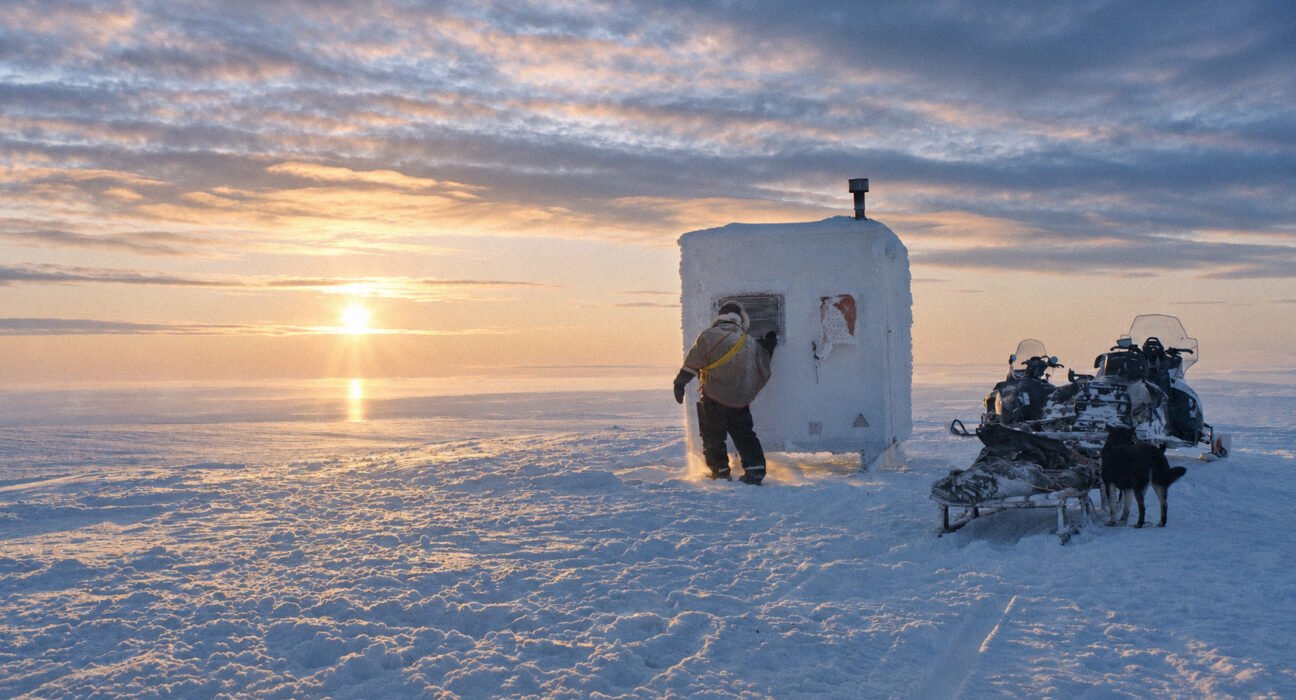
Architecture news rarely asks a question as universal—and as emotionally charged—as this one: what actually makes a home? The Human Shelter: Expedition into What Makes a Home, directed by Danish filmmaker Boris Bertram, turns that question into a visually rich global journey, tracing how people create belonging across radically different landscapes, climates, and social realities.
Spanning Norway, Iraq, the United States, Nigeria, Japan, Uganda, and Iceland, the documentary moves beyond the idea of home as a luxury object or a perfectly styled interior. Instead, it reveals home as a layered condition shaped by safety, memory, mobility, identity, and the environment. For readers interested in luxury architecture, luxury home design, and the future of residential living, the film offers a timely reminder: the most meaningful homes are not defined by excess, but by human need, resilience, and connection.
Architecture News Spotlight: Why ‘The Human Shelter’ Matters Now
Among the most compelling stories in recent architecture news, this documentary stands out for widening the conversation around domestic space. Rather than focusing solely on buildings as finished objects, it investigates the emotional and cultural infrastructure of dwelling.
Funded by IKEA and developed over more than two years, the film follows Bertram across nine countries as he gathers personal perspectives on shelter and belonging. Its premise is especially relevant in an era defined by:
- Climate change and environmental instability
- Migration and displacement
- Urban isolation and housing inequality
- Questions around adaptable, future-ready housing
That scope gives the film unusual depth. It is not just a documentary about houses; it is a documentary about the human condition as expressed through space.
From Shelter to Home: The Central Design Question
One of the film’s most powerful ideas is that shelter is only the beginning. A structure may protect the body, but home must also support emotional security, dignity, and a sense of rootedness. This distinction is central to both humanitarian design and high-end residential architecture.
Bertram suggests that under extreme conditions, even the body can become a form of shelter. That observation reframes architecture at its most fundamental level: before aesthetics, before status, before technology, design must answer the need for safety.
For the luxury design world, this is an important provocation. In the best projects, luxury is no longer just about rare materials or expansive square footage. It increasingly includes qualities such as:
- Privacy and calm
- Connection to landscape
- Flexibility for changing lifestyles
- Wellness and emotional comfort
- Long-term resilience
In that sense, architecture news around this film intersects with broader conversations about what future homes should prioritize.
A Global Portrait of Living on the Edge
The documentary’s seven chapters introduce voices from very different contexts, including a MoMA curator in New York, a Sámi nomad and artist in Finnmark, a professor connected to a NASA-funded Mars habitat in Hawaii, a young poet in a refugee camp in Kurdistan, a refugee shelter designer, a Tokyo-based art photographer, an Icelandic writer, and an environmental activist from Uganda.
These perspectives make the film feel expansive without becoming abstract. Each setting challenges the audience to reconsider what domestic life looks like when shaped by remoteness, instability, mobility, or scarcity.
Landscapes That Shape Domestic Life
The cinematography by Henrik Bohn Ipsen and Adam Philp gives the documentary much of its impact. Snow-covered Nordic terrain, dense urban environments, water-based settlements in Lagos, and the stark conditions of refugee camps all become active participants in the story.
This visual approach reinforces a truth often highlighted in contemporary architecture news: homes do not exist in isolation. They are always in dialogue with geography, climate, and culture.
Belonging in Motion
The film also examines how home is created when permanence is impossible. For displaced communities, migrants, and people living in temporary structures, home may be less about ownership and more about ritual, family, memory, and adaptation.
That insight is especially relevant as architects and designers explore modular housing, emergency shelter systems, and movable living environments. Even temporary architecture can support dignity when designed thoughtfully.
What Luxury Architecture Can Learn From the Film
Although The Human Shelter is grounded in humanitarian and social questions, it has clear relevance for luxury architecture and luxury home decor. The film challenges the assumption that premium living is primarily about visual refinement. Instead, it points toward a more intelligent and humane definition of residential quality.
Key takeaways for designers, developers, and homeowners include:
- Context matters: The best homes respond to place rather than impose a generic style.
- Emotional design matters: Spaces should foster safety, ritual, and belonging.
- Adaptability matters: Future homes must be resilient in changing environmental and social conditions.
- Nature matters: A strong relationship between shelter and landscape can transform how a home is experienced.
- Human stories matter: Great design begins with how people actually live, not just how spaces photograph.
For anyone tracking architecture news, these themes reflect a wider shift across the industry. Prestige is increasingly linked to sustainability, sensitivity, and relevance—not just spectacle.
A Documentary With Global Reach
The film’s impact extends beyond its subject matter. It was screened at MoMA in New York in 2020 and later presented by UN-Habitat as part of the global “Housing for All” campaign across 193 countries. That institutional recognition positions it as more than a cultural release; it is also part of an international dialogue on housing futures.
Bertram’s background helps explain that reach. Based at Zentropa Film in Copenhagen, the filmmaker is known for work focused on conflict, migration, disaster, and humanitarian issues. His broader body of work consistently examines how people endure and adapt under pressure, making The Human Shelter a natural extension of that mission.
The documentary is available to stream for free on ArchDaily from October 29 to November 29, 2026, with subtitles in six languages: English, French, Arabic, Chinese, Russian, and Spanish.
Why This Architecture News Story Resonates
The strongest architecture news stories do more than showcase buildings—they sharpen the questions behind them. The Human Shelter succeeds because it asks viewers to think beyond construction and into meaning. What turns refuge into belonging? How do humans create dignity under pressure? And what should homes of the future offer, whether they are modest shelters or exceptional residences?
The clear takeaway is this: home is not defined only by walls, furniture, or location. It is shaped by safety, memory, identity, and our relationship to the world around us. In a time of climate disruption, migration, and rapid cultural change, that may be the most important lesson in architecture news today.