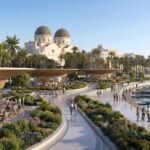
Architecture news rarely captures a city at such a pivotal turning point. Benghazi 2050, a newly unveiled concept proposal for Libya’s historic port city, presents an ambitious framework that blends heritage, digital planning, and future-ready urban design into one compelling vision.
Developed by a multidisciplinary team including ZHA, A&O TEC, Prior + Partners, Homa, Buro Happold, Systematica, and Fichtner, the proposal outlines a long-range strategy for Benghazi’s growth through 2050. For readers interested in luxury architecture, luxury home trends, and high-end urban living, this is more than regional architecture news—it is a case study in how design excellence can shape the future of an entire city.
Architecture News From Libya: What Is Benghazi 2050?
This major piece of architecture news centers on the “Next Generation City Plan” for Benghazi, a city defined by its Mediterranean port, layered history, and fast-changing urban pressures. The concept proposal aims to guide expansion while preserving the qualities that make Benghazi unique.
At its core, the plan is built around two connected components:
- Vision and Spatial Strategy — a planning framework that interprets Benghazi’s identity, urban character, and collective memory.
- Digital Planning Hub — a data-driven model that maps conditions across the city to support evidence-based decisions.
Together, these tools are designed to help Benghazi navigate rapid urbanization without losing the cultural and spatial DNA that gives it meaning. In today’s architecture news landscape, that balance between preservation and progress is increasingly central.
A Heritage-Driven Framework for a Modern Luxury City
One of the most striking aspects of this architecture news story is the way the proposal treats history not as a constraint, but as a design asset. Benghazi’s old town, waterfront, and long-standing civic patterns are positioned as foundations for future development rather than obstacles to modernization.
That approach resonates strongly within luxury architecture and luxury design. High-end environments are increasingly judged not only by materials and scale, but by authenticity, context, and a sense of place. A city that grows from its own identity tends to create more meaningful spaces, from public boulevards and cultural destinations to luxury homes and refined hospitality districts.
Instead of imposing a generic masterplan, the strategy appears to favor adaptability. That matters because the most successful luxury urban environments often share several traits:
- Strong visual continuity between historic and contemporary spaces
- Walkable districts with waterfront or civic anchors
- High-quality public realm design
- Integrated infrastructure that supports comfort and efficiency
- Flexible zoning that can evolve with market and community needs
This kind of urban thinking elevates architecture news beyond headline appeal and into the realm of long-term design value.
How the Digital Planning Hub Could Transform Benghazi
Perhaps the most forward-looking element in this architecture news update is the Digital Planning Hub. Rather than relying solely on static planning documents, the proposal uses an evidence-based model to map the city and identify the forces shaping its growth.
In practical terms, a digital planning system can help decision-makers understand:
- Population expansion and density shifts
- Mobility and transport needs
- Environmental pressures and infrastructure gaps
- Land-use opportunities
- The relationship between heritage districts and new development zones
For luxury design and luxury home markets, this matters more than it may first appear. Data-informed planning can improve everything from views and access to amenities, to traffic flow, waterfront activation, and neighborhood resilience. When a city plans intelligently, premium residential and mixed-use projects have a stronger foundation for long-term desirability.
This is why this architecture news story has relevance far beyond Libya. It reflects a broader global movement toward smart urbanism—where planning, technology, and design quality work together.
What Benghazi 2050 Means for Luxury Architecture and Design
For those following luxury architecture, Benghazi 2050 points to a future in which city-scale planning influences every layer of design, including luxury decor, luxury home decor, and elite residential development. A well-conceived urban framework creates the conditions for exceptional private spaces.
1. Premium waterfront potential
As a historic port city, Benghazi has natural advantages that could shape future luxury districts. Waterfront environments often attract signature residences, hospitality developments, and public promenades that raise the overall design standard of a city.
2. Contextual luxury over generic opulence
The best luxury design is moving away from excess for its own sake. Instead, it embraces local materials, climate-responsive architecture, and cultural references. Benghazi’s emphasis on identity suggests a richer, more grounded model for future high-end projects.
3. Better infrastructure supports better living
Luxury homes depend on more than beautiful interiors. They need mobility, utilities, public realm quality, and environmental foresight. This architecture news development highlights how urban systems and private comfort are deeply connected.
4. Adaptable planning encourages lasting value
Markets change, populations shift, and cities evolve. Flexible planning frameworks are especially important in emerging luxury destinations, where long-term value depends on resilience as much as aesthetics.
Why This Architecture News Matters Globally
Although focused on Benghazi, this architecture news story speaks to universal design challenges: how to grow quickly, plan responsibly, and preserve identity. Cities across the Middle East, North Africa, and beyond are asking similar questions as they modernize.
Benghazi 2050 offers a powerful template by suggesting that the future city should be:
- Rooted in memory rather than detached from history
- Driven by evidence rather than guesswork
- Flexible in form rather than rigid in structure
- Ambitious in quality rather than purely functional
For professionals and enthusiasts alike, this kind of architecture news signals where urban design is headed next. It also reinforces a key idea in luxury architecture: the most desirable spaces are shaped not only by what is built, but by the intelligence of the city around them.
Conclusion
Benghazi 2050 stands out in today’s architecture news cycle because it combines cultural sensitivity with advanced planning tools and a bold long-term vision. By linking collective memory, spatial strategy, and digital intelligence, the proposal outlines a future in which Benghazi can grow with both confidence and character.
For anyone invested in luxury architecture, luxury design, or the future of high-end urban living, this architecture news story is worth watching closely. The clearest takeaway is simple: truly exceptional cities are not just expanded—they are carefully imagined, intelligently mapped, and deeply rooted in place.