
Architecture news rarely captures a turning point as clearly as Aedes’ new Berlin exhibition, A Structure of Feeling: On a New Generation of Architects in China. Running through August 19, the show offers a compelling lens on how emerging Chinese practices are reshaping luxury architecture, adaptive reuse, cultural spaces, and refined contemporary living in ways that feel both local and globally resonant.
Hosted by Aedes – Architecture and Space, the long-running Berlin institution known for framing architecture within broader urban and social debates, the exhibition revisits a conversation it helped start decades ago. In 2001, Aedes introduced young independent Chinese architects to an international audience through TUMU. Now, 25 years later, this latest chapter reveals a very different professional landscape: one marked less by unchecked expansion and more by precision, experimentation, and critical engagement with the built environment.
Why This Architecture News Story Matters
For anyone tracking high-end design culture, this piece of architecture news matters because it highlights how architectural ambition is evolving beyond spectacle. The featured practices are not simply producing iconic forms. Instead, they are working through complex realities: inherited urban fabric, rural transformation, cultural memory, institutional pressure, and new expectations around experience, craftsmanship, and place.
That shift aligns closely with today’s luxury architecture conversation. Across premium residential, hospitality, and cultural design, true value increasingly lies in:
- Context-sensitive design rather than generic monumentality
- Adaptive reuse that gives existing structures new life
- Material richness and atmospheric interiors
- Landscape integration and regional identity
- Spatial experiences that feel intimate, curated, and enduring
The Berlin exhibition presents these themes through models, films, photographs, and graphic works, making architectural process visible rather than hiding it behind polished final images.
The Curatorial Idea Behind “A Structure of Feeling”
The exhibition is curated by Gao Changjun and Li Xiangning, who frame contemporary Chinese practice as operating in a period of transition. The title draws from Raymond Williams’ idea of a “structure of feeling,” suggesting a shared but still-forming condition that is difficult to define outright. That concept is especially fitting here.
Instead of declaring what Chinese architecture should become, the exhibition asks what forces are shaping it now. This makes the architecture news angle especially rich: the show is less a celebration of a style than an inquiry into a generation’s working conditions.
Three key dimensions structure the exhibition
- The urban: How architects act within rapidly changing cities and layered built histories.
- The economic-geographical: How construction is justified across interdependent urban and rural economies.
- The epistemological: How design judgment develops when there are no stable reference points.
These questions resonate far beyond China. They also speak to global concerns in luxury home design, boutique hospitality, and cultural architecture, where clients and designers increasingly seek authenticity, adaptability, and emotional depth.
Standout Projects from the Exhibition
This architecture news story is anchored by 12 projects from nine practices, each offering a different reading of contemporary spatial production across China.
Adaptive reuse and cultural reinvention
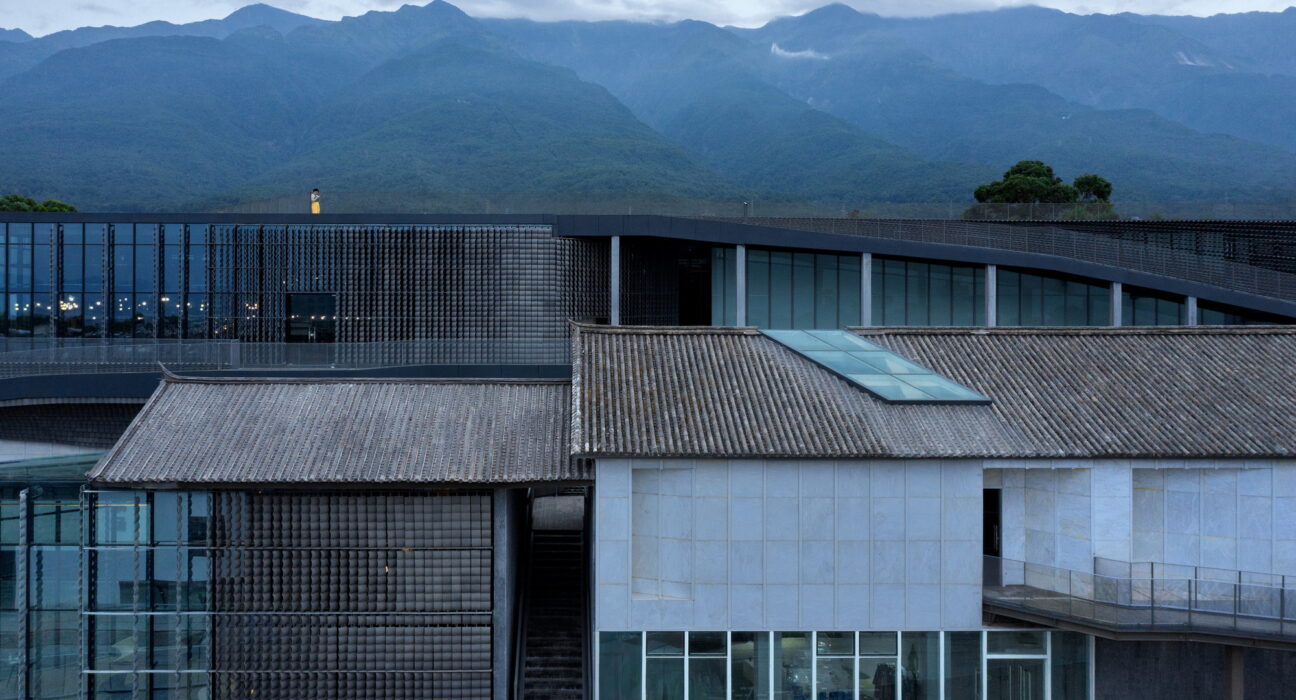
Atelier Alter Architects’ Dali Transformer Factory Theatrical District exemplifies how industrial remnants can be transformed into layered cultural destinations. For readers interested in luxury design, this project reflects a larger trend: reworking old structures into places with character, narrative, and tactile richness that new construction often struggles to replicate.
Similarly, Atelier XÜK’s Wu Guannan Art Museum suggests how art, architecture, and atmosphere can merge into a highly curated visitor experience, while line+ studio’s Lishui Guyanhuaxiang Art Center reinforces the growing importance of cultural buildings as civic and aesthetic anchors.
Education, community, and new typologies
Several works challenge assumptions about where design excellence belongs. DL Atelier’s LYCEUM School and genarchitects’ Dining and Swimming Complex of Shanghai Zhonghua College show that everyday public programs can achieve spatial sophistication without sacrificing usability.
That is an important thread in current architecture news: the best contemporary work often emerges in hybrid or overlooked typologies, where circulation, social interaction, and atmosphere must work together seamlessly.
Hospitality and luxury living in landscape
For luxury-focused readers, some of the most captivating projects are those connected to retreat, residence, and hospitality. Studio QI Architects’ Annoso · Hill in Tengchong and BUZZ’s Poodom Deqin Meri Hotel in Yunnan point to a more nuanced language of luxury home and boutique hotel design—one rooted in terrain, materiality, and mood rather than excess.
line+ studio’s Mansion on Lotus Mountain also fits this emerging vocabulary, where private architecture becomes an immersive spatial experience tied to topography and views. This is precisely where architecture news intersects with luxury home decor and luxury design trends: architecture is no longer just a container for refined interiors, but the source of atmosphere itself.
What the Exhibition Says About Chinese Architecture Today
A major strength of the exhibition is that it avoids presenting a single “new Chinese style.” Instead, it reveals a field shaped by contradiction. Many of the featured architects work outside state-owned design institutes and beyond the logic of mass property production, yet they remain entangled with those systems. Many also bring international experience into deeply local contexts.
This complexity makes the exhibition more relevant than a simple trend report. In the best architecture news tradition, it captures a profession in motion.
Notable themes include:
- Regional specificity: Projects respond to Yunnan, Jiangsu, Shanghai, Guangxi, and other distinct contexts.
- Cross-disciplinary thinking: The exhibition includes artistic contributions that expand architecture into visual culture.
- Process over manifesto: The work is presented as a cross-section of inquiry, not a polished national narrative.
- Material and spatial sensitivity: Many projects emphasize atmosphere, sequence, and embodied experience.
Even the exhibition design reinforces this approach. Shipping crates used to transport the work from China to Berlin by rail were incorporated into the display, turning logistics into architecture and underlining the exhibition’s interest in movement, exchange, and production.
Berlin, Global Exhibitions, and the Broader Design Conversation
This architecture news item also sits within a wider international calendar of exhibitions rethinking architectural history and contemporary practice. Alongside the Aedes show, major institutions are exploring modernism in West Africa, new forms of architectural exchange at the Venice Architecture Biennale, and interdisciplinary approaches at the Sharjah Architecture Triennial.
Together, these events signal a broader shift in design discourse. The spotlight is moving toward plural narratives, regional intelligence, and architecture’s social and cultural agency. For luxury architecture and luxury home audiences, that means the future of prestige design may be less about status symbols and more about meaningful, place-based sophistication.
Conclusion: Why This Architecture News Deserves Attention
In a crowded season of global exhibitions, this architecture news story stands out for its nuance. A Structure of Feeling does not offer easy answers or a marketable label for a new generation of Chinese architects. Instead, it reveals how design excellence is being negotiated through uncertainty, context, and changing systems.
That is exactly why it deserves attention. For professionals and enthusiasts in luxury architecture, luxury decor, luxury design, and luxury home culture, the exhibition is a reminder that the most compelling work today is not only beautiful—it is thoughtful, adaptive, and deeply attuned to how people inhabit space. In the best sense, this is architecture news about the future taking shape in real time.