Architecture news rarely arrives with a message as timely as this one: the inaugural Copenhagen Architecture Biennial has opened, turning the Danish capital into a living laboratory for slower, smarter, and more sustainable design. Running through October 19, the event positions Copenhagen at the center of a global conversation about how architecture can respond to climate pressure, resource scarcity, and the accelerating pace of urban change.
Organized by Copenhagen Architecture Forum (CAFx), the new biennial evolves from the former Copenhagen Architecture Festival into a larger international platform for architectural exchange. Under the leadership of Josephine Michau, the first edition launches with the theme Slow Down, inviting architects, designers, policymakers, and the public to rethink the speed at which we build, demolish, consume, and inhabit space. For readers following luxury architecture, luxury design, and the future of refined urban living, this is one of the most compelling pieces of architecture news in Europe this year.
Copenhagen Architecture Biennial Brings a New Pace to Architecture News
The core idea behind the biennial is not simply to reduce speed for its own sake. Instead, Slow Down explores what a “great deceleration” might mean for the built environment. That includes:
- Prioritizing transformation over demolition
- Designing with circular materials and low-waste systems
- Creating buildings that last longer and adapt better
- Considering multispecies habitats in urban design
- Encouraging more mindful relationships between people and place
In practical terms, the biennial presents more than 250 events across Copenhagen, from exhibitions and lectures to city walks, films, performances, and public gatherings. This broad format makes the event especially relevant in current architecture news, because it connects ambitious ideas to real sites, real materials, and public participation.
Program Highlights: Pavilions, Installations, and Exhibitions
Standout pavilions in the Cultural District
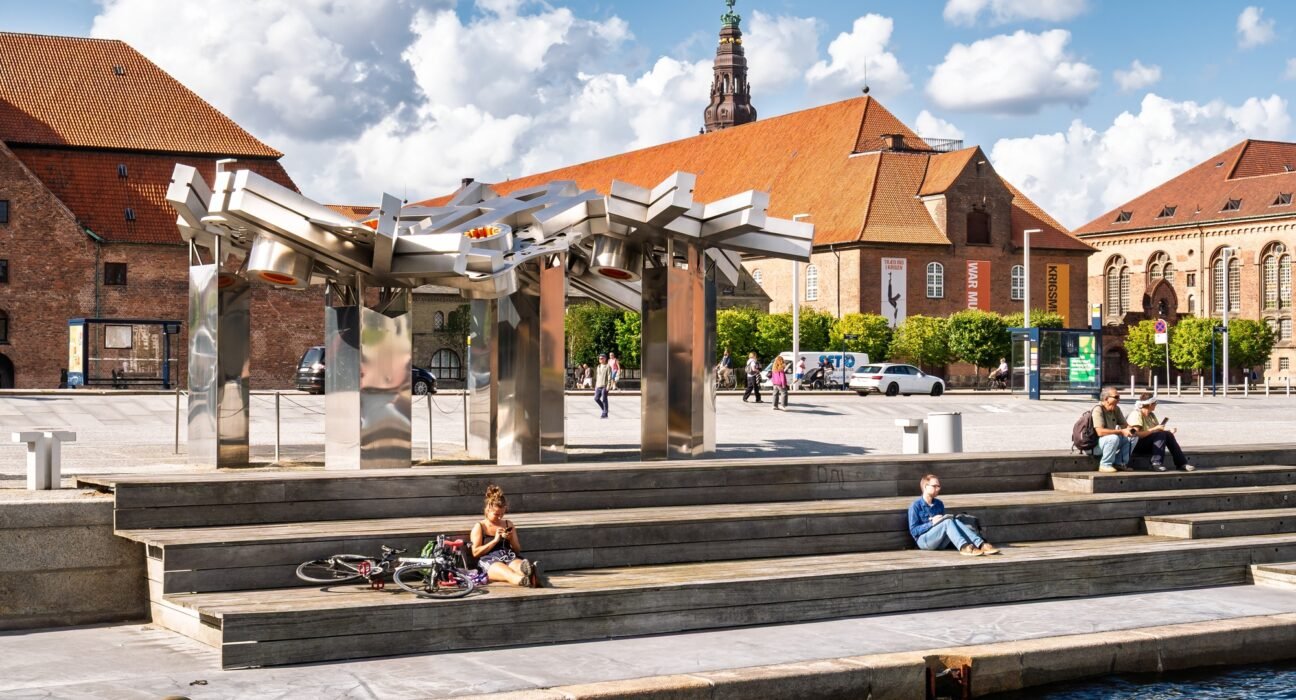
Two of the most anticipated commissions are Barn Again by Tom Svilans x THISS Studio and Inside Out, Downside Up by Slaatto Morsbøl. Located at Søren Kierkegaards Plads and Gammel Strand, these modular pavilions reinterpret reuse through an elegant architectural language rooted in regenerative and recycled materials.
Developed with partners including Revalu, Dreyers Foundation, and Buro Happold, the structures serve as public hubs for the biennial while embodying key themes in contemporary architecture news: circular design, zero-waste construction, and long-term ecological thinking.
Exhibitions that reshape the conversation
The group exhibition Slow Down unfolds across two venues, one in Copenhagen and one in Malmö, extending the biennial’s reach beyond a single city. Featuring transdisciplinary contributors from art and architecture, the exhibition examines alternatives to a high-speed cultural and building economy.
Selected from hundreds of international applicants, participants include Dark Matter Labs, Studio Tideland with Emma Rishøj, and CENTRALA. Their installations and spatial experiments engage with ideas such as friction, fatigue, acceleration, and cultural tempo, giving physical form to questions often discussed only in theory. For those tracking architecture news, this exhibition signals a wider shift toward architecture as a cultural framework, not just a building practice.
Other installations worth knowing
Several additional projects deepen the biennial’s material and sensory agenda:
- The Chapel Retold transforms an old chapel and garden at Frederiksberg Hospital
- Royal Danish Academy pavilions explore unfired clay construction and the spatial qualities of daylight
- Little Eelgrass Pavilion evolves through public participation outside BLOX
- VILLUM Window Collection hosts exhibitions by Yoshiharu Tsukamoto and Rem Koolhaas focused on windows and culture
- Pillars uses excavated materials in Hospitalshaven
- Textile Topography repurposes discarded fabrics into an outdoor workshop
- City Shrine by Dicki Lakha reimagines Tibetan prayer wheels through contemporary architectural form
Why This Matters for Luxury Architecture and Design
At first glance, a call to slow down may seem at odds with luxury architecture. In reality, the opposite is true. The most enduring luxury homes and interiors are defined by material integrity, craftsmanship, longevity, and emotional resonance rather than speed or excess. That is why this edition of architecture news feels especially important for the luxury sector.
The biennial’s themes align closely with the values shaping high-end residential design today:
- Natural and regenerative materials over disposable finishes
- Adaptive reuse instead of needless teardown
- Daylight, atmosphere, and spatial calm as markers of quality
- Design for longevity, not trend cycles
- A stronger connection between architecture, landscape, and wellness
For professionals in luxury home decor and luxury design, Copenhagen offers more than inspiration. It offers a model for how beauty, responsibility, and innovation can coexist.
Open House and Assemble! Expand the Public Conversation
Open House reveals hidden architecture
Another major draw is Open House, which grants free access to sites typically closed to the public. Visitors can explore contemporary Danish architecture, historic buildings, private residences, and climate-adaptive landscapes. The program also includes locations such as the Medicinal Museum, allowing guests to experience both iconic and lesser-known spaces across the city.
In a media landscape crowded with image-driven architecture news, Open House reminds audiences that architecture is best understood through direct experience: moving through rooms, noticing light, sensing material texture, and understanding context.
Assemble! turns ideas into strategy
The two-day Assemble! forum at the Danish Architecture Center adds a policy and systems lens to the biennial. Bringing together architects, engineers, developers, economists, poets, and activists, it focuses on how real change can happen through regulation, ownership models, and revised design processes.
Sessions include discussions on climate adaptation, circular ownership, and the possibility of slowing construction through systemic reform. This makes it one of the most action-oriented developments in recent architecture news, bridging visionary thinking with implementable frameworks.
Copenhagen’s Global Role in the Biennial Landscape
The opening arrives during a busy season for international architecture events. The Bukhara Biennial recently debuted in Uzbekistan, the Venice Architecture Biennale continues through November, and a Pan-African Biennale of Architecture is planned for Nairobi in 2026. Yet Copenhagen stands out for its unusually coherent thesis: slowing down as a design, cultural, and political act.
That clarity gives the event weight beyond Scandinavia. It also reinforces Copenhagen’s reputation as a leader in sustainable urbanism, public space, and human-centered design. For global observers following architecture news, the city is once again setting the standard for what progressive architecture can look like.
Conclusion: The Architecture News Story to Watch This Season
If there is one lesson from the Copenhagen Architecture Biennial, it is that building less hastily may lead to richer, more resilient environments. In a world defined by speed, this edition of architecture news argues for architecture that is thoughtful, adaptive, and built to endure.
For anyone interested in luxury architecture, luxury homes, and future-focused design, Copenhagen’s biennial is more than an event calendar highlight. It is a clear signal that the next chapter of great design will be measured not by how fast we build, but by how wisely we shape the places we call home.