
Architecture news from the 2027 Venice Architecture Biennale is already sparking debate, and Luxembourg’s newly announced pavilion could become one of the event’s most thought-provoking contributions. Titled Excess! On the Overconsumption of Living Space, the exhibition will examine how unequal access to housing and oversized living footprints mirror wider social and ecological imbalances.
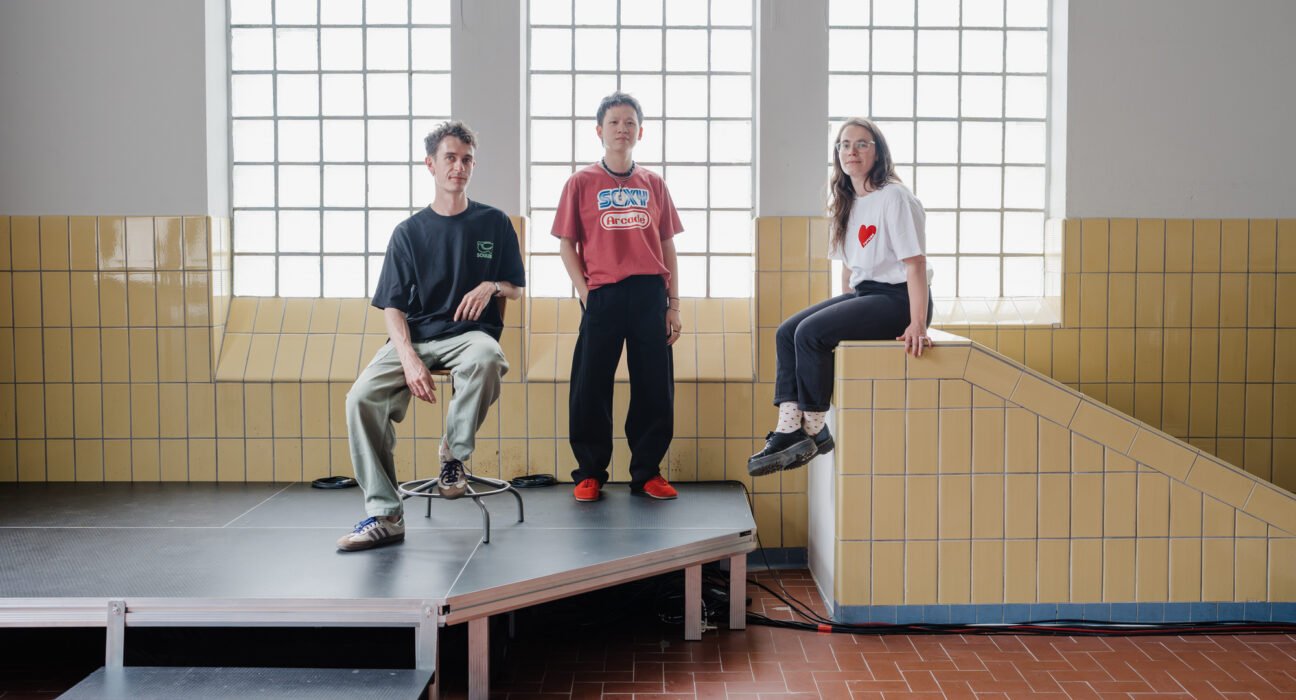
Selected by a professional jury, the Luxembourg Pavilion will be curated by housing researcher and activist Céline Zimmer alongside architects and researchers Bùi Quý Sơn and Paul-Antoine Lucas, co-founders of the critical spatial practice Exutoire. Their proposal places housing, luxury, land use, and environmental responsibility under the spotlight—an especially timely topic for readers following luxury architecture, luxury design, and the future of the luxury home.
Architecture News From Venice: Why Luxembourg’s Pavilion Matters
This latest piece of architecture news stands out because it moves beyond aesthetics and asks a harder question: how much space is enough? Rather than celebrating architecture as pure spectacle, the Luxembourg Pavilion will explore the overconsumption of living space as both a housing issue and an ecological one.
The exhibition is scheduled for the first floor of the Sale d’Armi in the Arsenale and will open to the public when the Biennale begins on May 8, 2027. It arrives at a moment when cities worldwide are wrestling with affordability, density, carbon impact, and the cultural expectations attached to domestic space.
For a country like Luxembourg—one of Europe’s wealthiest nations—the topic is particularly charged. Its housing system is often described as split between:
- a costly private market
- a tightly regulated, publicly subsidized sector
Against that backdrop, the pavilion’s curators aim to question how high per-capita floor area, economic growth, and finite environmental resources intersect. In other words, this is not just architecture news about a national pavilion; it is a wider commentary on the values embedded in how we build and inhabit homes.
What “Excess!” Will Explore at the 2027 Biennale
At its core, Excess! investigates the unequal distribution of living space. The curatorial team frames this imbalance as part of broader habits of excess that intensify both the housing crisis and the ecological crisis. That framing is especially relevant to luxury home conversations, where size, exclusivity, and status are often prized without equal attention to sustainability or social equity.
The exhibition will connect the realities of Luxembourg and Vietnam, creating a dialogue between two very different contexts. That comparison promises to deepen the conversation around spatial consumption by showing how housing pressures, resource allocation, and patterns of development play out across distinct political and economic systems.
Key themes likely to shape the pavilion include:
- Housing inequality and who gets access to generous living space
- Ecological limits in an era of continued growth
- Social justice through design and the politics of domestic life
- Alternative housing models, including cooperative approaches
- Critical perspectives on luxury and excess in the built environment
For followers of luxury decor and luxury home decor, this project may also offer an important corrective. Beautiful interiors and expansive residences can be inspiring, but the pavilion suggests that design excellence in the future may be judged not only by refinement, but by responsibility.
The Curators Behind This Architecture News Story
This piece of architecture news is also significant because of the team selected to lead it. Each curator brings a different but complementary lens to the topic of housing and space.
Céline Zimmer
Zimmer is a Luxembourg-based researcher, housing expert, and activist whose work focuses on housing affordability and the cooperative housing model. In 2026, she founded Eist Neit Wunnen Agence, an initiative aimed at promoting large-scale housing cooperatives in Luxembourg. Her involvement suggests the pavilion will be grounded in policy realities as much as architectural theory.
Bùi Quý Sơn and Paul-Antoine Lucas
Based in Hanoi, Sơn and Lucas are architects, researchers, and co-founders of Exutoire, a critical spatial practice known for challenging conventional assumptions about how environments are designed, occupied, and discussed. Exutoire was recognized in the ArchDaily 2026 Next Practices Awards for elevating underrepresented perspectives in architecture.
The pair’s work spans housing, collectivity, queer theory in architecture, and social justice through design. Their collaborative research, including the 2025 publication Housing, Micropolitics, and Pedagogies: Designing and Practicing Collectivity, points to a pavilion that will be intellectually ambitious and politically aware.
Why This Matters for Luxury Architecture and Design
For readers interested in luxury architecture, this architecture news story raises a crucial tension: when does abundance become excess? In high-end residential design, generous square footage is often linked to prestige. Yet the Luxembourg Pavilion challenges the assumption that more space always means better living.
This does not mean luxury design is inherently at odds with sustainability. In fact, the most forward-thinking luxury home projects increasingly prioritize:
- high-quality materials with lower environmental impact
- flexible layouts over unused rooms
- craftsmanship and longevity over sheer scale
- shared amenities and smarter urban density
- wellbeing-driven design instead of status-driven expansion
That shift may be one of the most important takeaways from this emerging architecture news. The future of luxury may lie less in excess square footage and more in thoughtful, adaptable, and ethically grounded spaces.
The Bigger Context of the 2027 Venice Architecture Biennale
The 20th edition of the Venice Architecture Biennale will run from May 8 to November 21, 2027. Curated by Wang Shu and Lu Wenyu of Amateur Architecture Studio, the exhibition carries the title Do Architecture — For the Possibility of Coexistence Facing a Real Reality. That wider curatorial framework makes Luxembourg’s proposal especially resonant, since questions of coexistence are inseparable from questions of housing, land, and access.
Other national pavilions are also taking on socially urgent themes, from democracy and reuse to displacement and shared space. Within that context, Luxembourg’s contribution appears poised to stand out for its direct engagement with domestic scale, privilege, and the politics of inhabitation.
As a result, this architecture news item is about more than one exhibition. It signals a broader shift in architectural culture, where the meaning of home is being re-evaluated through environmental, political, and ethical lenses.
Conclusion
The most compelling architecture news often does more than announce a project—it changes the conversation. Luxembourg’s Excess! pavilion for the 2027 Venice Architecture Biennale promises to do exactly that by confronting overconsumption of living space at a time when housing inequality and ecological strain can no longer be ignored.
For professionals and enthusiasts in luxury architecture, luxury decor, luxury design, and luxury home culture, the message is clear: true sophistication may no longer be defined by how much space we occupy, but by how intelligently, fairly, and sustainably we choose to live within it.