
Architecture news rarely captures the tension between civic identity, real-estate pressure, and preservation as clearly as the fight over Dallas City Hall. The future of I.M. Pei & Partners’ monumental civic complex now sits at the center of one of the most consequential design debates in the United States, with city leaders evaluating whether to repair, sell, relocate, or ultimately demolish the nearly half-century-old landmark.
For readers drawn to luxury architecture, luxury design, and the enduring value of iconic places, this story is about far more than one municipal building. It raises a larger question: when an ambitious modernist work becomes expensive to maintain, does a city restore its legacy or replace it with something more commercially attractive?
Architecture News Spotlight: Why Dallas City Hall Matters
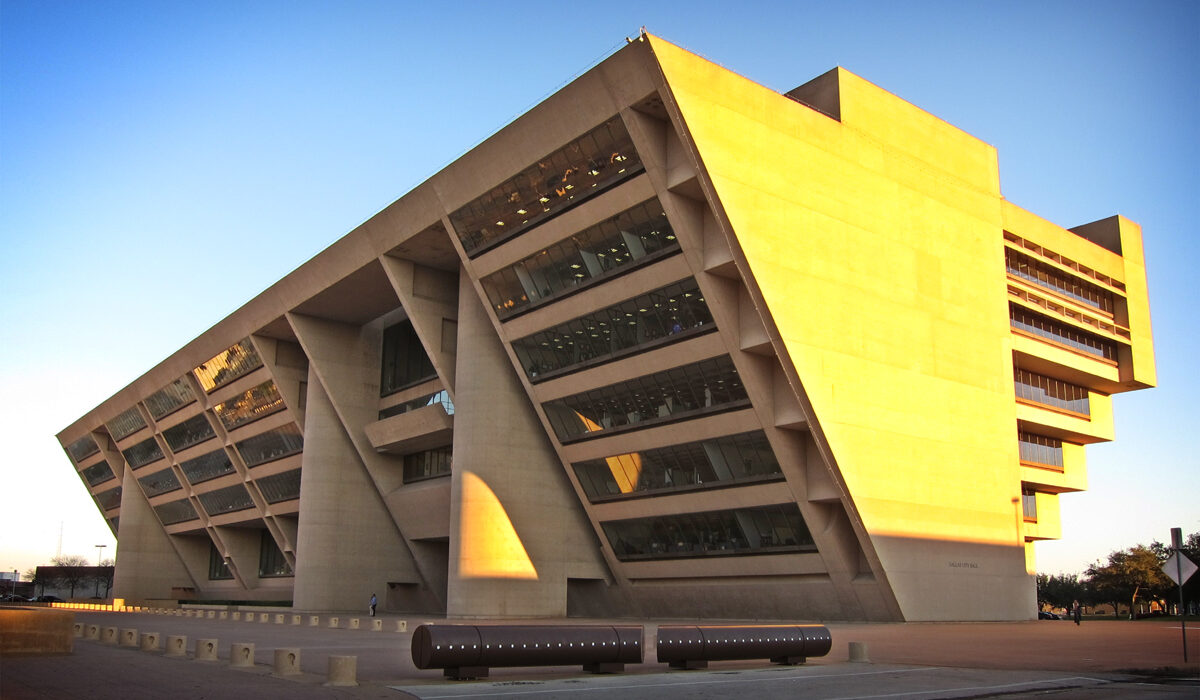
Dallas City Hall is not just another government building. Completed in 1978 and designed by I.M. Pei & Partners, it remains one of the most recognizable examples of Brutalist architecture in America. Set on an expansive site near downtown, the structure was conceived as both architecture and public landscape, combining a dramatic built form with civic open space.
Its defining feature is the inverted pyramid profile: six levels broadening as they rise, with a concrete facade sloping outward at a sharp angle. The result is a building that feels muscular, sculptural, and unmistakably modern. It also stands apart from the glass-tower model that dominates many urban cores, offering a more monumental expression of public power and civic presence.
Key facts behind its significance include:
- Designed by globally celebrated architect I.M. Pei and his firm
- Built between 1972 and 1978
- Occupies an approximately 11.8-acre site near downtown Dallas
- Contains extensive office space, underground parking, and ceremonial public rooms
- Includes a major public plaza used for protests, gatherings, and city events
In the world of architecture news, few city-owned structures carry this mix of design pedigree, urban symbolism, and public visibility.
The Preservation vs. Demolition Debate
The current controversy has been building since 2025, when Dallas officials intensified discussions about the building’s future amid mounting repair needs. Public listening sessions, committee meetings, and staff evaluations have framed the debate around two competing priorities: protecting a landmark of civic architecture or pursuing what some officials describe as a more fiscally responsible long-term solution.
Preservation advocates argue that Dallas City Hall is an irreplaceable part of the city’s architectural identity. They point to its cultural importance, its status as a major modernist work, and its role as a public gathering space for generations of residents. Supporters have also pushed for landmark designation and called for transparent study of renovation scenarios before any irreversible step is taken.
Those favoring demolition or relocation focus on cost, functionality, and redevelopment potential. The site’s prime location near major downtown investments has fueled speculation that the land could be used for large-scale commercial or entertainment projects, including future sports infrastructure.
Main arguments from each side
Preservation supporters say:
- The building is a significant work of American modernism
- Demolition would erase a defining civic landmark
- Adaptive reuse and renovation can extend the life of aging concrete structures
- Historic designation could protect an important part of Dallas heritage
Demolition advocates say:
- Deferred maintenance has made repairs increasingly expensive
- Municipal operations may be better served in a newer building
- The land could unlock major redevelopment value
- Long-term operating costs may outweigh preservation benefits
What Is Wrong With the Building?
At the heart of this architecture news story is a practical issue: infrastructure failure. Reports have cited water intrusion, aging electrical systems, and years of underfunded maintenance. Depending on the scenario studied, estimates for repairs and operations have varied widely, from tens of millions to several hundred million dollars over time.
That range has complicated public discussion. High-end restoration is rarely cheap, especially in monumental civic buildings where structural systems, mechanical upgrades, code compliance, and public safety all intersect. Yet demolition and replacement also come with enormous cost, not only financially but culturally and environmentally.
For many architects and preservationists, the question is not whether the building needs investment. It clearly does. The real question is whether Dallas sees that investment as a burden or as stewardship.
Why This Case Resonates Beyond Dallas
This is one of those architecture news moments that reflects a global pattern. Around the world, modernist and Brutalist landmarks are facing similar crossroads. Built with bold civic ambition in the postwar era, many now require extensive upgrades just as public tastes, budgets, and urban development priorities have shifted.
Dallas City Hall joins a wider conversation that includes threatened works by major architects and debates over adaptive reuse, sustainability, and design heritage. Cities increasingly must decide whether to preserve these buildings as cultural assets or clear the way for new real-estate opportunities.
There is also a lesson from Boston City Hall, another once-divisive Brutalist landmark that ultimately underwent renovation rather than demolition. Its reinvention showed that controversial public architecture can be modernized, reactivated, and appreciated anew.
Why adaptive reuse remains compelling
- Sustainability: Reusing an existing structure can reduce demolition waste and embodied carbon.
- Cultural continuity: Landmarks connect residents to civic history and shared memory.
- Design distinction: Unique architectural identities are difficult to recreate once lost.
- Urban value: Restored iconic buildings can anchor revitalization just as effectively as new development.
Luxury Design Lessons From a Civic Landmark
Although Dallas City Hall is a public building rather than a private residence, it still offers lessons relevant to luxury architecture and luxury home design. The best high-end spaces are not only visually striking; they are conceptually coherent, materially bold, and deeply tied to their setting. Pei’s design demonstrates how geometry, proportion, and landscape can create a timeless sense of drama.
Its broad public forecourt, commanding silhouette, and raw material palette reflect a confidence that many contemporary luxury projects try to recapture through stone, concrete, sculptural forms, and seamless indoor-outdoor composition. In that sense, this architecture news story also speaks to enduring design values: vision, permanence, and the importance of building with meaning.
What Happens Next?
Dallas officials are expected to continue evaluating alternatives, with preservation status and political negotiations shaping the final outcome. Until a definitive vote is made, the building remains in a precarious position—celebrated by architects and preservationists, yet challenged by budget realities and development pressure.
Whatever the city decides, the outcome will likely become a reference point in future architecture news coverage about modernist preservation. If Dallas restores City Hall, it could reinforce the case for adaptive reuse of major civic icons. If it chooses demolition, it will signal how vulnerable even internationally recognized landmarks can be when maintenance is deferred and land values rise.
The takeaway: this architecture news story is ultimately about what cities choose to value. Dallas City Hall is more than aging concrete; it is a test of whether architectural heritage, civic symbolism, and long-term design thinking can prevail in the face of short-term pressures.