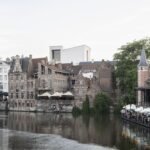
Architecture news rarely captures the tension between heritage and innovation as elegantly as the newly announced extension for Design Museum Gent in Belgium. Designed by Carmody Groarke in collaboration with TRANS architectuur | stedenbouw, the winning proposal introduces a bold yet carefully calibrated addition that aims to reconnect the museum with the city, expand its public role, and complete a fragmented architectural composition in Ghent’s historic core.
For readers interested in luxury architecture, luxury design, and elevated cultural spaces, this project is especially compelling. It shows how contemporary architecture can bring prestige, clarity, and civic value to an institution without overpowering the character of its historic surroundings.
Architecture News: A New Chapter for Design Museum Gent
The Design Museum Gent houses an important collection of Belgian and international applied arts, industrial objects, and artistic design works. Its home, however, has long been architecturally layered rather than unified. The museum currently spans three distinct structures: the 18th-century Hotel de Coninck, the Leten House with a 16th-century core, and a wing added in 1992.
The new extension is planned for the remaining residual site, effectively filling the missing piece in the museum complex. More than just additional square footage, the project is envisioned as a connective architectural element that ties the existing buildings together into a more coherent visitor experience.
In today’s architecture news landscape, museums are increasingly judged not only by their collections but by how welcoming, legible, and accessible they feel. This proposal directly responds to that shift by creating a new public-facing “house” for the institution—one that is civic in spirit at street level and distinctive on the Ghent skyline.
A Sensitive Addition in a Historic Urban Context
One of the most noteworthy aspects of this architecture news story is the team behind it. London-based Carmody Groarke has built a reputation for inserting contemporary architecture into sensitive historical contexts, while Ghent-based TRANS architectuur | stedenbouw brings local urban and cultural understanding to the collaboration.
Together, the firms have proposed an extension that does not attempt to imitate the surrounding heritage buildings. Instead, it establishes a fresh architectural identity while respecting the rhythm and importance of the existing streetscape. This balance is crucial in a city like Ghent, where layers of history define the urban experience.
Rather than reading as an isolated object, the extension is conceived as part of a larger ensemble. That approach aligns with some of the most refined principles in luxury architecture: proportion, restraint, material intelligence, and an emphasis on spatial continuity over spectacle alone.
Why the design stands out
- It completes the museum’s composition on a difficult leftover site.
- It strengthens the institution’s civic presence at street level.
- It creates a clear dialogue between old and new architecture.
- It enhances the museum’s visibility within the city skyline.
- It supports accessibility and public engagement.
How the Extension Will Improve the Visitor Experience
The most successful museum architecture does more than house art and design objects—it choreographs movement, curiosity, and discovery. According to the project concept, the new addition will introduce spaces for exhibitions, events, and archiving, while also improving the connections between the museum’s existing buildings.
A continuous circulation loop around the central courtyard garden is one of the project’s most important ideas. This strategy transforms what could have been a simple expansion into an experiential framework, helping visitors move intuitively through the complex. In practical terms, that means fewer disconnected transitions and a stronger sense of orientation throughout the museum.
For luxury design observers, this is where the scheme becomes particularly interesting. Great spatial design is not only about finishes or form—it is about creating flow, atmosphere, and emotional ease. By organizing the extension around circulation and connection, the architects are prioritizing the human experience of the building.
Key visitor-focused benefits
- Better accessibility: The ground floor is designed to feel more open and inviting, lowering the threshold for entry.
- Stronger internal links: The extension binds together the museum’s previously fragmented parts.
- Flexible programming: New rooms support exhibitions, events, and institutional functions.
- Enhanced exploration: Visitors are encouraged to discover the museum through a more fluid route.
A Civic Landmark, Not Just a Museum Addition
Another reason this project deserves attention in architecture news is its civic ambition. The architects have framed the extension not merely as an internal upgrade, but as a public building that contributes to the life of the city. That distinction matters.
Many contemporary museum projects focus on iconic form, but the Gent proposal appears equally concerned with urban generosity. At ground level, the architecture is intended to invite passersby inward and make the museum feel more relevant to everyday city life. On a broader level, the building is designed to register on the skyline as a new cultural marker for Ghent.
This combination of urban presence and public accessibility is a hallmark of sophisticated cultural design. It also resonates with luxury home decor and luxury home audiences who increasingly look to museums and boutique cultural institutions for inspiration in materiality, spatial layering, and curated atmosphere.
What This Means for Luxury Architecture and Design Trends
From a trend perspective, this architecture news story reflects several broader movements shaping high-end architecture and interiors:
- Adaptive cultural growth: Expansions are becoming more strategic than monumental, especially in historic settings.
- Experience-led planning: Circulation, openness, and flexibility are central to contemporary design thinking.
- Contextual modernism: New architecture is increasingly expected to stand apart without clashing.
- Civic elegance: Prestige now comes as much from public usefulness as from visual drama.
These ideas extend well beyond museums. They influence luxury homes, luxury decor, and premium hospitality projects, where clients increasingly seek timeless design that feels rooted, purposeful, and spatially intuitive.
In that sense, Design Museum Gent’s extension is more than a local institutional update. It is a case study in how contemporary architecture can elevate heritage environments while making them more functional and inclusive.
Conclusion
Among recent architecture news, the Design Museum Gent extension stands out for its intelligence, restraint, and civic clarity. Carmody Groarke and TRANS architectuur | stedenbouw have proposed a building that completes a complex historical site, improves the museum experience, and gives Ghent a compelling new cultural landmark.
The key takeaway is simple: the best contemporary additions do not compete with history—they reveal new ways to inhabit it. For anyone following luxury architecture, luxury design, and the future of cultural spaces, this is architecture news worth watching closely.