Architecture news rarely captures the delicate balance between heritage, sustainability, and public life as convincingly as the reopening of Design Museum Gent. In the heart of Ghent’s UNESCO-listed center, the Belgian institution has returned with a renewed identity: part historic restoration, part contemporary addition, and wholly focused on making design more open, useful, and immersive.
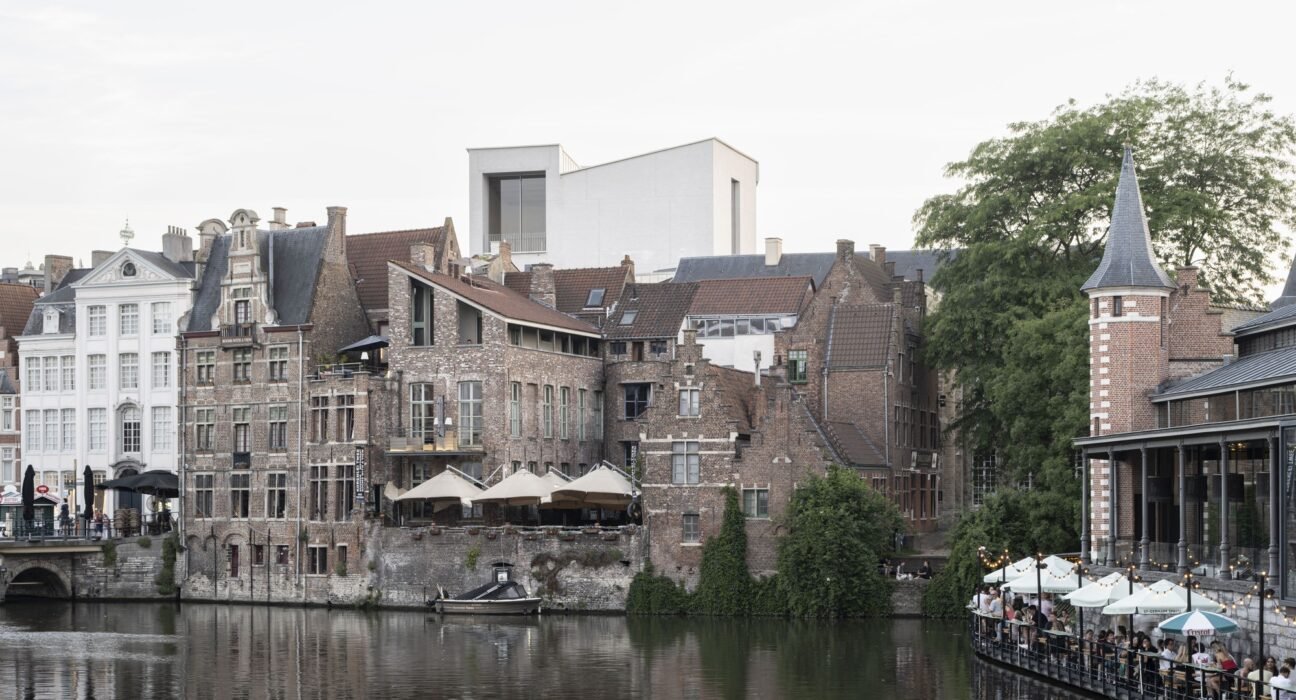
After years of renovation and expansion, Design Museum Gent officially reopened on October 3, 2026, with a new wing by London-based Carmody Groarke and Ghent practice ATAMA, alongside restoration work led by RE-ST architectenvennootschap. The result is more than a physical upgrade. It is a thoughtful reimagining of what a museum can be within a historic city: a place not only to observe objects, but to meet, learn, create, and participate.
Architecture News From Ghent: A Museum Reimagined for Public Life
This major cultural project began after Carmody Groarke and ATAMA won an international competition in 2019 to extend Belgium’s largest design museum. Before the transformation, the museum was spread across three distinct structures: the eighteenth-century Hotel de Coninck, the Leten House with its sixteenth-century origins, and a 1992 wing. The challenge was not simply to add more square meters, but to unify these layers of history into a coherent visitor experience.
The renewed museum addresses that challenge with an architectural strategy rooted in connection. Historic rooms have been restored, later interventions adapted, and a new wing inserted to bind the complex into a legible route. This creates a more intuitive sequence of spaces while preserving the unique character of each building.
For readers following architecture news in the luxury design and cultural sectors, this project stands out because it shows how contemporary architecture can enrich a heritage setting without overwhelming it.
A New Kind of Design Museum, Inspired by Community
One of the most compelling aspects of the project is the question that guided its development: “Is this a museum for me?” That prompt led to the creation of DE40, a citizens’ panel made up of forty Ghent residents who helped shape the museum’s future role. Their involvement pushed the institution beyond the traditional model of a display-focused museum.
Instead, Design Museum Gent has embraced the idea of a “third space” within the public realm. In practical terms, that means the building is designed to support:
- Casual social gathering
- Workshops and hands-on learning
- Public lectures and events
- Flexible exhibition formats
- Community access regardless of prior design knowledge
This people-centered approach gives the museum fresh relevance. It also reflects broader trends in architecture news, where cultural institutions are increasingly expected to operate as civic platforms rather than closed containers for collections.
How the New Wing Connects Heritage and Contemporary Design
The museum’s historic core revolves around Hotel de Coninck, an elegant rococo mansion long organized around an inner courtyard. Before the renovation, the courtyard was compromised by an underused passage and a neglected central plot. The new intervention changes that dynamic completely.
By reorganizing circulation and consolidating support spaces, the design allows the courtyard to function as a true garden and the emotional center of the museum. Visitors now navigate the complex with the courtyard as a visual and spatial anchor, bringing clarity to a formerly fragmented site.
The new wing also establishes a single visitor route through six distinct zones. These include:
- Art-handling area in the basement, revealing behind-the-scenes museum operations
- Stadskamer, which includes reception and shop functions
- Forum, a lecture and gathering space
- Atelier, dedicated to workshops and making
- Vitrine, for temporary exhibitions
- Loft, an event space with panoramic views over Ghent
This sequence reinforces the museum’s mission to make design active and accessible. In current architecture news, few museum expansions illustrate this operational openness so clearly.
Sustainable Architecture With a Local Material Story
The project is equally notable for its material intelligence. Rather than contrasting sharply with its historic surroundings, the new wing draws on the scale and rhythm of Ghent’s traditional guild houses and merchant homes. Its brick dimensions match those of the Hotel de Coninck, while its light coloration relates to nearby streetscape tones.
The most innovative feature, however, is the facade material: Gent Waste Brick. This lime-cured brick is made from locally sourced municipal waste and avoids the energy-intensive kiln firing associated with conventional brick production. More than 82,000 of these bricks were produced locally at Het Arsenaal in Ghent, and the manufacturing process was visible to the public.
That decision gives the building a strong environmental narrative while maintaining architectural refinement. It also places the project firmly within the conversation around sustainable architecture, adaptive reuse, and circular materials—topics that continue to dominate architecture news globally.
Key sustainability highlights
- Reuse of existing materials where possible
- Restoration instead of replacement for heritage interiors
- Improved climate control for the museum environment
- Low-impact locally produced facade materials
- Integration of new construction with adaptive reuse principles
Why Design Museum Gent Matters in Today’s Architecture News
Design Museum Gent’s reopening resonates far beyond Belgium. It reflects several of the most important movements shaping cultural architecture today: conservation with contemporary clarity, stronger civic participation, sustainable building practices, and more flexible public programming.
For the luxury architecture and luxury design audience, the project offers another lesson as well: true sophistication lies not in excess, but in precision. Every gesture here appears carefully calibrated, from the restoration of ornate heritage spaces to the measured expression of the new wing. The result is a museum that feels elegant, modern, and deeply rooted in place.
At a time when cities worldwide are rethinking how historic structures can serve present-day communities, this reopening deserves attention. It is not simply a stylish addition to Ghent’s cultural map; it is a model for how institutions can become more welcoming without sacrificing architectural rigor.
Conclusion
In this standout piece of architecture news, Design Museum Gent proves that restoration and innovation do not have to compete. With its new wing by Carmody Groarke and ATAMA, restored heritage buildings, community-led vision, and sustainable material strategy, the museum sets a high bar for cultural projects in historic urban settings. The clearest takeaway is this: the best contemporary museums are no longer just places to look at design—they are places designed to be lived, shared, and experienced.