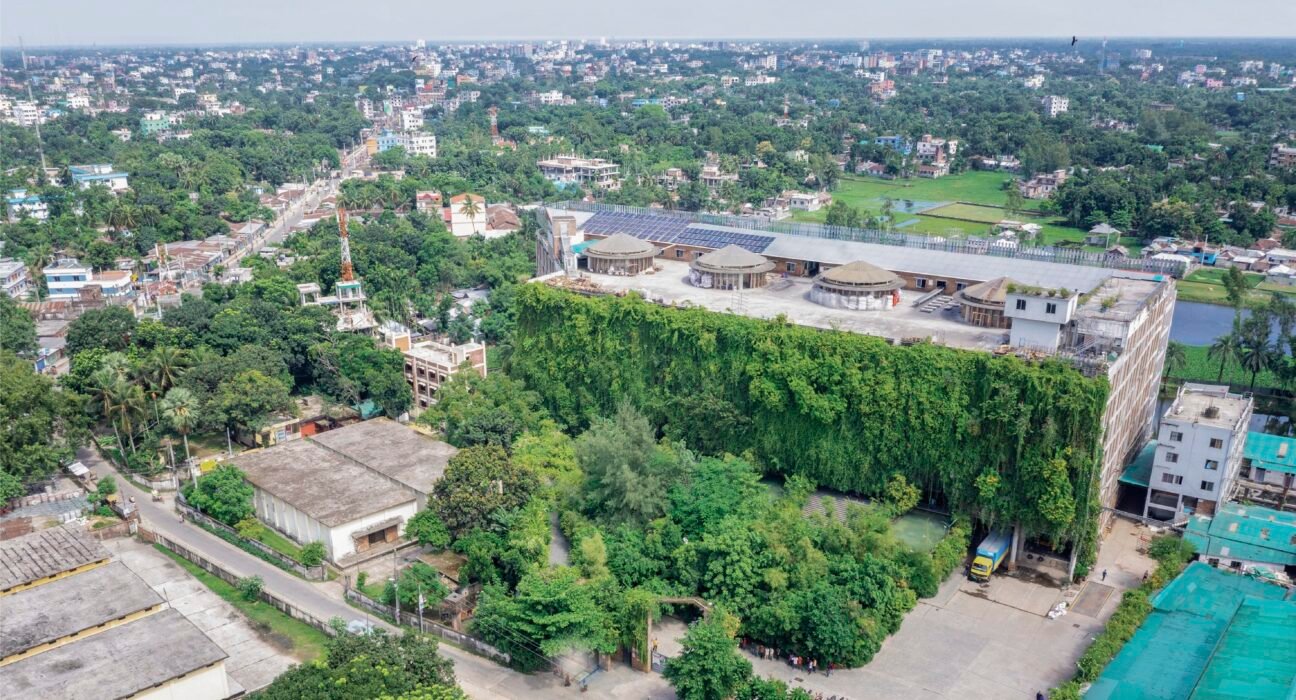
Architecture news rarely spotlights industrial buildings with the same excitement as museums or luxury homes, yet Green Field of Karupannya Rangpur Factory makes a compelling case for why it should. Designed by Nakshabid Architects in Rangpur, Bangladesh, this 14,450-square-meter factory reimagines the workplace as a humane, climate-responsive environment that feels restorative rather than purely utilitarian.
Completed in 2016, the project challenges the long-standing assumption that factories must be harsh, anonymous spaces. Instead, it presents an industrial campus shaped by landscape, comfort, and a sense of belonging—qualities more commonly associated with luxury design and high-end residential architecture. For readers tracking how thoughtful planning can elevate everyday environments, this is one of the most interesting stories in contemporary architecture.
Architecture News From Bangladesh: A Factory Designed Around Well-Being
At its core, Green Field of Karupannya Rangpur Factory is about redefining the worker experience. According to the project description, the factory was conceived to feel welcoming enough that employees would want to return even on weekends for recreation. That idea alone marks a major shift in industrial architecture.
Rather than treating labor spaces as isolated production zones, Nakshabid Architects designed the compound to create a sense of home. The result is a workplace that feels grounded, open, and emotionally considerate. In an era when wellness, sustainability, and user-centered planning are shaping everything from luxury home decor to hospitality interiors, this factory shows those values can also transform large-scale industrial design.
The project team includes chief architect Bayejid Mahbub Khondker, with landscape and interior design by Saidul Huq Juice, supported by structural, electrical, and plumbing engineers who helped realize the concept as an integrated built environment.
A New Standard for Industrial Luxury Architecture
Luxury architecture is not always about marble finishes, dramatic penthouses, or oversized villas. Increasingly, true luxury is expressed through quality of life, spatial generosity, and a strong relationship with nature. Green Field of Karupannya Rangpur Factory embodies that more sophisticated definition.
Its design elevates the ordinary by giving workers access to:
- A campus-like environment instead of a sealed industrial box
- Workspaces that feel connected to the land
- A setting shaped by climatic responsiveness
- Relief, comfort, and visual openness throughout the compound
These choices align closely with principles seen across luxury design and luxury home planning, where emotional comfort and environmental harmony matter as much as visual beauty. In that sense, the factory’s architecture feels unexpectedly relevant to broader conversations about luxury living and luxury decor.
Why the Project Stands Out in Architecture News
Among recent architecture news stories, this project stands out because it applies design intelligence where it is often most needed and least expected. Factories are essential to economic life, yet many are built with limited attention to the people who occupy them for long hours each day. Green Field of Karupannya Rangpur Factory takes the opposite approach.
1. It humanizes the industrial workplace
The most notable achievement of the project is its commitment to dignity. The architects envisioned a workspace that feels close to the earth and naturally calming. That human-centered attitude makes the building more than a production site—it becomes a social and spatial environment.
2. It integrates climate as a design asset
The design reportedly seeks to use climatic resources to the utmost level across the compound. In architectural terms, that suggests a thoughtful response to local environmental conditions rather than a generic industrial model. This kind of climate-sensitive planning is increasingly important in sustainable architecture, especially in warm and humid regions like Bangladesh.
3. It blurs the line between work and recreation
One of the project’s most memorable ideas is that workers feel comfortable enough to visit the factory on weekends. That is a powerful indicator of successful placemaking. Spaces that support both productivity and relaxation tend to foster stronger emotional connection, community, and long-term usability.
Lessons for Luxury Home and Luxury Decor Trends
Although this is a factory, the project offers surprising inspiration for luxury home, luxury home decor, and luxury interior concepts. The central lesson is that atmosphere matters. A space becomes memorable not simply because of expensive materials, but because of how it makes people feel.
Design professionals and homeowners alike can draw several ideas from this project:
- Design for emotional ease: Calm, welcoming environments improve daily experience.
- Prioritize connection to landscape: Buildings feel richer when they engage the ground, greenery, and open air.
- Use climate intelligently: Comfort can come from orientation, airflow, and environmental responsiveness—not just technology.
- Create multi-use environments: The best spaces support work, rest, and social interaction.
These are the same qualities increasingly shaping luxury residences and refined decor schemes around the world. In that way, Green Field of Karupannya Rangpur Factory resonates far beyond its category.
The Project at a Glance
- Project: Green Field of Karupannya Rangpur Factory
- Architect: Nakshabid Architects
- Location: Rangpur, Bangladesh
- Area: 14,450 m²
- Completion: 2016
- Category: Factory
- Chief Architect: Bayejid Mahbub Khondker
- Landscape & Interior: Saidul Huq Juice
Final Thoughts on This Architecture News Story
In the world of architecture news, Green Field of Karupannya Rangpur Factory is a reminder that great design can—and should—reach every building type. By turning a factory into a place of relief, belonging, and environmental sensitivity, Nakshabid Architects have created a model that feels both socially meaningful and architecturally ambitious.
The clearest takeaway is simple: luxury in design is no longer defined only by exclusivity or ornament. It is increasingly measured by care, comfort, and the ability to improve everyday life. That is what makes this project such an important piece of architecture news—and such a relevant reference point for anyone interested in luxury architecture, luxury design, and the future of humane workplaces.