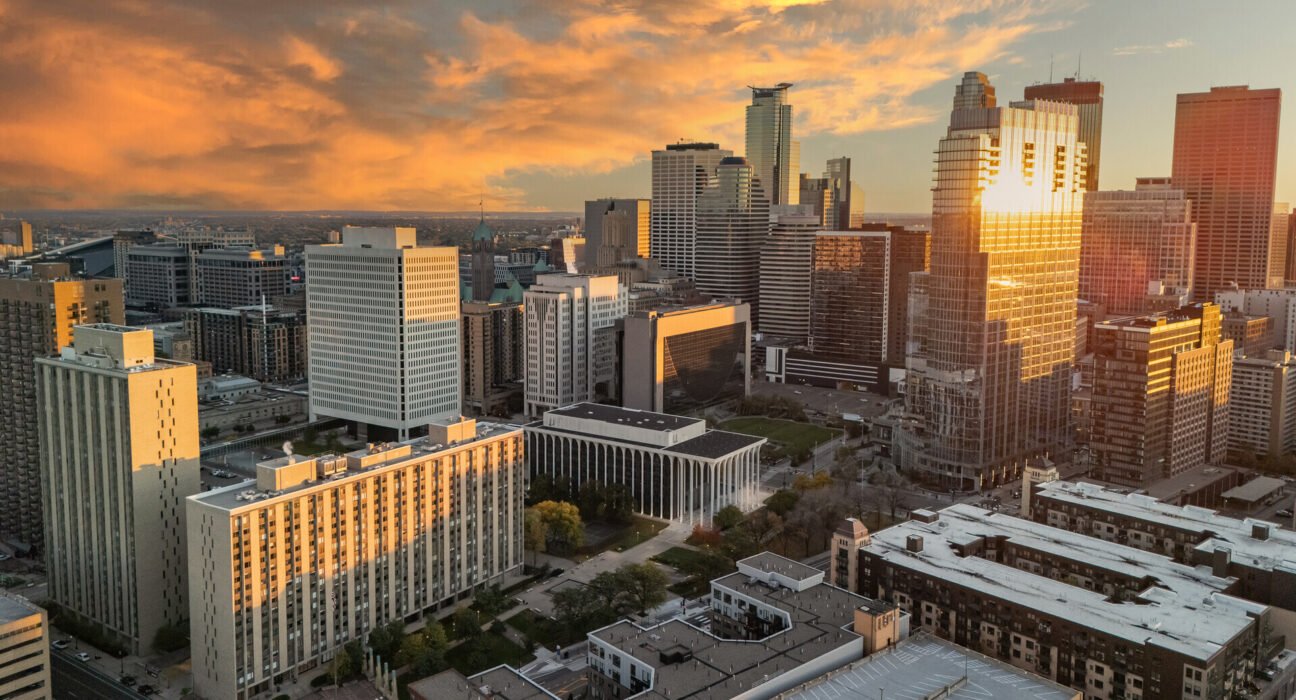
Architecture news rarely lands at the intersection of preservation, luxury design, and cultural legacy as elegantly as this Minneapolis transformation. The reimagining of a Minoru Yamasaki building by Kelly Wearstler Studio and ESG Architecture signals more than a renovation—it reflects a new model for restoring mid-century landmarks with contemporary sophistication.
For design lovers, the project stands out because it brings together one of America’s most recognizable modernist architectural voices and one of today’s most influential luxury interiors studios. The result is a conversation between eras: Yamasaki’s refined architectural language meets a fresh vision shaped by texture, atmosphere, and high-end livability.
Architecture News From Minneapolis: A Landmark Enters a New Chapter
This piece of architecture news centers on the transformation of a building originally designed by Minoru Yamasaki, the celebrated architect known for his graceful modernism and enduring civic and commercial works. In Minneapolis, his architecture remains an important part of the city’s design history, making any intervention especially significant.
By appointing Kelly Wearstler Studio alongside ESG Architecture, the project team appears to be taking a dual-track approach:
- Preserve architectural identity through careful stewardship of Yamasaki’s original design intent
- Introduce contemporary luxury through updated interiors, material palettes, and enhanced user experience
- Modernize performance with upgrades suited to current expectations for comfort, utility, and long-term relevance
That combination is exactly why this development matters in current architecture news. It shows how historically important structures can be revitalized without being flattened into generic modern spaces.
Why Minoru Yamasaki’s Legacy Still Matters
Any serious discussion of this architecture news story begins with Yamasaki himself. His work is often defined by a delicate balance of monumentality and human scale. Rather than relying solely on brute modernist expression, Yamasaki frequently explored rhythm, proportion, ornament, and lightness.
That legacy is especially relevant in today’s luxury architecture landscape, where designers and developers are increasingly rediscovering the value of character-rich buildings. Instead of building from scratch, many are seeking out iconic structures with cultural pedigree and adapting them for contemporary use.
Yamasaki’s buildings offer several qualities that make them ideal for thoughtful reinvention:
- Distinctive façades and structural clarity
- Elegant spatial composition
- A sense of timeless formality
- Built-in architectural storytelling
In the broader world of architecture news, projects like this underscore a growing respect for adaptive reuse, especially when paired with elevated design leadership.
Kelly Wearstler’s Role in Luxury Design Evolution
Kelly Wearstler Studio brings a very different—but highly complementary—sensibility to the project. Known for expressive interiors, sculptural forms, layered materials, and a fearless approach to luxury decor, Wearstler’s work often creates spaces that feel both curated and experiential.
That makes her involvement especially compelling for readers interested in luxury home decor, luxury design, and upscale lifestyle trends. While the original building carries architectural gravitas, the interior transformation has the potential to reshape how occupants and visitors emotionally connect with the space.
What Wearstler’s Design Language Could Add
Although specific design details may still be emerging, Wearstler’s body of work suggests a few likely themes:
- Rich tactile contrasts such as stone, wood, plaster, and metal
- Statement lighting that acts as functional sculpture
- A hospitality-inspired sense of comfort and glamour
- Custom furnishings and artistic detailing
- Bold yet refined color and material composition
This is the kind of layered design direction that often elevates preservation projects from worthy restorations into headline-making architecture news.
ESG Architecture and the Value of Local Expertise
While Kelly Wearstler Studio brings global design recognition, ESG Architecture contributes essential regional and architectural expertise. In adaptive reuse projects, local knowledge can be just as important as aesthetic vision. Code compliance, structural integration, planning realities, and contextual sensitivity all shape whether a historic transformation succeeds.
That partnership model is increasingly visible in architecture news: a high-profile design studio joins forces with an experienced local architecture firm to produce a result that is both ambitious and buildable.
For Minneapolis, this also means the project is not merely importing luxury style. It has the potential to respond to the city’s architectural culture, urban fabric, and practical demands while still delivering a striking new identity.
What This Means for Luxury Architecture and Luxury Home Trends
Though the project is rooted in a commercial or institutional architectural context, its influence extends into residential design trends as well. Major restoration projects often shape what homeowners, interior designers, and luxury developers want next.
From this standpoint, the story offers insight into several broader shifts:
1. Heritage Is Becoming a Luxury Asset
In today’s design market, authenticity carries enormous value. Buildings with architectural lineage are increasingly viewed as more desirable than blank-slate new construction.
2. Modernization No Longer Means Minimal Erasure
The best new architecture news stories show that updates can preserve soul. Designers are embracing renovation strategies that retain original character while improving comfort and performance.
3. Hospitality-Level Interiors Are Influencing Every Sector
Luxury home and luxury decor trends continue to borrow from boutique hotels and destination properties. Expect layered finishes, immersive lighting, and emotionally resonant spaces to remain in demand.
4. Collaboration Is Defining Premium Design
Projects of this caliber rarely come from a single voice. They emerge from partnerships between preservation-minded architects, luxury interior designers, developers, and craftspeople.
Why This Architecture News Story Resonates Now
This project arrives at a moment when cities and developers are rethinking what progress looks like. Rather than replacing significant architecture, many are asking how existing landmarks can be renewed for another generation. That question is especially urgent in urban centers where identity, sustainability, and market appeal increasingly overlap.
For readers following architecture news, the Minneapolis transformation stands out because it blends all three priorities:
- Cultural continuity through preservation of an important design legacy
- Luxury repositioning through a high-impact aesthetic update
- Contemporary relevance through adaptive reuse and renewed functionality
It also reflects a wider design truth: the most compelling spaces today are often those that honor the past while confidently embracing the present.
Conclusion: A Defining Moment in Architecture News
As architecture news, the transformation of Minoru Yamasaki’s Minneapolis building by Kelly Wearstler Studio and ESG Architecture is more than a project announcement. It is a case study in how iconic architecture can be preserved, elevated, and made newly desirable through intelligent collaboration.
For anyone interested in luxury architecture, luxury decor, or the future of adaptive reuse, this development is a clear signal of where design is heading: toward spaces that are storied, sophisticated, and deeply experience-driven. If executed with care, this Minneapolis landmark may become one of the most compelling examples of heritage-meets-luxury in recent architecture news.