Architecture news rarely captures the full ambition of a city-shaping transport project, but Valencia’s new Central Station does exactly that. Selected through competition, the team led by Sener with RSHP and Valencia-based ERRE is set to deliver a major intermodal hub that blends engineering precision, urban repair, and a distinctly contemporary architectural identity.
For readers drawn to luxury architecture, luxury design, and refined urban experiences, this project stands out not because it is ornamental, but because it elevates infrastructure into a civic destination. The proposal promises a sophisticated underground station, seamless mobility connections, generous public space, and a careful restoration strategy for the historic Valencia Nord Station.
Architecture News: A Landmark Transit Vision for Valencia
The newly selected proposal for Valencia Central Station is far more than a transport upgrade. It is a large-scale urban transformation intended to connect high-speed rail, commuter services, metro, tram, bus, taxi networks, and active mobility such as walking and cycling. In practical terms, that means a future-facing mobility hub designed to make movement across the city smoother, faster, and more legible.
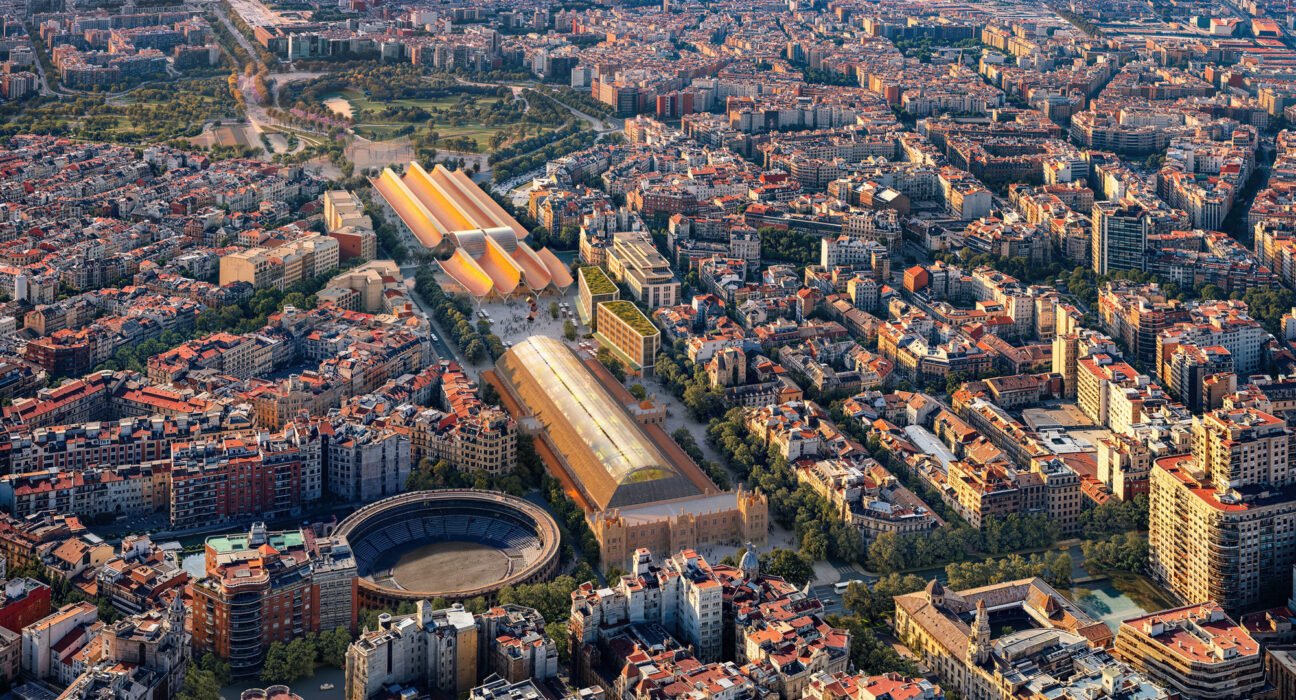
At the heart of the scheme is an underground station that links the new Central Station with Valencia Nord Station and the future Central Park. This move allows the project to reduce surface-level disruption while opening up new public realm opportunities above ground. Instead of acting as a barrier, railway infrastructure becomes part of a more connected and elegant city fabric.
In today’s architecture news cycle, this kind of integration matters. Cities increasingly want transportation infrastructure that does more than function efficiently; they want it to shape identity, support sustainability, and improve daily life.
Why the RSHP and ERRE Proposal Won
According to the project information, the design is organized around five guiding principles:
- Railway functionality
- Urban integration
- Architectural identity
- Constructability
- Operational safety
That framework helps explain why the proposal resonated with the evaluation committee. It balances technical performance with architectural clarity, which is essential for a project of this complexity.
RSHP brings international expertise in large-scale transport architecture, while ERRE contributes local knowledge and contextual sensitivity rooted in Valencia. Combined with Sener’s engineering and technology leadership, the team appears well positioned to handle both the design vision and the logistical demands of building a major station while maintaining rail operations.
For followers of architecture news, the collaboration is notable because it reflects a broader trend: successful contemporary infrastructure increasingly depends on multidisciplinary teams that can merge architecture, engineering, heritage preservation, and sustainability into one coherent system.
Underground Infrastructure With a Civic Presence
Although much of the station will be below ground, the design aims to avoid the closed, purely utilitarian feel associated with older transport complexes. The proposal includes entrances, concourses, waiting areas, platforms, retail spaces, and an underground car park, all conceived as part of a layered public experience.
One of the most compelling design strategies is the emphasis on natural light and fresh air. Daylight is intended to reach the platforms, and open visual connections between levels will help make the station easier to navigate and more pleasant to occupy. This is a crucial design move in premium public architecture, where atmosphere, orientation, and material quality can significantly affect how people experience space.
Another major shift is operational: the railway system will move from a terminus model to through services. Rather than reversing direction, trains will be able to continue north to south across Valencia. That change may sound technical, but its urban impact is substantial, improving network efficiency and supporting the city’s long-term mobility strategy.
Historic Valencia Nord Station Will Be Preserved
One of the most sensitive aspects of the project is the refurbishment of Valencia Nord Station, a designated Site of Cultural Interest. Rather than replacing or overwhelming the historic structure, the proposal is expected to preserve its architectural and urban heritage, including its existing façades, while integrating the old station into the renewed transport landscape.
This approach is especially important in a city like Valencia, where heritage and contemporary development must coexist. In the best architecture news, preservation is not treated as an obstacle to innovation but as a design opportunity. Here, the historic station becomes an anchor for memory and identity, while the new infrastructure supports future growth.
That balance between old and new also aligns with the sensibilities of luxury architecture. Timeless design often comes from restraint, careful proportion, and respect for context rather than spectacle alone.
Public Space, Landscape, and Urban Luxury
The plan extends beyond the station building itself. A landscape axis will connect the Central Station, Valencia Nord Station, and the future Central Park through pedestrian routes and cycle lanes, converging at a new Station Square. This gesture transforms mobility infrastructure into a civic landscape.
Key public realm benefits include:
- Improved pedestrian connectivity between major urban destinations
- Safer and more attractive cycle routes
- A clearer arrival sequence through the proposed Station Square
- Better integration with future city planning projects
- More usable open space above and around the transport infrastructure
For luxury design audiences, this is where the project becomes especially compelling. True urban luxury is not limited to private interiors or exclusive residences; it also lives in beautifully resolved public space, intuitive circulation, and environments that feel generous, calm, and coherent.
Sustainability and Smart Construction Strategies
This project also reflects the growing environmental priorities shaping global architecture news. The design incorporates a modular construction system with a high level of prefabrication, intended to improve efficiency and minimize disruption during building works. Just as importantly, the station is being designed to maintain railway operations throughout construction.
Environmental measures include reducing dependence on energy-intensive mechanical systems, improving material efficiency, and lowering the station’s overall carbon footprint. Bringing light and air into the underground spaces is not only an experiential choice but also part of a broader sustainability strategy.
In premium contemporary architecture, sustainability is increasingly synonymous with quality. Buildings and infrastructure that use resources intelligently tend to offer better comfort, stronger long-term value, and more resilient design outcomes.
What This Means for Spain’s Design Future
Valencia Central Station signals a powerful direction for transport-led urban renewal in Spain. It demonstrates how infrastructure can act as a catalyst for placemaking, heritage preservation, and environmental performance all at once. The project is also a reminder that civic architecture can feel ambitious and elegant without losing sight of operational realities.
As architecture news continues to spotlight cities investing in smarter, more humane mobility systems, Valencia’s new station stands out as one to watch. With RSHP and ERRE shaping the design, the city has an opportunity to create a transport hub that is not only efficient, but memorable, refined, and deeply integrated into its urban future.
Takeaway: this is the kind of architecture news that matters because it reaches beyond a single building. Valencia Central Station has the potential to redefine how infrastructure, heritage, landscape, and contemporary design come together in one of Spain’s most dynamic cities.