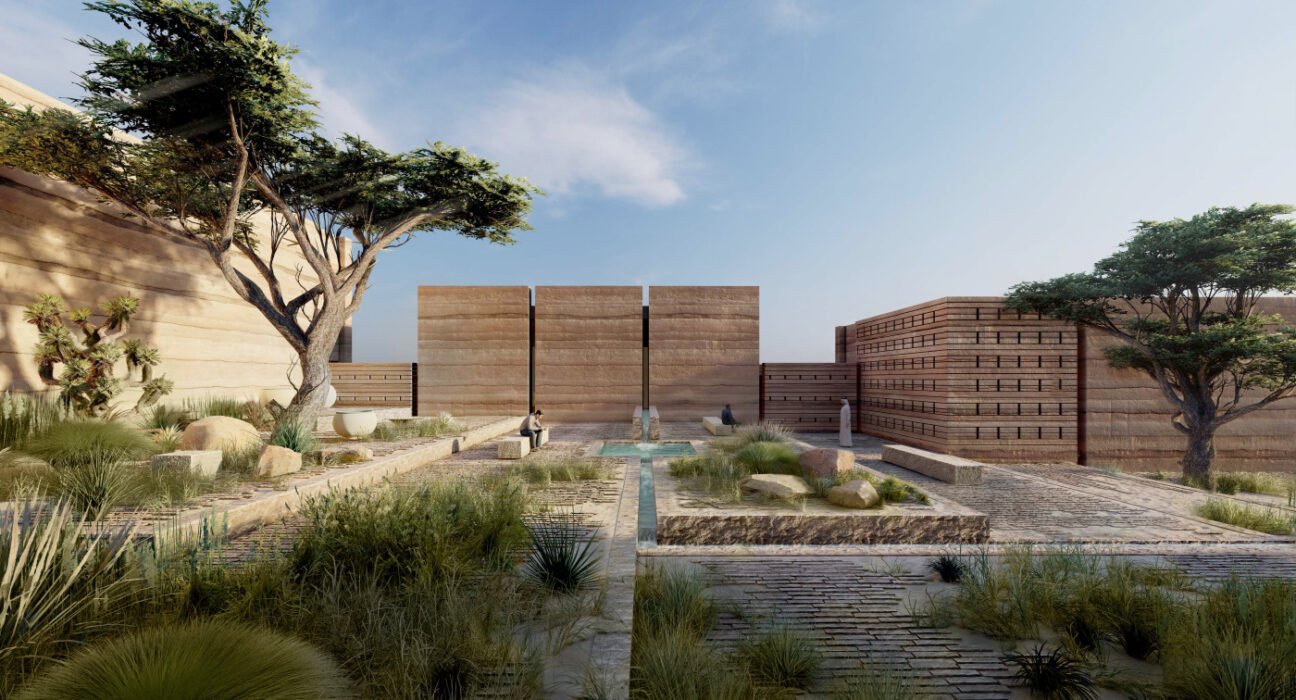
Architecture news rarely feels as forward-looking and rooted in history at the same time, but Sharjah Design Centre’s newly unveiled plans do exactly that. Set to open in 2029, the project signals a bold direction for luxury architecture in the Gulf, pairing contemporary design ambition with the ancient, climate-smart technique of rammed earth construction.
For design enthusiasts, homeowners, and industry watchers alike, this announcement is more than a headline. It reflects a growing shift in how high-end spaces are imagined: less dependent on flashy excess, and more focused on material honesty, environmental performance, and regional identity. In that sense, this piece of architecture news is also a larger story about the future of luxury design.
Architecture News Spotlight: Sharjah Design Centre’s Vision for 2029
The planned Sharjah Design Centre building is expected to become a cultural and architectural destination when it opens in 2029. While the announcement centers on a new rammed earth structure, the real significance lies in what the material choice represents. Rammed earth is one of the oldest building methods in the world, yet it is increasingly being revisited by architects seeking durable, low-impact, and visually distinctive alternatives to conventional concrete and steel.
In the context of the UAE and wider Middle East, the project stands out for embracing a construction language that speaks directly to climate, geography, and heritage. Rather than importing a generic international style, the design appears to align with a regional architectural sensibility—one that values thermal mass, tactility, and a strong connection to place.
That makes this architecture news especially relevant for readers following luxury architecture trends. Today’s most compelling landmark projects are not only visually impressive; they are also expected to deliver cultural meaning and environmental intelligence.
Why Rammed Earth Matters in Luxury Architecture
Rammed earth has long been admired for its natural beauty, but its appeal in contemporary luxury architecture goes much deeper. The technique involves compressing layers of earth into formwork, creating solid walls with rich texture, subtle stratification, and an almost sculptural presence. The result is a surface that feels handcrafted yet monumental—an ideal balance for premium design projects.
For luxury homes, boutique hospitality, and cultural institutions, rammed earth offers several advantages:
- Material authenticity: The finish carries depth and variation that cannot be replicated by synthetic cladding.
- Thermal performance: Thick earthen walls can help regulate indoor temperatures, especially in hot climates.
- Timeless aesthetics: Earth-toned architecture tends to age gracefully and remain visually relevant.
- Sustainability potential: Depending on sourcing and construction methods, rammed earth can reduce reliance on high-carbon materials.
For readers interested in luxury home and luxury home decor, this architecture news also reinforces a broader interior trend: the move toward natural palettes, textural walls, artisanal finishes, and spaces that feel grounded rather than over-polished.
Design, Climate, and Regional Identity
One reason this project is attracting attention in architecture news circles is its likely relationship to climate-responsive design. In hot, arid regions, architecture must do more than look striking. It must manage heat, daylight, and comfort with intelligence. Rammed earth is particularly suited to that challenge because of its thermal mass and sensory warmth.
Sharjah has steadily built a reputation as a cultural capital with a serious investment in design, art, and architecture. A new design centre executed in rammed earth strengthens that identity by demonstrating that innovation does not have to come at the expense of local character. In fact, the most memorable projects often emerge when architecture responds directly to the environment around it.
This is where architecture news intersects with luxury design in a meaningful way. True luxury today is increasingly defined by:
- Context-sensitive planning
- Long-lasting materials
- Craft-driven construction
- Reduced environmental impact
- Spaces that create emotional resonance
By those standards, the Sharjah Design Centre project fits neatly into the new luxury conversation.
What This Means for Luxury Design and Home Trends
Although the Sharjah Design Centre is an institutional project, its design language is likely to influence residential and interior trends. High-end clients and designers often take cues from major cultural buildings, adapting their material palettes and spatial ideas for private settings. As this architecture news gains traction, expect to see more demand for interiors and homes inspired by earthen minimalism.
Luxury decor ideas inspired by rammed earth architecture
- Textured plaster or limewash walls in warm neutral tones
- Stone, clay, and travertine surfaces with visible natural variation
- Sculptural furniture with soft organic forms
- Layered lighting that enhances texture rather than flattening it
- Handcrafted ceramics and artisanal objects with earthy finishes
These ideas align beautifully with the luxury decor and luxury home decor categories, where understated refinement often creates a stronger impression than overt ornamentation. The lesson from this architecture news is clear: elegance can be quiet, tactile, and deeply connected to natural materials.
A Broader Shift in Architecture News
The Sharjah Design Centre announcement also reflects a larger movement happening across global architecture news platforms. Architects, developers, and cultural institutions are re-evaluating what progress looks like. Instead of celebrating scale alone, the conversation is moving toward resilience, circular material thinking, and buildings that contribute to a stronger sense of place.
In that environment, rammed earth is no longer seen as a niche or purely vernacular technique. It is becoming a serious design strategy for contemporary landmark buildings. Its visual richness appeals to the luxury market, while its environmental logic supports the industry’s sustainability goals.
That dual appeal is powerful. It suggests that future luxury architecture will not be defined only by exclusivity or spectacle, but by intelligence, restraint, and authenticity.
Conclusion: Why This Architecture News Deserves Attention
This architecture news story matters because it points to where premium design is heading next. Sharjah Design Centre’s planned rammed earth building, opening in 2029, brings together heritage, sustainability, and high design in a way that feels both timely and enduring.
For anyone tracking luxury architecture, luxury design, or the future of sophisticated living spaces, the takeaway is simple: the most exciting projects are no longer just about bold form. They are about meaningful materials, regional identity, and spaces designed to last. If this architecture news is any indication, the future of luxury may look more natural, more tactile, and far more connected to the world around it.