Architecture news this week captures a striking paradox: some of the most important projects in the world are not only about spectacle, but about access, reuse, and public value. From affordable housing in Ibiza to a highly anticipated art pavilion in Doha, the latest headlines show how contemporary design is balancing social responsibility with cultural ambition.
For readers interested in luxury architecture, luxury home design, and the future of refined living, these developments matter far beyond their immediate locations. They reveal where design is heading next: toward adaptable housing, meaningful public space, intelligent restoration, and immersive cultural experiences shaped by world-class architects and artists.
Architecture News Highlights a Shift Toward Social Value
This week’s most compelling stories point to a broader evolution in the profession. Architects are increasingly being asked to deliver more than iconic forms. Today, the built environment is expected to address affordability, sustainability, long-term maintenance, and the quality of collective life.
That shift is visible across new housing, adaptive reuse, museum projects, and major exhibitions. In practical terms, the latest architecture news suggests a design culture focused on:
- Flexible spaces that respond to changing lifestyles
- Reuse of existing structures instead of demolition
- Lower-impact materials and construction methods
- Shared amenities that strengthen community
- Cultural buildings that create deeper public engagement
For the luxury sector, this is especially relevant. High-end design is no longer defined only by rare materials or visual drama. Increasingly, true luxury includes environmental intelligence, craftsmanship, wellness, and long-term value.
Ibiza’s Affordable Housing Project Brings Smart Design to a Pressured Market
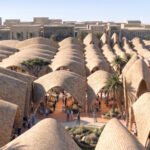
One of the standout items in this week’s architecture news is Sa Casa in Ibiza, designed by Stefano Boeri Architetti. The project, selected through competition, proposes roughly 190 below-market rental homes organized across four volumes.
Ibiza is often associated with exclusivity, hospitality, and premium real estate, which makes this development especially noteworthy. Rather than treating affordability as a compromise, the scheme presents it as a design challenge that can be met with innovation and care.
Why Sa Casa Matters
The project combines several forward-looking strategies:
- Prefabricated CLT construction for efficiency and lower embodied impact
- Adaptable apartment layouts that can support different household needs
- Shared spaces that encourage social connection
- Native planting to reduce water demand and strengthen local identity
- Photovoltaic systems and passive environmental design to improve performance
In the context of luxury home trends, this kind of project also sends a clear message: quality architecture should not be reserved for elite buyers. Good design, healthy living conditions, and climate-conscious planning are becoming universal expectations.
Adaptive Reuse Continues to Define Contemporary Architecture News
Another key theme in current architecture news is adaptive reuse, seen clearly in MAD’s plans for Danshuis in Rotterdam. The proposal transforms a 1923 Art Deco warehouse into a major dance center with studios, performance areas, exhibition spaces, and educational functions.
This is more than a preservation story. It reflects the growing belief that older buildings can be reimagined as vibrant civic assets. Reuse often preserves urban memory while reducing waste, and it can produce spaces with far more character than entirely new construction.
For architects, developers, and design-minded homeowners, the lesson is powerful: existing structures can become the foundation for extraordinary new experiences. That same philosophy is increasingly influencing luxury home decor and luxury design, where historic textures, salvaged materials, and layered narratives are highly prized.
Biennials Are Expanding the Architecture Conversation
The week’s architecture news also underscores the role of architecture biennials in shaping debate. Tallinn Architecture Biennale 2026, under the theme “How Much?”, examines the hidden costs of building, including labor, environmental impact, resource use, and long-term social consequences.
Meanwhile, the Buenos Aires International Architecture Biennial marks its 40th anniversary with “HABITAR,” or “Inhabit,” exploring the many ways architecture influences how people live in cities, territories, and communities.
Why These Events Matter
Major design exhibitions increasingly act as testing grounds for ideas that later influence mainstream practice. They push professionals and the public to consider questions such as:
- What is the true cost of construction?
- How should architecture serve collective life?
- What defines value in a building over time?
- How can design support dignity, participation, and belonging?
These are not abstract concerns. They affect housing policy, urban planning, cultural investment, and even the expectations clients bring to residential design.
Gerhard Richter’s Doha Pavilion Is the Cultural Event to Watch
Among the most visually exciting stories in this week’s architecture news is Doha Pavilion: Gerhard Richter, a permanent site-specific structure created by the artist in collaboration with Selldorf Architects. Set in the Museum of Islamic Art park, the hexagonal pavilion will translate Richter’s exploration of repetition, perception, and image-making into built form.
The pavilion is expected to house large-scale Strip paintings, mirrored elements, and a central sculptural installation, while its exterior surfaces will feature digitally generated patterns derived from Richter’s earlier work. The result promises to blur the boundaries between art, architecture, and landscape.
For followers of luxury architecture, this is a powerful example of cultural patronage at the highest level. It demonstrates how architecture can become an immersive medium, not just a container for objects. Doha continues to position itself as a global center for ambitious art and design, and this pavilion will likely become one of the year’s most talked-about destinations.
Restoration and Experimental Construction Also Make Headlines
Elsewhere in architecture news, SOM’s London exhibition explores future construction through a structure made from reclaimed wooden bricks assembled without mortar or mechanical fixings. The installation points to more accessible and potentially lower-impact building methods, while also highlighting how technology and participation may redefine construction.
At the same time, noAarchitecten’s Het Steen restoration in Antwerp has earned major recognition for integrating heritage and contemporary intervention with unusual sensitivity. Its award-winning design demonstrates that restoration can be both bold and respectful, enhancing the public experience while preserving historical presence.
Together, these stories show a profession experimenting across scales, from temporary installations to landmark restorations and globally significant cultural projects.
What This Week’s Architecture News Means for Luxury Design
The clearest takeaway from this round of architecture news is that excellence in design now depends on more than appearance. The most influential projects combine beauty with adaptability, sustainability, cultural depth, and social relevance.
That is an important cue for anyone interested in luxury home, luxury decor, or premium real estate. Tomorrow’s most desirable spaces will likely be those that do all of the following:
- Use materials intelligently and responsibly
- Create flexible, human-centered interiors
- Honor history where possible through reuse or restoration
- Connect architecture with art, landscape, and community
- Deliver lasting value rather than short-term novelty
In short, architecture news this week reveals a design world redefining what sophistication really means. Whether in Ibiza, Rotterdam, Buenos Aires, London, Antwerp, or Doha, the future belongs to projects that are as thoughtful as they are visually compelling.