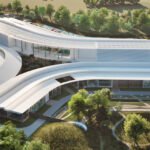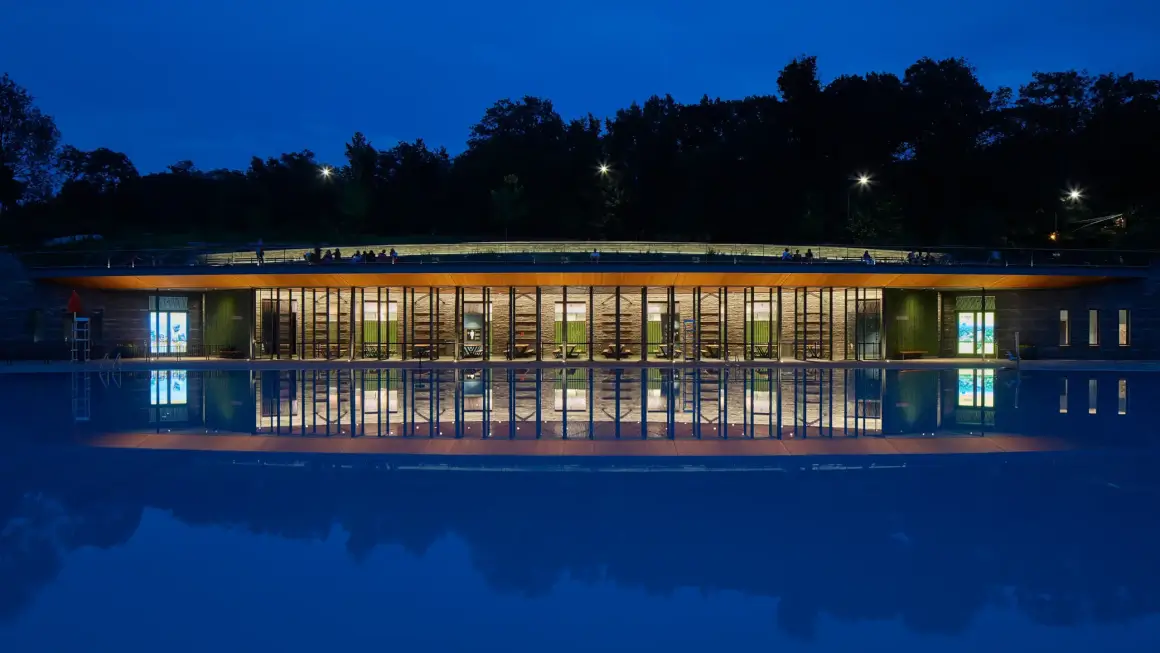
Iconic architecture is often associated with skyline-defining towers or lavish private residences, but some of the most powerful design statements are the ones that disappear into the landscape. The new Davis Center at Harlem Meer in Central Park, designed by Susan T. Rodriguez Architecture & Design, is a compelling example of how civic design can feel both elevated and deeply humane.
Positioned at the northern edge of Central Park, the Davis Center reimagines a long-underused site as a year-round destination for recreation, gathering, and environmental connection. Rather than competing with the park’s natural beauty, the project appears to fold into it, creating a subtle yet memorable architectural presence that aligns with the values of luxury design today: craft, experience, sustainability, and seamless integration with place.
Iconic Architecture That Blends Into Nature
The Davis Center stands apart because its design does not rely on spectacle alone. Instead, this iconic architecture approach is rooted in restraint. Susan T. Rodriguez’s vision treats the building as part of Central Park’s topography, allowing visitors to experience architecture and landscape as one continuous composition.
Set beside the Harlem Meer, the center is designed to strengthen the relationship between water, pathways, open lawns, and community activity. The result is a public space that feels inviting rather than imposing. In a city known for bold formal gestures, this quieter form of iconic architecture delivers a different kind of luxury: one defined by atmosphere, accessibility, and enduring beauty.
A Park Building Designed to Disappear
One of the project’s most notable achievements is how carefully it minimizes visual disruption. The architecture works with the landform, preserving views and encouraging movement across the site. This landscape-first strategy supports the broader heritage of Central Park while updating it for contemporary use.
- Low-profile massing reduces the sense of a separate object building
- Strong indoor-outdoor connections enhance the visitor experience
- Natural materials and park-oriented detailing reinforce a refined civic identity
- Flexible spaces allow seasonal programming without compromising aesthetics
For readers interested in luxury architecture, the Davis Center offers a lesson in how design sophistication can emerge through subtlety rather than excess.
Why the Davis Center Matters for Luxury Architecture
At first glance, a community-centered park facility may seem outside the traditional luxury conversation. Yet the Davis Center reflects many of the same principles that define elite residential and hospitality design. The best luxury spaces are tailored, immersive, and materially thoughtful. This project brings those qualities into the public realm.
The building’s understated elegance, close attention to circulation, and integrated relationship with the site place it firmly within the evolving world of iconic architecture. It demonstrates that prestige in design no longer depends solely on exclusivity. Increasingly, status comes from meaningful placemaking, environmental sensitivity, and design that enriches everyday life.
Luxury Through Experience, Not Excess
The Davis Center’s appeal lies in how it choreographs experience. Visitors can move from pathways to gathering areas, engage with the water’s edge, and enjoy changing seasonal uses in a setting that feels composed and calm. This mirrors the priorities seen in high-end luxury design and luxury decor, where emotional resonance is just as important as appearance.
Key luxury-driven design values visible in the project include:
- Contextual harmony — the building belongs to its setting rather than dominating it
- Material integrity — finishes and forms support a timeless visual language
- Human-centered planning — spaces are intuitive, welcoming, and flexible
- Wellness and connection — nature is central to the experience, not an afterthought
Community, Recreation, and Year-Round Design
The renewed site is more than an architectural statement; it is a civic investment. The Davis Center creates a versatile destination designed to serve visitors in every season. That level of adaptability is a hallmark of successful iconic architecture, especially in urban environments where public spaces must work hard and remain relevant over time.
At Harlem Meer, the project supports recreation, relaxation, and neighborhood access while enhancing one of the most distinctive areas of Central Park. This is especially meaningful in North Manhattan, where thoughtful public design has the power to shape social life, wellbeing, and cultural identity.
What Makes the Design Future-Focused
Several themes make the Davis Center particularly relevant for today’s architecture audience:
- Sustainable site integration: architecture that respects ecology and existing landscape patterns
- Multi-season functionality: spaces designed for changing weather and evolving community use
- Civic elegance: public architecture that feels elevated without becoming inaccessible
- Inclusive placemaking: a design language that welcomes a broad range of users
These are the same ideas increasingly influencing luxury home and hospitality projects, where designers seek to blur boundaries between architecture, wellness, and nature. If you follow trends in luxury home design, the Davis Center offers valuable inspiration on how spatial serenity and environmental immersion can elevate any setting.
A New Standard for Iconic Architecture in Urban Parks
The Davis Center suggests a new direction for iconic architecture in cities. Instead of prioritizing image over experience, it emphasizes continuity, calm, and civic generosity. It shows that a building can be memorable not because it shouts, but because it fits so perfectly within its surroundings that the entire place feels renewed.
That is what makes the project so important. It reframes architecture as a connector — between neighborhood and park, structure and landscape, recreation and reflection. In doing so, it raises the bar for public design and expands the definition of architectural luxury.
For architects, designers, and homeowners alike, the takeaway is clear: the future of iconic architecture is not just about creating landmarks. It is about shaping experiences that feel timeless, sustainable, and inseparable from the places they inhabit.