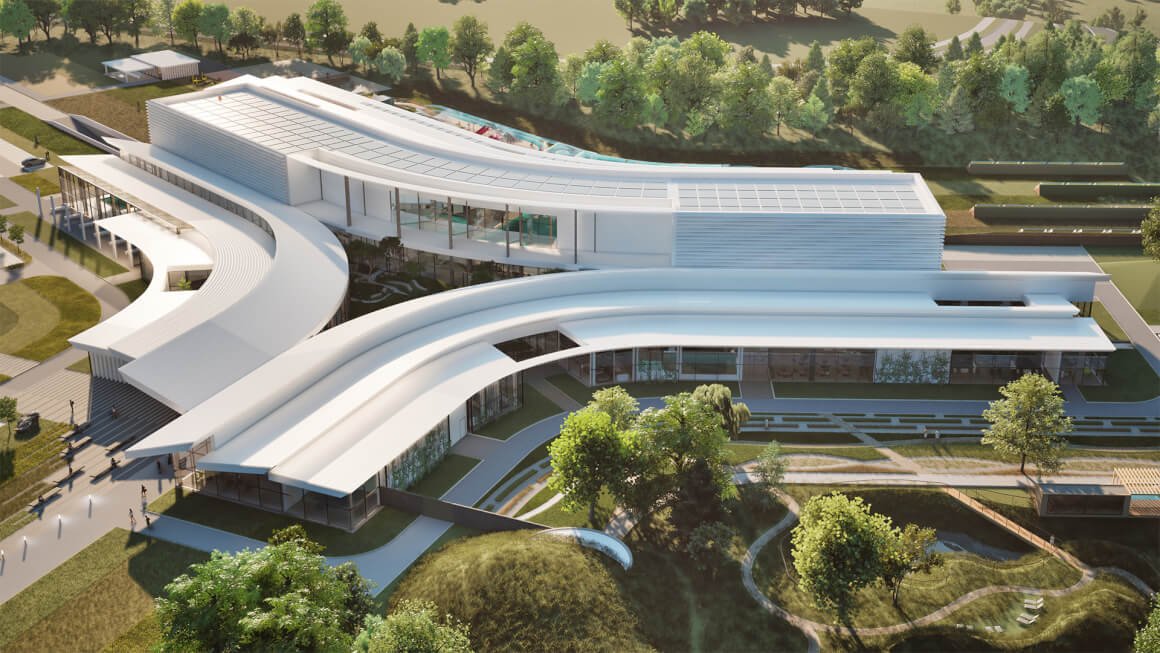
Great architecture does more than shelter activity; it choreographs light, movement, and emotion. The proposed Solres Water Park in Rzeszów is a striking example of iconic architecture, using the sun’s path as a guiding design principle to shape a leisure destination that feels both sculptural and deeply site-responsive.
Positioned at the intersection of luxury design, public experience, and environmental awareness, the project by TKHolding Truszczyński Kobierzewski presents a fresh model for contemporary aquatic architecture. Rather than relying solely on spectacle, the concept builds its identity through orientation, geometry, and a carefully considered relationship between structure and daylight.
Iconic Architecture Rooted in the Movement of the Sun
What makes this proposal stand out is its commitment to turning a natural phenomenon into an architectural framework. In this vision for Solres Water Park, the building aligns with the sun’s trajectory, allowing solar movement to inform both the spatial composition and the visual character of the complex.
This approach gives the development a dynamic quality throughout the day. As sunlight shifts, surfaces, shadows, and interior atmospheres evolve, creating an immersive environment rather than a static recreational facility. That sensitivity to time and light is a hallmark of iconic architecture that aspires to do more than make a bold first impression.
For readers interested in related design strategies, this kind of solar-responsive planning also connects with broader conversations around passive design, bioclimatic architecture, and experiential luxury spaces.
A New Vision for Water Park Design in Rzeszów
Water parks are often associated with entertainment-first planning, where technical requirements overshadow architectural ambition. Solres Water Park appears to challenge that formula by treating the complex as a landmark destination with a strong conceptual identity.
Instead of designing a purely utilitarian envelope around pools and attractions, the project frames the water park as a civic and visual statement. This is where iconic architecture becomes especially relevant: the building is not just a backdrop for leisure, but a central part of the experience itself.
Key design themes that define the concept
- Solar alignment: The massing and orientation respond to the changing angle of daylight.
- Sculptural form: The architecture aims for a memorable silhouette that can function as a regional landmark.
- Experiential interiors: Natural light likely plays a major role in shaping mood, circulation, and visual comfort.
- Site integration: The project suggests a contextual response rather than an isolated object building.
These qualities place the scheme within a premium category of leisure architecture where design value is as important as programmatic performance.
Why Sun-Oriented Design Matters in Luxury Architecture
In luxury architecture, true sophistication often lies in what the eye does not immediately register: comfort, proportion, atmosphere, and the effortless quality of space. A building aligned with the sun can support all of these outcomes by improving daylight access, enhancing views, and shaping seasonal experience.
That makes Solres Water Park more than an eye-catching proposal. It reflects a wider industry shift toward architecture that integrates environmental intelligence with high-design aesthetics. In this sense, iconic architecture is no longer only about unusual form. It is increasingly about how a structure performs, adapts, and elevates everyday use.
Benefits of solar-informed planning
- Creates changing interior ambience throughout the day
- Supports more thoughtful energy-conscious design strategies
- Enhances the emotional impact of arrival and circulation spaces
- Strengthens the project’s connection to its geographic setting
For luxury home and luxury decor audiences, there is a valuable lesson here: the most compelling spaces often begin with orientation and natural light, not just finishes and furnishings.
From Public Attraction to Design Landmark
Rzeszów may not be the first city that comes to mind in discussions of destination architecture, which makes this proposal all the more interesting. Projects like Solres Water Park can help reshape a city’s visual identity, attracting attention not only for recreation but also for architectural innovation.
When a civic-scale leisure development embraces iconic architecture, it can generate benefits beyond tourism. It can reinforce local pride, create a recognizable urban marker, and expand the cultural conversation around design in emerging architectural centers.
This is particularly important in an era when cities compete not just through infrastructure, but through distinctiveness. Memorable public-facing buildings become part of a place brand, especially when they combine functionality with a strong conceptual narrative.
Lessons for Luxury Design and Luxury Home Trends
Although Solres Water Park is a large-scale public project, its design thinking translates surprisingly well into residential and hospitality settings. The same ideas that shape exceptional public spaces are increasingly influencing high-end private environments.
Design takeaways for luxury-focused readers
- Prioritize orientation: Plan key rooms around daylight patterns and seasonal sun exposure.
- Use architecture to create mood: Form, shadow, and volume can be as impactful as decor choices.
- Think beyond ornament: Lasting elegance often comes from spatial intelligence rather than excess detailing.
- Blend performance with beauty: Sustainable design and visual drama are no longer separate goals.
This is why projects like Solres resonate across categories including luxury decor, luxury design, and luxury home inspiration. They remind us that compelling environments begin with an architectural idea strong enough to guide every subsequent decision.
For additional inspiration, publishers should consider internal linking to related content on daylight-led interiors, sculptural pool design, luxury wellness spaces, and sustainable modern architecture to support both user discovery and on-page SEO performance.
The Lasting Power of Iconic Architecture
Solres Water Park in Rzeszów points to a more meaningful future for destination design—one in which spectacle is grounded in environmental logic. By aligning architecture with the sun’s path, the project suggests that memorable buildings can emerge from natural systems as much as from formal ambition.
The clearest takeaway is this: iconic architecture endures when it connects beauty, experience, and place. In Solres Water Park, that connection appears to be the project’s strongest luxury asset, transforming a recreational concept into a landmark design story worth watching.